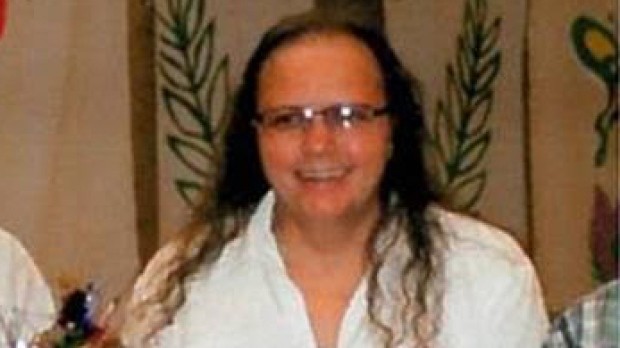
Fallon Aubee: The Contract Killer Who Became Canada's First Federal Inmate Transferred to a Women's Prison — And Why It Matters

GIVEN NAME:
Jean-Paul Aubee
ALIAS:
Fallon Aubee
DATE:
July 2017 (transfer date); 2003 (murder conviction)
LOCATION:
Fraser Valley Institution for Women, Abbotsford, British Columbia
Jean-Paul Aubee was convicted of first-degree murder in 2003 for a street-gang contract killing in British Columbia and sentenced to life in prison. In July 2017 — directly following Prime Minister Justin Trudeau's off-the-cuff promise at a Kingston town hall to address transgender prisoner rights — Aubee became Canada's first federal inmate transferred to a women's prison on the basis of gender identity alone, without surgical requirement, setting the precedent for every transfer that followed.
Full Story
On January 12, 2017, Prime Minister Justin Trudeau was asked a question at a town hall in Kingston, Ontario. A member of the audience asked about transgender prisoners. Trudeau admitted he had never thought about the issue before. He then promised, on the spot, to address it.
The next day, Correctional Service Canada reversed its existing policy.
Without parliamentary debate, without a vote, without a formal review of the implications for the women already incarcerated in Canada's federal women's institutions — a policy that had required surgical transition as a prerequisite for cross-sex prison placement was abandoned overnight. In its place came Interim Policy Bulletin 584: a directive allowing male federal inmates to be transferred to women's institutions on the basis of self-declared gender identity alone.
Six months later, Jean-Paul Aubee — a convicted contract killer serving a life sentence in a BC men's prison — became Canada's first federal inmate transferred to a women's prison under that new policy.
Aubee had not undergone surgical reassignment. He had been convicted of first-degree murder. He was serving a life sentence with no parole eligibility for twenty-five years.
He was transferred to Fraser Valley Institution for Women in Abbotsford, British Columbia — the same institution that would later house Adam Laboucan, Canada's youngest ever Dangerous Offender, convicted of raping a three-month-old infant.
The Aubee case is not simply one entry in a database of concerning transfers. It is the entry — the precedent that made every subsequent transfer legally and administratively possible. Understanding what happened in 2017, and how it happened, is essential to understanding how Canada arrived at the corrections policy it has today.
The Crime — Contract Killing, 2003
The Murder
Jean-Paul Aubee was convicted of first-degree murder in 2003 in British Columbia. The killing was connected to street-gang activity — a contract killing carried out as part of gang operations in the province.
First-degree murder in Canada carries a mandatory sentence of life imprisonment, with no eligibility for parole for twenty-five years. There is no fixed release date. Aubee will remain under the supervision of the Correctional Service of Canada for the remainder of his natural life, whether incarcerated or on parole.
The specific details of the murder — the victim, the circumstances, the nature of the contract — are not extensively reported in the coverage that followed Aubee's transfer. The crime itself received far less attention than the policy question his transfer raised. What is documented is its classification: first-degree murder, the most serious category of homicide in Canadian law, requiring both the intent to kill and premeditation.
Two Decades in Men's Prisons
Aubee began identifying as transgender after entering the federal corrections system. He reported to CBC News that his early experience was one of immediate and severe institutionalized hostility. When he disclosed his transgender identity to officials at his first federal institution — Prince Albert Institution in Saskatchewan — he was placed in segregation for six months. He described the conditions as making him feel like a "junkyard dog."
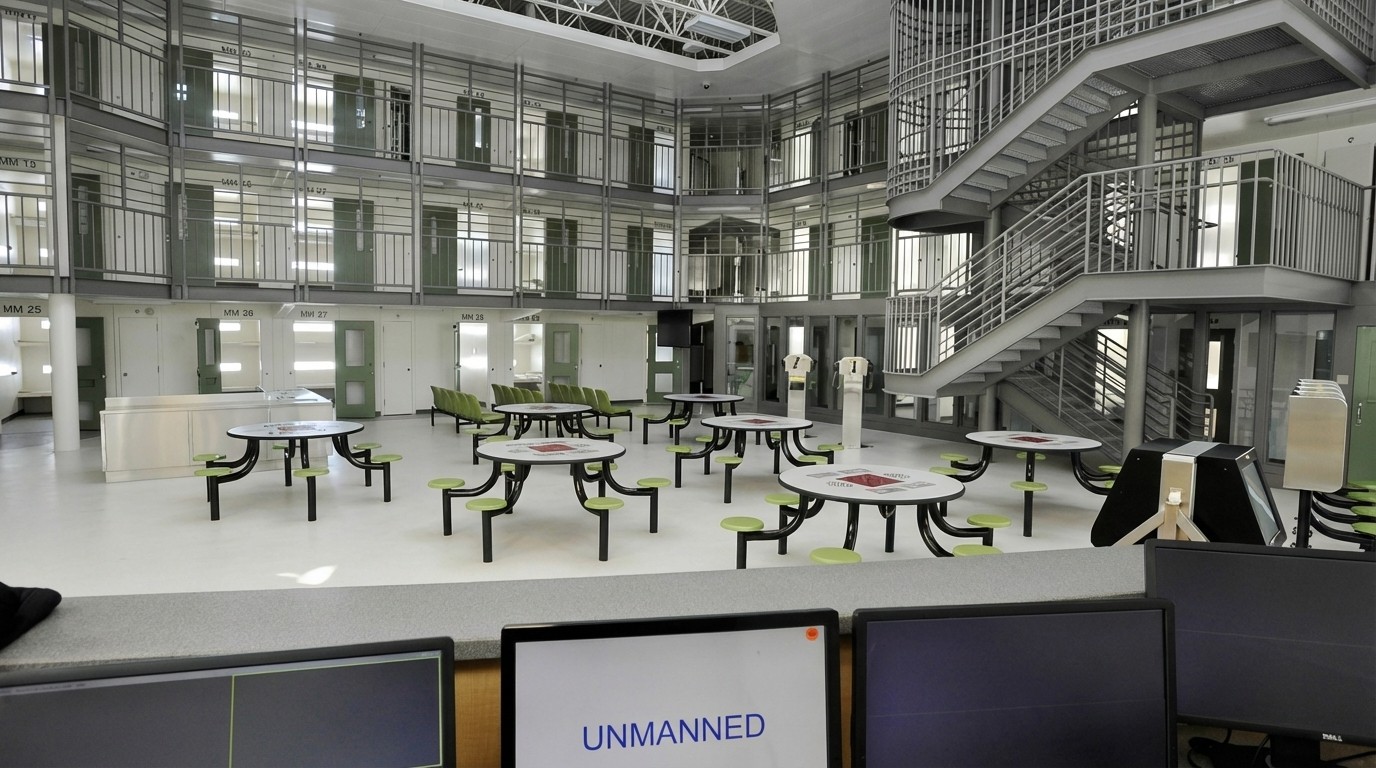
Over the following years, Aubee was housed at multiple federal men's institutions, eventually settling at Mission Institution in British Columbia — a medium-security facility for male federal inmates. He reported experiencing taunts, threats, and physical violence from other inmates across his nearly two decades of incarceration in men's facilities. He reported being threatened with being thrown over a balcony, set on fire, and stabbed to death.
To navigate this environment, Aubee developed a role that provided some protection: he became a prisoners' legal rights advocate within Mission Institution, helping other inmates with parole applications and institutional grievances. The role gave him value within the institution and some buffer from the hostility he reported experiencing as a transgender inmate in a men's facility.
Aubee spent at least ten years actively seeking a transfer to a women's federal institution before one became legally available without surgical requirements.
The Policy Change — January 2017
Trudeau's Town Hall
The policy change that enabled Aubee's transfer did not emerge from a careful review of corrections law, a parliamentary committee study, or a formal consultation with incarcerated women's advocates. It emerged from a single unscripted exchange at a town hall meeting.
On January 12, 2017, Prime Minister Justin Trudeau held a town hall in Kingston, Ontario. A member of the audience asked about the rights of transgender prisoners. Trudeau's response, as reported by CBC News, was candid: he had never thought about the issue before. He then committed, on the spot, to addressing it.
The following day — January 13, 2017 — CBC News reported that CSC had changed its policy. Interim Policy Bulletin 584 was issued, abandoning the requirement for surgical transition as a prerequisite for cross-sex placement and replacing it with a self-declaration standard.
The speed of the change is documented and significant. A policy that had governed the placement of transgender federal inmates for years — requiring surgical evidence of transition before cross-sex institutional placement was available — was reversed within twenty-four hours of a prime ministerial promise made without any apparent prior consideration.
The women incarcerated in Canada's federal women's institutions were not consulted before the change. No risk assessment of the implications for female inmates was published. No analysis of how the change interacted with Canada's international obligations under the Bangkok Rules, the ICCPR, or CEDAW was conducted or released.
The policy simply changed. Overnight.
What Interim Policy Bulletin 584 Created
IPB 584 established that male federal inmates who identified as women could request assessment for transfer to a women's institution, and that the assessment would be conducted without requiring surgical or hormonal transition as a threshold criterion. Self-declaration of gender identity was made the operative standard.
The bulletin created a process — not an automatic right to transfer. Individual cases would be assessed. Safety considerations would be weighed. But the presumption embedded in the policy was in favour of accommodation, and the standard for refusal was high: documented safety concerns that could not be resolved through other means.
For Aubee, who had been seeking a transfer for over a decade and who had documented experience of harassment and violence in men's institutions, the new policy provided the pathway he had been unable to access under the previous framework. He applied immediately.
The Transfer — July 2017
The Application and Approval
After IPB 584 was issued in January 2017, Aubee applied for transfer to a women's federal institution. The application was reviewed by CSC under the new framework. In July 2017 — approximately six months after the policy change — CSC approved the transfer.
The approval was announced publicly, described by CSC as the first federal transfer of a transgender inmate based on gender identity rather than physical anatomy. The West Coast Prison Justice Society — a BC-based legal advocacy organization that had supported Aubee's application — described the approval as "a really big deal."
Jennifer Metcalfe, a lawyer at the West Coast Prison Justice Society, told media: "We're just really happy to finally see it happening federally." She noted that similar policies had already been in place in Ontario and British Columbia at the provincial level, and that Aubee's transfer represented the federal system catching up to what some provinces had already implemented.
Fraser Valley Institution for Women
Aubee was transferred to Fraser Valley Institution for Women in Abbotsford, British Columbia — a federal women's prison approximately 70 kilometres east of Vancouver. Fraser Valley is a minimum-to-medium security facility housing female federal inmates from British Columbia and the Yukon. Like Grand Valley Institution for Women in Ontario, Fraser Valley operates a Mother-Child Program — allowing young children to reside with their incarcerated mothers in designated residential units.
Aubee was, at the time of transfer, still not post-operative. He had stated in media interviews that he planned to have sexual reassignment surgery eventually but was seeking the transfer in advance of that procedure. The transfer was approved without that surgical step having occurred.
The female inmates who would now share an institution with Aubee — a man convicted of premeditated contract killing, serving a life sentence — were not publicly consulted about the transfer, in keeping with CSC's standard practice of citing privacy protections to avoid disclosing information about individual inmates.
Aubee's Response
In media interviews following the approval, Aubee described the transfer as "incredibly huge." He stated his desire to become a resource for other transgender inmates seeking to pursue the same pathway.
"Despite all the stigma, the discrimination, the harassment, the abuse, the sexual abuse, I believe it was a worthwhile journey because I can stand tall and proud today and say, I'm a woman and I'm going to be recognized as a woman and I'm going to live in a woman's prison," Aubee told CBC News.
He expressed gratitude to Prime Minister Trudeau for making what he called the "proper and pro-acting thing" by addressing transgender rights in the corrections system.
Why This Case Is the Foundational Entry in This Database
The Precedent
Every other entry in this database — every transfer, every assault, every placement decision documented here — flows from the legal and administrative precedent that Aubee's case established.
Before July 2017, no federal male inmate had been transferred to a women's prison based on gender identity alone. Surgical transition had been required. That requirement was a meaningful, if imperfect, safeguard: not because surgery changes the risk profile of an offender in any fundamental way, but because it represented a significant threshold that filtered opportunistic self-identification.
After July 2017, there was no threshold. Self-declaration was sufficient to trigger the assessment process. And the assessment process, as documented across the other entries in this database, has repeatedly concluded that male offenders with histories of violence against women — including rape, child sexual assault, and murder — can be safely accommodated in women's federal institutions.
The Aubee transfer did not cause all of the subsequent transfers. CSC's policy framework caused them. But Aubee's case was the proof of concept — the demonstration that the new policy would be applied, that the approval mechanism worked, and that the pathway was real and available.
The Speed of the Policy Change
The speed with which IPB 584 was adopted — overnight, in response to an unscripted prime ministerial promise — is itself a significant feature of this case and its legacy. Policy changes affecting the safety of incarcerated women should not be made in twenty-four hours. They should involve consultation with incarcerated women, with women's advocacy organizations, with corrections professionals, and with the legal and human rights frameworks Canada is bound by.
None of that happened. The policy changed in a day. The women in Canada's federal women's prisons had no voice in that change. They woke up on January 13, 2017, in an institution whose sex-based admissions policy had been fundamentally altered while they slept.
Aubee was transferred six months later. The door opened that day has not been closed since.
The Media Framing
The CBC's coverage of Aubee's transfer — which broke the news and provided the most detailed reporting — is worth noting as a document of how the issue was framed at the time. The coverage presented Aubee as a sympathetic figure overcoming years of abuse and discrimination. It quoted advocacy organizations enthusiastically. It did not quote any female inmate at Fraser Valley about how she felt about the transfer. It did not quote any women's rights organization with concerns about the policy change.
The word "murder" appeared in the coverage — Aubee's conviction for first-degree murder was noted. But the framing was entirely one of a victory for transgender rights. The women who would share an institution with a convicted murderer serving a life sentence were not part of the story.
That framing — in which the rights and safety of incarcerated women are absent from coverage of policy changes that directly affect them — has characterized much of the mainstream Canadian media coverage of this issue since 2017. This database exists, in part, because that absence needs to be named and corrected.
Conclusion
Jean-Paul Aubee killed someone under contract. He was convicted of first-degree murder. He received a life sentence. He identified as a woman. He was transferred to a women's federal prison.
That sequence — and the speed with which it became possible — is the foundation of Canada's current crisis in women's federal corrections. Not because Aubee represents the worst outcome this database documents, but because he represents the first. The case that proved the pathway worked. The transfer that told every subsequent applicant: the door is open.
Prime Minister Trudeau promised it at a town hall. CSC implemented it the next day. The women at Fraser Valley Institution for Women — who had committed no act that gave them a voice in this decision — lived with the consequences.
That is how Canada's first federal transgender prison transfer happened. And that is why, seven years later, this database exists to document what followed.
Timeline
2003: Convicted of first-degree murder in connection with a street-gang contract killing in British Columbia; sentenced to life in federal prison with no eligibility for parole for 25 years
2003 onward: Began identifying as transgender; placed in segregation for six months at Prince Albert Institution, Saskatchewan after disclosing transgender identity to officials
2003–2017: Spent nearly two decades in men's federal institutions; reportedly subjected to taunts, threats, and physical abuse; worked as a prisoners' legal rights advocate, assisting other inmates with parole bids and grievances
2007 onward: BC became the second province (after Ontario) to permit prison placement based on gender identity; Aubee spent at least ten years attempting to obtain a federal transfer
January 12, 2017: Prime Minister Justin Trudeau, asked about transgender prisoners at a town hall in Kingston, Ontario, stated he would address the issue — despite admitting he had "never thought" about it before
January 13, 2017: CSC abruptly reversed its existing policy overnight; issued Interim Policy Bulletin 584 allowing males to be transferred to women's federal institutions based on self-declared gender identity, without surgical requirement
April 2017: CBC News reports Aubee has applied for transfer to a women's prison under the new policy; Aubee is still housed at Mission Institution, BC; has not undergone sexual reassignment surgery
July 2017: CSC approves Aubee's transfer request; Aubee transferred to Fraser Valley Institution for Women, Abbotsford, BC — Canada's first federal transgender inmate transferred based on gender identity rather than physical anatomy
July 2017: West Coast Prison Justice Society describes the transfer as "a really big deal"; advocacy organizations celebrate; women's rights groups raise alarm
Ongoing: Aubee serving life sentence at Fraser Valley Institution for Women; has expressed desire to help other transgender inmates pursue transfers through the same pathway he pioneered
References
CBC News (July 21, 2017). "In historic 1st, transgender inmate wins transfer to women's prison." https://www.cbc.ca/news/politics/fallon-aubee-transgender-inmate-1.4215594
CBC News (April 23, 2017). "Transgender inmate hopes to make history with transfer to women's prison." https://www.cbc.ca/news/politics/transgender-prison-policy-trudeau-1.4075500
Global News (July 22, 2017). "B.C. transgender inmate wins right to change prisons." https://globalnews.ca/news/3617022/b-c-transgender-inmate-wins-right-to-change-prisons/
Feminist Current (April 24, 2017). "What's Current: Trans-identified male has applied to transfer to a women's prison under Trudeau's new policy." https://www.feministcurrent.com/2017/04/24/whats-current-trans-identified-male-applied-transfer-womens-prison-trudeaus-new-policy/
Christian Post (July 23, 2017). "Canadian Man Convicted of Murder Wins Right to Spend Life in Women's Prison as Transgender." https://www.christianpost.com/news/canadian-man-convicted-murder-right-womens-prison-transgender-192933
Murphy, Meghan (October 2019). "Male-Bodied Rapists Are Being Imprisoned With Women. Why Do so Few People Care?" Quillette. https://quillette.com/2019/10/12/male-bodied-rapists-are-being-imprisoned-with-women-why-do-so-few-people-care/
Correctional Service Canada, Interim Policy Bulletin 584 (issued January 2017).
Correctional Service Canada, Commissioner's Directive 100: Gender Diverse Offenders (in effect May 9, 2022): https://www.canada.ca/en/correctional-service/corporate/acts-regulations-policy/commissioners-directives/100.html
Corrections and Conditional Release Act, SC 1992, c 20: https://laws-lois.justice.gc.ca/eng/acts/C-44.6/
Canadian Women's Sex-Based Rights (caWsbar): https://cawsbar.ca/
text
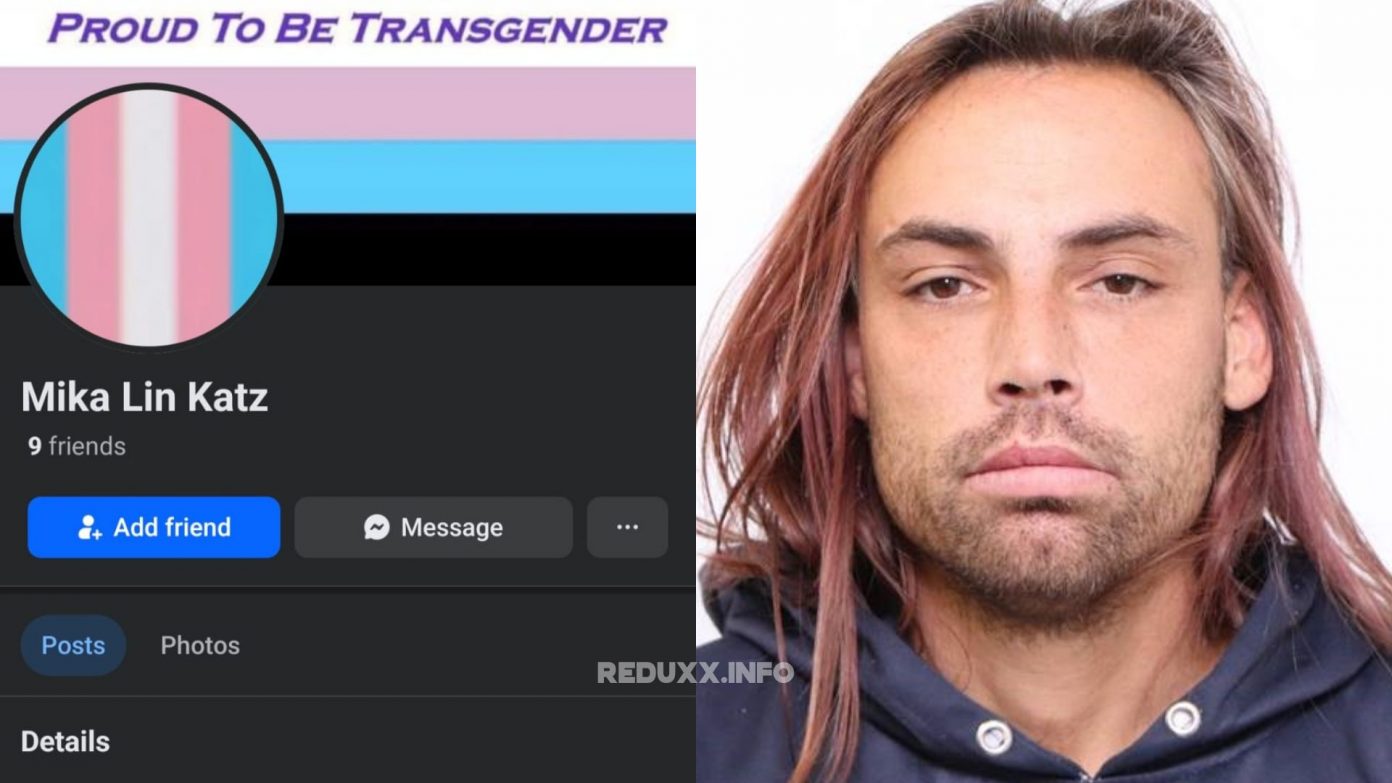
Mika Lin Katz: The Trans-Identified Male Who Sexually Assaulted 4 Women at an Edmonton Women's Shelter and Was Released Before Being Arrested Again
Mika Lin Katz, a thirty-seven-year-old trans-identified male, sexually assaulted at least four women at an Edmonton women's shelter in August 2024, was released after the first two complainants came forward, and was re-arrested in January 2025 after two additional victims reported assaults. The Edmonton Police Service publicly released his photograph and asked whether further victims existed, suggesting the four known charges may not represent the full scope of his offending.
text
John Boulachanis: The Murderer Who Fled Justice for Thirteen Years, Then Sued the Federal Government to Enter a Women's Prison — and Won
John Boulachanis murdered his criminal associate Robert Tanguay in 1997 in Rigaud, Quebec — killing him over suspicions he was a police informant, then burying the body in a sandpit where it remained hidden for nearly two decades — before fleeing Canada as a fugitive for thirteen years using false identities. After being convicted of first-degree murder in 2016 and identifying as transgender in 2018, Boulachanis sued the federal government for a transfer to a women's prison, won a court ruling declaring denial to be gender discrimination, and was transferred to a women's federal institution in early 2021 following taxpayer-funded gender-affirming surgery.