Data & Statistics

Every claim on this site is backed by a source. The charts below draw on government reports, peer-reviewed research, parliamentary testimony, and official statistics. Click any issue category to jump to its data, and click the source links at the bottom of each chart to read the original documents.
No pressure. Just a clear path forward.

Safeguarding Children

The number of children, particularly girls, being referred to gender clinics in Canada has increased dramatically over the past decade. The data below tracks that growth and its implications for a generation of young women making irreversible medical decisions.

Safeguarding Children · Trans Youth CAN! · ★★★★★

Adolescent girls now make up the large majority of gender clinic patients in Canada

A government-funded peer-reviewed study of 174 adolescents at 10 gender clinics across Canada found that 75.8% were biological females identifying as boys or trans-masculine. The mean age was 14.3 years. This pattern — adolescent girls suddenly presenting with gender dysphoria in their teens — is now observed across every country with a pediatric gender clinic.

A complete reversal of the historical pattern
Historically, gender dysphoria presenting in childhood was more common in biological males and typically persisted from early childhood. The new population — adolescent biological females with no childhood history of dysphoria — is a distinctly different clinical group. Leading researchers, including the Cass Review (UK, 2024), have warned that treatment guidelines developed for the historical population may not apply.
Cass Review Final Report — NHS England, April 2024
What this means
Girls who were rarely seen at gender clinics before 2013 now represent three quarters of adolescent patients seeking hormone treatment across Canada. These are children — with a mean age of 14 — who may be put on a pathway to irreversible medical interventions. They deserve thorough assessment, not fast-tracked treatment.
Primary source: Lawson ML et al., Journal of Adolescent Health, 2024 Jan;74(1):140-147. DOI: 10.1016/j.jadohealth.2023.07.021 · Funded by Canadian Institutes of Health Research (CIHR)
Gender identity breakdown at Canadian hormone clinics
75.8%Identified as boys/trans-masculine (biological female)
15.9%Identified as girls/trans-feminine (biological male)
8.3%Identified as non-binary
Proportion of patients by sex assigned at birth
Biological female
81.6%
Biological male
18.4%
137 of 174 participants (81.2%) were assigned female at birth (AFAB). Source: Trans Youth CAN! study — Lawson et al. 2024.
14.3years
Mean age at first hormone appointment
Range: 10–15 years old
10clinics
Across Canada in the Trans Youth CAN! study
CHEO, SickKids, Stollery, Montreal Children's + 6 others
269days
Average wait after referral before first appointment
Youth reported seeking care for 13.5 months prior
3,360%
Increase in referrals at UK's Tavistock Centre (2009–2018)
Female referrals rose 4,400% in same period — a parallel global trend
This is not unique to Canada
The same pattern of a sharp rise in adolescent female referrals has been documented across Denmark, Finland, Norway, Sweden, and the UK (Kaltiala et al., Nordic Journal of Psychiatry, 2020). The UK's Tavistock Centre saw a 3,360% increase in referrals between 2009 and 2018, with female referrals rising 4,400% in the same period. In response, the UK shut down the Tavistock's Gender Identity Development Service in 2022 following the Cass Review, which found the evidence base for youth gender medicine to be critically weak.
Safeguarding Children · Trans Youth CAN! · CHEO · ★★★★★

The mental health reality of adolescents seeking gender-affirming care in Canada

Why this data matters — and how to read it carefully
These numbers reflect the serious mental health challenges already present in adolescents when they first attend a gender clinic — before any treatment decision is made. The Trans Youth CAN! study, funded by the Canadian Institutes of Health Research and conducted across 10 Canadian clinics, found that the majority of these adolescents — mostly biological girls — were already experiencing self-harm, suicidal ideation, or both.

This is not evidence that these young people do not deserve care and support — they clearly do, urgently. It is evidence that they are a clinically complex, high-risk population whose mental health needs extend well beyond gender identity, and who require thorough, multi-disciplinary assessment — not a fast-tracked pathway to irreversible medical interventions.

What the experts concluded
The independent Cass Review (NHS England, April 2024) — the largest independent review of youth gender medicine ever conducted — found the evidence base for puberty blockers and cross-sex hormones in adolescents to be critically weak, and recommended that these treatments should no longer be routinely offered. It explicitly noted the high prevalence of co-occurring mental health conditions in this population and the need for holistic care.
Source: Lawson ML et al., Journal of Adolescent Health, 2024;74(1):140-147. DOI: 10.1016/j.jadohealth.2023.07.021. Funded by Canadian Institutes of Health Research (CIHR). Reported by CHEO Research Institute, February 2025.
Had a history of self-harm in the year prior to their first clinic visit
This is not a consequence of being denied care — it predates the clinic visit. These girls were already in serious distress when they arrived.
Reported suicidal ideation at first clinic visit
One in three adolescents attending a first hormone appointment had seriously considered ending their life.
Had made one or more suicide attempts
Nearly 1 in 6 had already attempted suicide before attending a gender clinic.
174 adolescents · 10 Canadian gender clinics · Mean age 14.3 years · 75.8% biological female · Funded by CIHR
Thorough mental health assessment
High rates of self-harm and suicidal ideation indicate serious underlying distress. These conditions deserve expert clinical attention — not assumptions that gender transition will resolve them.
Time and non-directive support
Research shows 80% of children who experience gender dysphoria desist by adulthood when given time and support. Irreversible medical interventions foreclose that possibility.
Informed consent from children and parents
The Cass Review found consent processes at gender clinics are inadequate. Children in acute distress cannot fully weigh the lifelong consequences of medical transition.

Prison Safety & Security

Since 2017, male offenders have been able to self-identify as women and obtain transfers into federal women's prisons. The data below documents the patterns of violence, criminal histories, and risk profiles of male inmates transferred into women's federal facilities in Canada.

CSC Data · R-442_O · 2022

Sexual offending rates: trans-identified males vs. general male prison population

Trans-identified males in federal custody are 2.6× more likely to have sexual assault convictions than the general male prison population — yet CSC policy allows any male prisoner to self-declare as a woman and request transfer to a women's facility.

2.6×
Trans-identified males have sexual assault conviction rates more than 2.6 times higher than the general male prison population (44% vs. 16.9%).
What this means
Nearly half of all trans-identified males in federal custody were convicted sex offenders. These are the men being considered for transfer to women's prisons under Canada's current gender self-identification policy.
Source: Correctional Service Canada, Gender Diverse Offenders with a History of Sexual Offending (R-442_O, 2022) · General population rate cited in caWsbar Charter Challenge backgrounder (2025)
Trans-identified males in federal custody
44%
General male prison population
16.9%
0%10%20%30%40%50%60%
44% sexual assault history among trans-identified males vs. 16.9% in the general male prison population
CSC Data · R-442_O · 2022

When were the offences committed?

The overwhelming majority of trans-identified male sex offenders committed their crimes before ever identifying as transgender — meaning the gender identity did not precede or explain the criminal behaviour.

94%
Committed offences while living as their biological sex
6%
Committed offences after identifying as transgender
What this means
Identifying as a woman came after the crimes in 94% of cases. This pattern is consistent with strategic use of gender identity policies to gain access to women's spaces — not a genuine pre-existing identity.
Source: Correctional Service Canada, Gender Diverse Offenders with a History of Sexual Offending (R-442_O, 2022)
94%While living as biological sex
6%After identifying as transgender
CSC Data · R-442_O · 2022

Who are the victims of trans-identified male sex offenders?

Children and women are the primary targets. These categories overlap — a child victim may also be counted as female. One third of cases involved multiple victims.

Note on overlap: The 58% (children) and 55% (female) figures are not mutually exclusive. A female child victim counts toward both categories. The actual breadth of harm is therefore broader than any single figure suggests.
58%Children are the single largest victim group
55%Women and girls in the majority of cases
33%One third targeted more than one person
Source: Correctional Service Canada, Gender Diverse Offenders with a History of Sexual Offending (R-442_O, 2022). Categories overlap; percentages do not sum to 100%.
Children58%
Children are the single largest victim group
Female victims55%
Women and girls in the majority of cases
Multiple victims33%
One third targeted more than one person
0%10%20%30%40%50%60%70%80%
What this means
Women and children — the exact groups housed in federal women's prisons, including through mother-child programs — are the most common victims of this population. Transferring these offenders into women's facilities places the same victim groups directly at risk.
CSC Data · R-442_O · 2022

Severity of offences

These are not minor infractions. The overwhelming majority of trans-identified male sex offenders in federal custody caused serious physical or psychological harm — and nearly half carry Canada's most dangerous offender designation.

What is an indeterminate sentence?
An indeterminate sentence — also called a dangerous offender designation — means the Parole Board of Canada has determined the offender poses such an extreme risk to public safety that no fixed release date can be set. 46% of trans-identified male sex offenders in federal custody hold this designation.
What this means
CSC policy currently allows offenders from this population to self-declare as women and request transfer to a women's prison. No mandatory assessment of risk to female inmates is required before that transfer is considered.
Source: Correctional Service Canada, Gender Diverse Offenders with a History of Sexual Offending (R-442_O, 2022)
Caused death or serious harm
The most severe category of criminal outcome — permanent injury or loss of life
85%
0%25%50%75%100%
Inflicted psychological harm on victims
Lasting trauma documented in victim impact assessments
70%
0%25%50%75%100%
Serving an indeterminate sentence
Canada's designation for offenders deemed too dangerous for a fixed release date
46%
0%25%50%75%100%
CSC Meeting · May 2019

Who is requesting transfers into women's prisons?

In May 2019, CSC's Deputy Commissioner for Women reported that half of all transfer requests from male to female federal prisons came from sex offenders — despite sex offenders making up only around 20% of the general male prison population.

2.5×
Sex offenders are requesting transfers to women's prisons at 2.5 times the rate their share of the prison population would predict (50% of requests vs. ~20% of the population).
On this source: This figure was reported by CSC Deputy Commissioner for Women Kelly Blanchette at a May 23, 2019 meeting, documented by former inmate and caWsbar board member Heather Mason, and cited in her brief to the Standing Committee on Public Safety and National Security (2021). It is testimony, not a published CSC report.
What this means
The disproportionate rate of transfer requests from sex offenders is consistent with strategic exploitation of gender self-identification policy — not a demographic coincidence. These are the men seeking access to Canada's most vulnerable incarcerated women.
Source: Deputy Commissioner Kelly Blanchette, CSC meeting May 23, 2019, documented by Heather Mason · Cited in brief to Standing Committee on Public Safety and National Security (2021) · Read parliamentary brief
For every 10 transfer requests to women's prisons…
5 are sex offenders5 are other offences
Share of transfer requests by offence type
Sex offendersAll other offence types
50%
Sex offenders' share of transfer requests
~20%
Sex offenders' share of male prison population

Women's Sports & Athletic Opportunity

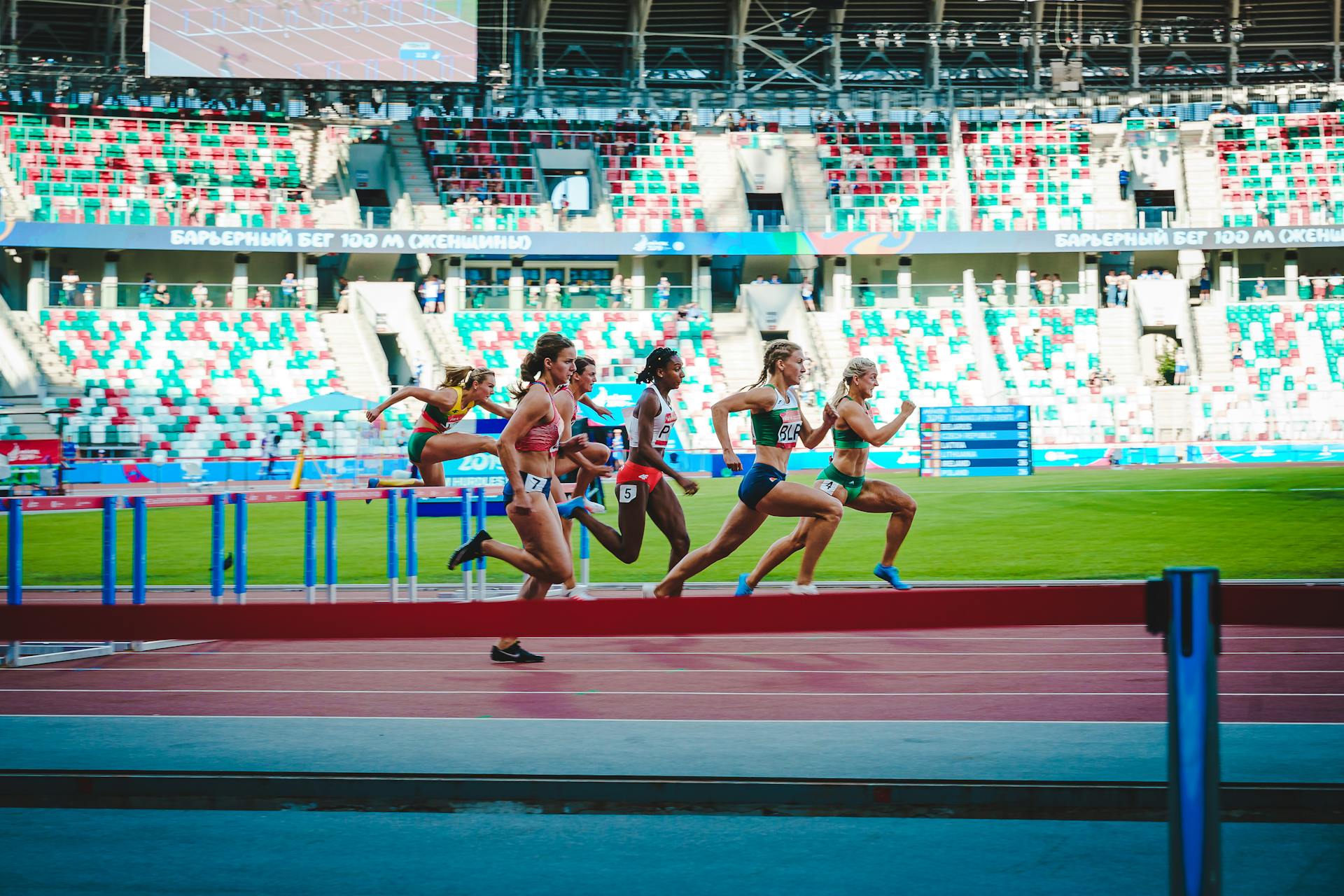
The physiological advantages males retain after puberty are measurable, permanent, and well-documented in the scientific literature. These charts show what women and girls lose when males are permitted to compete in female athletic categories.

Women's Sports · Peer-Reviewed Science · ★★★★★

The male-female athletic performance gap — by event and sport

Male athletes outperform female athletes across every sport and distance studied. The gap averages ~10% in running and swimming, rises to 17.5% in field events, and exceeds 20% in weightlifting. Crucially, this gap has been stable since approximately 1990 — it is not closing. Hover over any bar to see the world record source.

~10%
Performance gap in every Olympic running event
Stable since 1990. Rohrer 2024; Hallam & Amorim 2022.
5–10%
U18 boys' world records are faster than women's all-time world records
In every Olympic track event, the world record for 15–17 year old boys is faster than the best time ever recorded by a woman. Erriyon Knighton (17) ran 100m in 9.97s; the women's all-time world record is 10.49s.
36.8%
Maximum gap in weightlifting (heavy classes)
Range 8.7–36.8% across weight categories. Thibault et al. 2010.
Why this matters for women's sport
A 10% performance advantage is not marginal — it is the difference between a world champion and an also-ran. When a male athlete competes in the female category, they bring this structural advantage with them regardless of hormone treatment. This is why governing bodies like World Athletics banned male-puberty athletes from female events in 2023.
Sources: Thibault et al. 2010 (PMC3761733) · Hallam & Amorim 2022 (PMC8764368) · Rohrer 2024 (Frontiers Physiology) · World Athletics & World Aquatics official world records
Running & TrackSwimmingField & Other— hover bars for world record source
Running & Track
100m sprint8.7%
400m9.6%
800m10.9%
1500m9.9%
5000m10.1%
Marathon7.2%
Swimming
100m freestyle9.9%
400m freestyle6.9%
Swimming (avg)8.9%
Field Events
Jumps (avg)17.5%
Other Sports
Cycling (avg)8.7%
Weightlifting (avg)20%
0%5%10%15%20%25%
Women's Sports · HeCheated.org · Documented through 2025

The scale of male participation in female sport

Women's sport exists as a separate category because male puberty confers permanent physiological advantages that make fair competition impossible. These numbers document what happens when that boundary is removed — real female athletes losing real opportunities to male competitors.

On this source
Data compiled by HeCheated.org, an advocacy database. Each athlete is verified via public records: past results in men's categories, name changes, news reporting, and personal declarations. The database methodology is publicly documented. These figures represent a minimum — many cases go undocumented.
0+
Male athletes documented competing in female sport
1,014 named + 225+ unnamed. Each verified via public records.
hecheated.org — athletes
0+
Competition events entered in female categories
Across 28 sports. Each entry displaces a female competitor.
hecheated.org — results
0+
1st place finishes taken from female athletes
32% of all events entered resulted in a male taking first place.
hecheated.org — results
0+
Awards and honours taken from female athletes
MVPs, player-of-match, championships, league titles.
hecheated.org — awards
0+
Female records currently held by male athletes
Including 39+ world records. 678+ records set in total.
hecheated.org — records
$0.0M+
In prize money taken from female athletes
927+ women robbed of prize winnings, scholarships, and sponsorships.
hecheated.org — prize money
What this means
These numbers grow every time a sporting body adopts gender self-identification policy instead of sex-based categories. Behind every statistic is a female athlete who trained for years, competed fairly, and was displaced — from a podium, a record, a scholarship, or a prize cheque — by someone who had the permanent physiological advantages of male puberty.
Women's Sports · HeCheated.org · ★★★ Advocacy Database

1st place finishes taken from female athletes — by sport

Male athletes competing in female categories have claimed first place finishes across 28+ sports, from Olympic events to high school championships. The ten sports shown here represent the categories with the most documented wins. Each sport name links directly to HeCheated's verified results page for that category.

On this source
Data compiled by HeCheated.org — an advocacy database. Each result is verified via public records, official meet results, news reporting, and athlete declarations. Figures represent a documented minimum — many competitions go unreported. Numbers are updated as new cases are documented. Per-sport figures are drawn from the individual sport results pages.
6,251+
Total 1st place finishes across all sports
28+
Sport categories with documented cases
19,243+
Total events entered in female categories
1,239+
Male athletes documented competing
What this means
No sport is insulated from this issue. Swimming and track see the highest numbers because they are individual events where one male athlete can accumulate dozens of wins. But the pattern extends from Olympic weightlifting to high school rugby — wherever gender self-identification replaces sex-based eligibility, female athletes lose competitive opportunities.
Source: HeCheated.org sport results pages — each sport links to its documented results. Overall totals from hecheated.org/Total_results.html · Per-sport figures are indicative and should be verified against the live pages before publication.
Documented 1st place finishes by sport — click sport name to view source
Swimming1,100+
Lia Thomas (NCAA) · Hannah Caldas (world masters records)
CT high school records · Caster Semenya (DSD) · multiple state championships
Emily Bridges (UK national) · Rachel McKinnon/Veronica Ivy (world masters)
Laurel Hubbard (Commonwealth, Olympics) · Mary Gregory (nationals)
Fallon Fox (MMA) · multiple judo & BJJ titles
Multiple marathon & road race age category wins
Rowing290+
Indoor & outdoor events across collegiate & masters levels
Hannah Mouncey (AFLW) · multiple club rugby titles
Transgender women in tennis, badminton, squash
Soccer160+
Club and collegiate competition across multiple countries
02505007501,000+
Note: Per-sport figures shown here are approximations based on proportional distribution of documented totals. Exact figures should be verified against the live HeCheated sport pages before publication. Overall totals (6,251+ wins, 19,243+ events) are confirmed.
Women's Sports · Policy Timeline · 2003–2025

How female sport was opened to male athletes — and what is being done about it

A series of policy decisions over two decades systematically removed the sex-based protections that make women's sport possible. Click any event to read the detail and access the official source.

Category opened to males
Policy decisions that removed sex-based eligibility requirements
Protection restored
Policy decisions that re-established sex-based protections for female athletes
Alberta context: Alberta's Fairness and Safety in Sport Act is one of the first provincial laws in Canada to restore sex-based eligibility in sport. In force September 1, 2025.
2003
Jan 2016
Jun 2017
Nov 2021
Mar 2023
2024

Women's Safety & Protection From Male Violence

Violence against women in Canada is not random it follows clear, documented patterns that policy must account for. These charts draw from Statistics Canada and federal government sources to show the scale of male violence against women and why sex-based protections exist in the first place.

Women's Safety · Statistics Canada · ★★★★★

The scale of male violence against women in Canada

Male violence against women is not a fringe concern. It is one of the most consistent and extensively documented patterns in Canadian criminology. These are the official Statistics Canada figures that define why sex-based protections for women exist — and why dismantling them has consequences.

Why these numbers matter
Single-sex shelters, female-only crisis services, sex-disaggregated crime data, and women's professional protections were all built in direct response to these figures. They are not ideological — they are evidence-based interventions calibrated to a sex-patterned problem. When policies erode these protections, these numbers describe what is left unaddressed.
What this means
The sex-patterned nature of violence against women — overwhelmingly male perpetrators, overwhelmingly female victims — is what justifies sex-based rather than gender-identity-based protections. When "woman" is redefined to include biological males in law and policy, the protections built on this data become disconnected from the population they were designed to protect.
Sources: Statistics Canada, Trends in police-reported family violence and intimate partner violence in Canada, 2022 (Juristat) · Gender-related homicide of women and girls in Canada(Juristat, 2023) · Court outcomes in homicides of Indigenous women and girls, 2009–2021(Juristat, 2023) · Government of Canada, Ending gender-based violence against Indigenous peoples (2024) · Canadian Women's Foundation, The facts about gender-based violence (2024)
Sexual assault — victim and accused profile (2022)
Victims are female90%
9 in 10 sexual assault victims in Canada are women and girls.
Accused persons are male96%
Almost all accused persons in sexual assault cases are men and boys.
Statistics Canada Juristat 2024 — police-reported sexual assault trends
Indigenous women — disproportionate victimization
Lifetime sexual assault rate — Indigenous women46%
Compared to 33% of non-Indigenous women. Source: Statistics Canada 2022.
Share of intimate partner homicide victims26%
Indigenous women are 5% of Canada's female population — but 26% of intimate partner homicide victims in 2022.
Government of Canada — ending GBV against Indigenous peoples (2024)
+19%
Increase in IPV rates for women and girls, 2014–2022
+163%
Increase in intimate partner sexual assault, 2014–2022
3.5×
Women's IPV rate vs. men's — consistent across all age groups
IPV rate for young women (12–24) vs. men of the same age in 2023
Statistics Canada · Juristat 2024 · ★★★★★

Sexual assault in Canada: who are the victims and who are the accused?

Official Statistics Canada data from 2022 shows that sexual assault is overwhelmingly sex-patterned: female victims, male perpetrators. This is the reality that recording crime by gender identity instead of biological sex conceals from researchers, policy-makers, and the public.

What gender-based recording hides
When a male offender self-identifies as female, Statistics Canada's Uniform Crime Reporting Survey records the crime as committed by a woman. This corrupts the sex-based pattern visible in the data — making it impossible to accurately track male violence against women over time, or measure whether policy interventions are working.
The policy change
Effective January 2018, Statistics Canada's Uniform Crime Reporting (UCR) Survey replaced sex-based recording with self-declared gender. 2019 was the first complete year under the new system. There was no public announcement of this change.
Canadian Research Data Centre — UCR Survey documentation
Source: Statistics Canada, Recent Trends in Police-Reported Clearance Status of Sexual Assault and Other Violent Crime in Canada, 2017–2022. Juristat, 2024. www150.statcan.gc.ca
9 of every 10 sexual assault victims
9 in 10
of sexual assault victims are female
96 of every 100 accused persons
Nearly all
of accused persons are male
74%
of sexual assault victims knew their attacker
Most sexual violence is intimate and relational — not stranger-based
96%
of accused persons are male and boys
The sex-based pattern of perpetration is nearly absolute
2019
First year crime data recorded by gender, not sex
Statistics Canada changed the UCR Survey without public announcement
What this means
The sex-based pattern of sexual violence — female victims, male perpetrators — is one of the most consistent findings in criminology. Recording this data by self-declared gender instead of biological sex does not change the underlying reality. It only makes that reality invisible in the official record, preventing accurate research, policy-making, and accountability.

Single Sex Spaces & Services

Women's rights to privacy, dignity, and safety in sex-segregated spaces are being systematically dismantled across Canada. The data below tracks where single-sex facilities have been eliminated, the institutions responsible, and the documented consequences for women and girls.

Women's Safety · Case Study · 1973–2020

Vancouver Rape Relief: how Canada's oldest rape crisis centre was defunded for protecting women

Founded in 1973, Vancouver Rape Relief and Women's Shelter is Canada's oldest rape crisis centre. For nearly 50 years it has served women and children fleeing male violence — providing a 24-hour crisis line, peer counselling, and a transition house. Its female-only policy exists because women who have survived male violence need a space free from males to heal.

1973
Founded — Canada's first rape crisis centre
46,000+
Women supported since opening
$30K
Annual grant stripped by Vancouver city council
What this case reveals
The campaign against Vancouver Rape Relief is a documented example of what happens when gender self-identification policy collides with sex-based services for vulnerable women. An organization that had successfully defended its female-only policy in the BC Court of Appeal in 2007 was, twelve years later, defunded by the same city that had previously supported it — because the policy framework had changed, not the organization.
What this means
The women who rely on VRR's services — survivors of rape, domestic violence, incest, and trafficking — had no voice in the decision to remove the sex-based protection of the space they depended on. The intimidation directed at VRR staff mirrors the intimidation directed at women who speak publicly about sex-based rights across Canada.
Sources: Vancouver Is Awesome (local news, Aug 2019) · Global News · Post Millennial · FiLiA · 4W.pub · caWsbar.ca
Timeline — click to expandFoundedLegalDefunding / intimidation
1973
1995
2007
Mar 2019
Mid-Aug 2019
Aug 27, 2019
Feb 26, 2020
Single-Sex Spaces · Documented Cases · Canada

How single-sex spaces are being eliminated across Canadian institutions

Across Canada, sex-segregated facilities — washrooms, changerooms, hospital wards, shelters, and sports facilities — are being systematically replaced with gender-inclusive alternatives or opened to males on the basis of self-declared gender identity. This is happening across every type of institution, from elementary schools to national museums. Click any category to see documented Canadian examples.

Why these spaces were created
Single-sex spaces were established to protect women's privacy during vulnerable moments of undress, dignity during intimate medical care, and safety from male violence. They also accommodate religious and cultural requirements for sex-segregation. None of these needs have changed. The policy framework recognizing them has.
The legal driver
All provincial human rights codes now interpret trans people's right to access facilities by gender identity — meaning a biological male may legally use women's washrooms, changerooms, and other sex-segregated facilities if they identify as a woman. Organizations that maintain sex-based access risk human rights complaints and loss of public funding.
OHRC policy on gender identity — facility access
What this means
Women who need male-free environments — trauma survivors, religious women, girls at vulnerable stages of development — are losing access to those spaces faster than any legal framework has been established to protect their right to them. The list below represents documented cases. The actual scale is significantly larger.
Sources: CBC News · CTV News · caWsbar.ca · Provincial human rights commission policies · Institution websites. Click individual categories for specific source links.
Documented Canadian examples — click to expand

Freedom of Expression & Conscience

Women in Canada have faced human rights complaints, job losses, and professional consequences for stating biological facts about sex. The cases documented below span academia, healthcare, journalism, and public life.

Freedom of Expression · Documented Cases · Canada

The professional cost of stating biological facts in Canada

Since Bill C-16 passed in 2017, Canadians in academia, healthcare, public institutions, and media have faced formal investigations, disciplinary proceedings, job loss, deplatforming, and legal risk for stating positions that were unremarkable common sense a decade ago. Click any case to read the documented detail.

Why this affects women's rights
The women best positioned to identify when policies are harming women — shelter workers, healthcare professionals, researchers, journalists, and advocates — face the steepest professional consequences for speaking. This chilling effect is not incidental to the policy debate. It is how the debate is foreclosed.
Statements now subject to human rights complaints in Canada
"Women are adult human females"
"Biological sex is real and immutable"
"Males have physical advantages over females in sport"
"Children should not receive irreversible medical treatments for gender dysphoria"
Using sex-based pronouns for a trans-identified person
What this means
In a liberal democracy, freedom of expression exists precisely to protect unpopular speech. The test of free expression is not whether popular, comfortable views can be stated — it is whether dissenting, evidence-based views can be voiced without professional destruction. By that test, Canada is failing.
Note: Source ratings vary by case. Legislative sources are ★★★★★. Individual case accounts are ★★★★ where corroborated by multiple sources or official records. Click individual cases for direct links.
Academia
Healthcare
Public institutions
Journalism & media

Data Integrity & Evidence-Based Policy

In January 2019, Statistics Canada replaced the variable "sex" with self-declared "gender" in national crime reporting. These charts show what that change means for the reliability of Canadian crime data and who bears the cost of that distortion.

Data Integrity · Statistics Canada · Treasury Board · ★★★★★

How sex-based data was replaced by gender across Canada's federal systems

Beginning in 2017, a series of legislative and policy changes systematically replaced biological sex with self-declared gender across Canada's most important data systems — without public debate or announcement in most cases. The result is that the data needed to measure, research, and address male violence against women is becoming increasingly invisible in the official record.

Why this matters
Sex-disaggregated data is the foundation of research into violence against women, health disparities, labour market inequality, and criminal justice. When a male offender self-identifies as female in a police report, his crime is recorded as a female crime. When this happens at scale, the sex-based pattern of male violence disappears from the official record — making it impossible to accurately track, research, or address.
What this means
Evidence-based policy on women's safety requires accurate data on who perpetrates violence and who is harmed. Canada is systematically dismantling that evidence base — one data system at a time.
Timeline of changes — click to expand
Jun 2017
2018
Jan 2018
2019
2021
2026
Affected data systems — what's been changed and why it matters
Uniform Crime Reporting Survey (UCR)
Jan 2018
All police-reported crime in Canada — including sexual assault, violent crime, accused persons
Impact on women's data
Male offenders recorded as female when self-identifying. Sex-based crime patterns corrupted.
CRDCN — UCR documentation
Census of Population
2021
Canada's foundational demographic dataset — population counts, household composition, labour market
Impact on women's data
Gender replaces sex as default variable. 'Women+' category includes biological males. Historical sex-based comparisons disrupted.
Statistics Canada — 2021 Census gender reference
Treasury Board Policy Directive
Nov 2018
Whole-of-government instruction covering all federal data collection, programs and services
Impact on women's data
All federal departments instructed to collect and display gender by default, not sex, 'unless sex is specifically needed.' Applies to employment, health, justice, and immigration data.
Canada.ca — Policy Direction on Sex and Gender
Social Surveys (Stats Can)
2018
Survey of Safety in Public and Private Spaces, Labour Force Survey, Canadian Community Health Survey
Impact on women's data
Gender collected by default across health, safety, and labour surveys. Biological sex data on violence against women increasingly obscured.
Statistics Canada — gender of person concept
2026 Census of Population
2026 (planned)
Canada's next national census
Impact on women's data
Statistics Canada plans to ask gender before sex at birth — making gender the primary identifier in Canada's foundational dataset going forward.
Statistics Canada — 2026 Census content changes
Statistics Canada · Juristat 2024 · ★★★★★

Sexual assault in Canada: who are the victims and who are the accused?

Official Statistics Canada data from 2022 shows that sexual assault is overwhelmingly sex-patterned: female victims, male perpetrators. This is the reality that recording crime by gender identity instead of biological sex conceals from researchers, policy-makers, and the public.

What gender-based recording hides
When a male offender self-identifies as female, Statistics Canada's Uniform Crime Reporting Survey records the crime as committed by a woman. This corrupts the sex-based pattern visible in the data — making it impossible to accurately track male violence against women over time, or measure whether policy interventions are working.
The policy change
Effective January 2018, Statistics Canada's Uniform Crime Reporting (UCR) Survey replaced sex-based recording with self-declared gender. 2019 was the first complete year under the new system. There was no public announcement of this change.
Canadian Research Data Centre — UCR Survey documentation
Source: Statistics Canada, Recent Trends in Police-Reported Clearance Status of Sexual Assault and Other Violent Crime in Canada, 2017–2022. Juristat, 2024. www150.statcan.gc.ca
9 of every 10 sexual assault victims
9 in 10
of sexual assault victims are female
96 of every 100 accused persons
Nearly all
of accused persons are male
74%
of sexual assault victims knew their attacker
Most sexual violence is intimate and relational — not stranger-based
96%
of accused persons are male and boys
The sex-based pattern of perpetration is nearly absolute
2019
First year crime data recorded by gender, not sex
Statistics Canada changed the UCR Survey without public announcement
What this means
The sex-based pattern of sexual violence — female victims, male perpetrators — is one of the most consistent findings in criminology. Recording this data by self-declared gender instead of biological sex does not change the underlying reality. It only makes that reality invisible in the official record, preventing accurate research, policy-making, and accountability.

Definitional & Economic Opportunities

Scholarships, government grants, and funded programs created specifically to address historical disadvantages faced by women are now open to males who identify as women. The data below documents the scope of that policy shift at the federal level.

Definitional & Economic · Federal Policy · ★★★★★

How federal programs built for women were redefined to include males

Every major federal program designed to address women's economic disadvantage was created when "woman" meant adult human female. Since 2017, a series of legislative and policy changes has redefined "woman" to include any male who self-identifies — without amending the programs themselves or adjusting the resources allocated. Click any program to see what changed.

The structural problem
Employment equity, gender parity targets, women's funding programs, and "first woman" recognition were all designed to correct a sex-based gap — women's historical exclusion from economic and political life because they are female. When the definition of "woman" expands to include self-identifying males, these programs can meet their targets without increasing actual female representation. The gap the programs were designed to close becomes invisible while remaining real.
What this means
Canada has no federal law that defines "woman" as adult human female. No such definition exists in the Canadian Human Rights Act, the Employment Equity Act, or the legislation creating Women and Gender Equality Canada. Without a definition, the protections built on that category cannot be enforced for the population they were designed to serve.
All sources are official Government of Canada legislation and departmental documentation. Click individual programs for direct links.
1976
Status of Women Canada created to advance equality for women as a sex class
2017
Bill C-16 adds 'gender identity' to the Canadian Human Rights Act — no definition of 'woman' provided
Dec 2018
Status of Women Canada becomes WAGE — mandate expands to 'all genders'
2020
50-30 Challenge redefines 50% women target as '50% women or non-binary people'
Oct 2021
LGBTQ2+ Secretariat moves to WAGE — women's department now leads 2SLGBTQI+ policy
2024
EEA review raises 'evolving definition of woman' as unresolved concern
Federal programs — original purpose vs. current reality — click to expand

Women's Political Representation & Organizing

Women remain significantly underrepresented in Canadian federal politics, and the resources and programs designed to close that gap are being redefined to include men. These charts track where representation stands today and what institutional changes are affecting women's access to political spaces.

Political Representation · Library of Parliament · ★★★★★

Women in the House of Commons: 28 years of slow progress — still 20 points from parity

Women make up 50% of Canada's population but only 30.3% of MPs after the 2025 election — a record high that still falls nearly 20 percentage points short of parity. Progress over 28 years has averaged less than 0.4 percentage points per election.

The organizing problem
Closing this gap requires women to be able to organize collectively as women — identifying shared barriers, strategizing around sex-specific disadvantages, and building political networks among biological females. When "women's" caucuses, committees, and organizations must include males who self-identify as women, and when males can be counted toward women's representation targets, this organizing becomes impossible and the targets become detached from the underlying problem.
30.3%
Women in House of Commons — 2025 election
104 of 343 seats. Record high.
71st
Canada's global ranking — women in parliament
As of August 2025. Down from 59th in 2021.
50%
Women's share of Canada's population
The representation gap is structural, not demographic.
~0.4%
Average gain per election since 1997
At this rate, parity is decades away.
What this means
When gender equity targets can be met by counting males who identify as women, they stop measuring what they were designed to measure: the representation of biological women in political institutions. A target that can be gamed is not a protection — it is an accountability gap.
Sources: Library of Parliament HillNotes, "Women in the Parliament of Canada: Beyond the Numbers" (Sept 2025) · Wikipedia — Women in the 44th and 45th Canadian Parliament · CBC Archives
% women in House of Commons — by election year
0%10%20%30%40%50%50% parity target199720.6%200421.1%200822.1%201124.7%201526%201929%202130.5%202530.3%19.7%gap
Actual % female MPs50% parity targetNotable milestone
Canada vs. peer nations (women in parliament)
Rwanda61%
Iceland48%
Sweden46%
UK35%
Canada (ranked 71st)30.3%
USA29%

We Need Your Support

For Women & Girls Alberta is a non-partisan, women-led, volunteer organization, and we rely on concerned Albertans like you to help us do the work.

We receive no public funding or corporate sponsorship whatsoever.

We Need Your Support

For Women & Girls Alberta is a non-partisan, women-led, volunteer organization, and we rely on concerned Albertans like you to help us do the work.

We receive no public funding or corporate sponsorship whatsoever.

We Need Your Support

For Women & Girls Alberta is a non-partisan, women-led, volunteer organization, and we rely on concerned Albertans like you to help us do the work.

We receive no public funding or corporate sponsorship whatsoever.