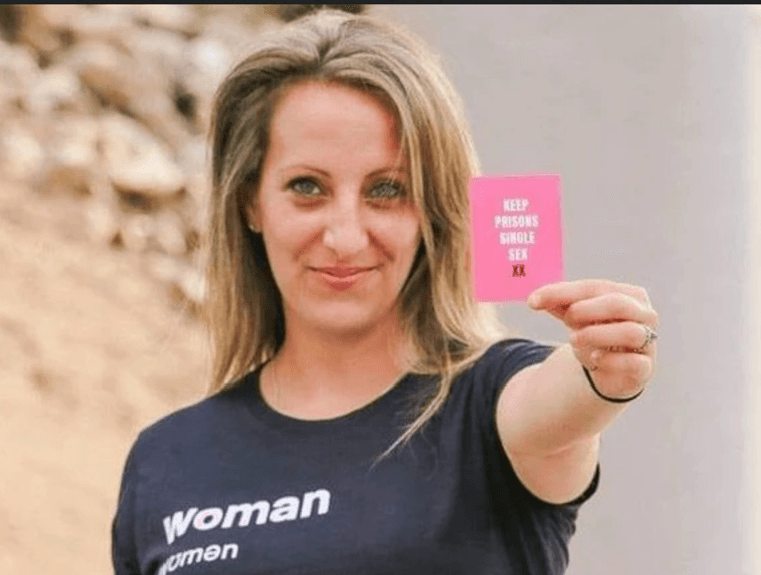
Heather Mason: The Former Prisoner Who Refused to Stay Silent — And What She Found When She Started Asking
GIVEN NAME:
Heather Mason
ALIAS:
N/A
DATE:
2019 (began advocacy); June 22, 2021 (parliamentary brief); September 18, 2021 (national prison protests); January 2026 (Charter challenge affidavit)
LOCATION:
Various Canadian women's prisons
Heather Mason is a former federal prisoner at Grand Valley Institution for Women, a founding member of caWsbar, and the primary whistleblower who documented the harms of CSC's gender-diverse offender transfer policy through a 2021 parliamentary brief, a national survey of incarcerated women, organized protests at five federal women's institutions, and a 2026 affidavit supporting the caWsbar Charter challenge — providing Parliament and the public with the first systematic, sourced account of sexual assault, physical violence, harassment, and institutional betrayal inside Canada's federal women's prisons.
Full Story
When Heather Mason was released from Grand Valley Institution for Women in Kitchener, Ontario, she did not leave quietly.
She had been incarcerated when Bill C-16 passed in 2017 and when CSC implemented Interim Policy Bulletin 584 — the directive that allowed male-bodied inmates to be transferred to women's federal institutions based on self-declared gender identity. She had been inside when the first transfers occurred. She had seen and heard what was happening to the women around her.
After her release, she kept in contact with the women she had left behind. They kept calling. They kept telling her what was happening. They told her about male-bodied inmates who bragged openly about sexual conquests across the compound. About assaults that guards attributed to the women who reported them. About morning-after pills distributed quietly by medical staff as if pregnancy risk in a women's prison was a routine administrative matter. About women who stayed silent because speaking up meant being labelled transphobic and losing whatever institutional protections they had.
Nobody else was asking. No journalist had built the contact network that would allow a woman to call from inside a federal prison and speak freely. No advocacy organization with access to women's institutions was collecting this testimony. No government body had surveyed incarcerated women about their experiences with the new policy. Parliament had passed the legislation. CSC had implemented the directive. The women inside were left to manage the consequences.
Heather Mason started asking.
What she found — and what she did with what she found — is the foundation on which most of this database is built.
Who Heather Mason Is
Former Federal Prisoner
Mason was incarcerated at Grand Valley Institution for Women, Ontario's largest federal women's prison. She is a survivor of fentanyl addiction. Her path to federal incarceration followed the pattern documented in the lives of many women in the federal system: trauma, addiction, and offending rooted in circumstances that the federal corrections system was not designed to address.
Her experience inside Grand Valley gave her two things that would prove essential to her subsequent advocacy: a first-hand understanding of how federal women's institutions actually function, and relationships with women who remained inside after her release.
Founding Member of caWsbar
On release, Mason became a founding member of Canadian Women's Sex-Based Rights — caWsbar — and joined its board of directors. She also joined the board of Strength in Sisterhood, an organization of women who have survived prison and are working to end female incarceration. Her advocacy sits at the intersection of women's rights and prison reform — a position that has made her simultaneously the most credible and the most inconvenient voice in the debate about gender-diverse offender policy.
She is credible because she was there. She knows how the institutions work, what women's lives inside look like, and how institutional power operates against women who report harm. She is inconvenient because her testimony cannot be dismissed as ideological opposition from people who have never been inside. She has been inside. She is describing what she saw and what women she knows personally are continuing to tell her.
The Investigation — 2019 to 2021
Building the Network
From 2019 onward, Mason systematically developed a network of contacts inside Canada's six federal women's institutions — Grand Valley in Ontario, Fraser Valley in BC, Edmonton in Alberta, Joliette in Quebec, Nova in Nova Scotia, and Grand Valley's separate maximum-security unit. Women inside these institutions called her, wrote to her, and provided first-hand accounts of what was happening in their housing units.
This network is not a journalistic source network in the conventional sense. It is a network of women in difficult, dangerous circumstances who trusted Mason because she had been one of them. They told her things they would not tell CSC officials, would not tell the Canadian Association of Elizabeth Fry Societies — which has unique access to women's institutions but had aligned itself with transgender rights advocacy — and would not put in a formal grievance because formal grievances were treated as transphobic complaints and dismissed.
Mason's network gave her access to information that no government body, journalist, or advocacy organization had collected: first-hand, contemporaneous accounts from women inside federal institutions about what the gender-diverse offender transfer policy was producing.
The Survey
Recognizing that the accounts she was receiving were powerful but individually dismissible, Mason structured a systematic effort to collect testimony. She developed a survey — not a government-administered, CSC-adjacent questionnaire, but an independent instrument asking women about their experiences with male-bodied inmates in their institutions.
She paid women $40 honorariums for completing the survey — a recognition that their time and their testimony had value, and a practical acknowledgment that women in federal custody have very limited financial resources. The survey reached 62 women. Mason paid out $2,480 in honorariums from fundraising.
The results were, in her word, "heartbreaking." No summary of the survey results has been published in detail — the results belong to the women who provided them, and their safety inside the institutions depends on the confidentiality of their participation. What Mason has said publicly is that the accounts were consistent with what she had been hearing individually: sexual assault, harassment, fear, and systematic silencing.
No government body had asked these 62 women about their experiences before Mason did.
The Parliamentary Brief — June 22, 2021
The Committee
The Standing Committee on Public Safety and National Security was studying "the Current Situation in Federal Prisons in Relation to Reports of Sexual Coercion and Violence in Federal Prisons" in the spring and summer of 2021. The study was prompted by growing reports — many originating from Mason's own public advocacy — that the transfer policy was producing harm for female inmates.
On June 22, 2021, Mason submitted a comprehensive written brief to the Committee.
What the Brief Contained
The brief is the single most important document in the public record on the conditions inside Canada's federal women's institutions following the adoption of the self-identification transfer policy. It is available at the Parliament of Canada website and runs to multiple pages. Its contents are specific, sourced, and devastating.
The brief documented that since the broad self-identification standard was adopted, "issues of assault and harassment that previously existed with some transgender individuals became notably more severe and more frequent." It documented that women had reported "frequent issues of sexual assault, sexual harassment, stalking, sexually transmitted diseases, negative impacts to programming, negative emotional impacts, increased issues with drugs, and increased issues of fear of retaliation."
The brief named specific trans-identified male inmates — Adam Laboucan, Steve Mehlenbacher, Michael Williams, Matthew Harks — and documented their criminal histories alongside the harms they had caused or were alleged to have caused inside women's institutions. It included Schedule A: a table listing 25 or more trans-identified male inmates in federal women's institutions, with their offense histories and current locations.
The brief described the systematic silencing of women who reported harm — the treatment of any complaint as transphobia, the dismissal of women's accounts by staff and organizations, the chilling effect on reporting that left women "without supports, without recourse and without any surety of security from targeted sexism and sexual violence."
The brief documented that one woman's abuser — Steve Mehlenbacher — had been imprisoned with her throughout 2019, was facing rape charges, and would be tried in the fall of 2021. Mason noted that even if convicted, there was no mechanism to both isolate Mehlenbacher from his victim pool and honour his transgender entitlement to placement in a women's institution. The victim who had been raped was herself incarcerated. She could not leave. He could not be legally required to leave either.
The Five Recommendations
Mason's brief concluded with five formal recommendations to the Committee:
First: Correctional Service Canada should immediately halt the transfer of any transgender individuals from men's prisons to women's prisons.
Second: Transgender individuals with histories of violence toward women or children who have already been transferred from a men's prison to a women's prison should be immediately removed.
Third: Prison population statistics should be registered according to prisoners' sex at birth, or two new categories of statistics should be established for transgender women and transgender men respectively.
Fourth: Women in prison should be given a meaningful mechanism to report harms without retaliation and without their reports being dismissed as transphobic.
Fifth: Independent oversight of the transfer policy should be established, with women's rights organizations — including organizations representing incarcerated women — included in the oversight structure.
The Committee received the brief. The policy continued. Commissioner's Directive 100 was formally adopted in May 2022 — eleven months after the brief was submitted — entrenching the self-identification transfer framework that the brief had documented was causing harm.
More Than 20 Women Write to Parliament
On June 2, 2021 — three weeks before Mason submitted her brief — a group of more than 20 criminalized women submitted a letter to Parliament. They were women currently or recently incarcerated in federal women's institutions. They were writing about their own experiences. They were asking Parliament to listen.
Parliament received their letter. No policy change followed.
The Protests — September 18, 2021
Five Prisons, One Day
On September 18, 2021, Mason organized simultaneous protests at five federal women's institutions across Canada: in British Columbia, Alberta, Ontario, Quebec, and Nova Scotia. More than one hundred Canadians attended across all five sites. No counter-protests occurred at any location.
The protests were organized on a shoestring budget — Mason had been fundraising to cover travel costs, signs, and honorariums. The women who attended were, in many cases, women with direct personal connections to the incarcerated women they were demonstrating for. They stood outside the walls of federal women's prisons and asked the government to hear what the women inside had been saying.
Mason commented afterward: "I love how we all joined forces from across the country and stood for our most marginalized women in prison. We competed with a Freedom Rally and people still cared enough to come out during the fourth wave and chose our protest over that."
The protests received some media coverage. No policy change followed.
The Capital Costume Party
On October 30, 2021, Mason and supporters held a "Capital Costume Party" on Parliament Hill in Ottawa — a deliberate attempt to use visibility and humour to draw media attention to an issue that mainstream coverage had largely ignored. It was another creative use of limited resources by a volunteer advocate working without institutional backing.
The Charter Challenge Affidavit — January 2026
The Legal Action
On April 7, 2025, caWsbar filed a Charter challenge against the federal government's prison placement policy. The challenge was filed with the Justice Centre for Constitutional Freedoms and Charter Advocates Canada as legal partners.
In January 2026, Mason submitted an affidavit to the Federal Court supporting caWsbar's motion for public interest standing. The affidavit stated that "Female Inmates have been sexually assaulted by Trans-identifying Male Inmates both with and without male genitalia" and provided specific details of incidents of harassment, physical assault, and psychological trauma documented through Mason's years of contact with incarcerated women.
Justice Centre President John Carpay described the lawsuit as "a pivotal stand for the safety and dignity of female inmates, challenging a policy that disregards their Charter-protected rights and exposes them to intolerable harm."
Mason stated: "I firmly believe that all women are entitled to sex-based rights and protections as specified in the Canadian Charter of Rights and Freedoms. This matter is especially important to me as a former federal prisoner."
The affidavit — unlike the 2021 parliamentary brief, which Parliament received and set aside — is filed before a court. It will be tested, challenged, and either accepted or rejected as evidence by a body with the authority to require a response from the federal government.
What Mason's Work Has Made Possible
Without Heather Mason, most of what is documented in this database would not be public knowledge.
The documented cases — Mehlenbacher's sexual activity across two women's institutions, Radcliffe's assaults at Grand Valley, the morning-after pill distribution, the conditions at Fraser Valley where Laboucan loiters near children — reached public knowledge because a woman with a phone number, a Facebook account, and a contact network inside federal prisons kept documenting what she was being told and kept making it public.
CSC was not going to disclose any of this. The Canadian Association of Elizabeth Fry Societies — the organization with formal access to women's institutions and a mandate to advocate for incarcerated women — had aligned itself with transgender rights advocacy and was not collecting or publishing this testimony. No government ombudsman, no parliamentary committee, and no journalist had built the trust network that allowed incarcerated women to speak freely about what was happening to them.
Mason built it. She paid $40 honorariums from fundraising. She organized protests outside prison walls. She filed parliamentary briefs. She took calls from women inside federal institutions and made what they told her visible in a world that was, for a long time, unwilling to look.
She is a founding member of caWsbar. She is on the board of Strength in Sisterhood. She is a former prisoner and a survivor of addiction. She is the person who has done the most to make this issue impossible to ignore.
The federal government has not acknowledged her brief's recommendations. The policy she documented causing harm was formalized into Commissioner's Directive 100 eleven months after she asked Parliament to stop it. The women she has spoken for are still inside. The male-bodied inmates she has documented are still, in most cases, in the federal corrections system.
She has not stopped.
Conclusion
Heather Mason asked the questions no one else was asking. She found answers no one else was looking for. She brought those answers to Parliament, to the courts, to the media, and to the public.
Parliament received her brief and formalized the policy she documented. The courts are now considering the Charter challenge built on the evidentiary foundation her years of advocacy created. The public is paying attention in ways it was not in 2019, when she first started posting on Facebook about what women inside Canada's federal women's prisons were telling her.
The incarcerated women who called her, filled in her survey, and asked her to speak for them remain the most important people in this story. They cannot be named here. They cannot speak publicly without risk. They trusted Mason to carry what they told her into spaces where their own voices could not reach.
She has done that. She is doing that. She will continue to do that until the policy changes or the courts require it.
Timeline
2017: Bill C-16 passes; CSC implements Interim Policy Bulletin 584 allowing male-bodied inmates to transfer to women's federal institutions based on self-identification; Mason, then recently released from Grand Valley, begins receiving accounts from women still inside
2019: Mason begins publicly posting on Facebook about conditions at Grand Valley — including the morning-after pill distribution, the presence of specific trans-identified male inmates, and women's accounts of harassment and assault; posts are the first public documentation of conditions inside
2019–2021: Mason conducts a survey of criminalized women incarcerated with male-bodied trans-identified inmates; offers $40 honorariums; 62 women respond; results described as "heartbreaking"; no government body had asked these women about their experiences
June 2, 2021: A group of more than 20 criminalized women submit a letter to Parliament in support of Mason's advocacy, describing their experiences
June 22, 2021: Mason submits a comprehensive brief to the Standing Committee on Public Safety and National Security, which is studying "the Current Situation in Federal Prisons in Relation to Reports of Sexual Coercion and Violence in Federal Prisons"; the brief names specific trans-identified male inmates, documents specific incidents of assault and harassment, includes Schedule A listing 25+ trans-identified male inmates in women's institutions, and makes five formal recommendations
Brief Key Finding: Since the broad self-identification standard was adopted, "issues of assault and harassment that previously existed with some transgender individuals became notably more severe and more frequent"
Brief Documents: Sexual assault, sexual harassment, stalking, STI transmission, negative impacts to programming, fear, and systematic silencing of women who report — described as "transphobic" when they disclose abuse
Brief Recommendation 1: CSC should immediately halt the transfer of any transgender individuals from men's prisons to women's prisons
Brief Recommendation 2: Transgender individuals with histories of violence toward women or children already transferred should be immediately removed
Brief Recommendation 3: Prison population statistics should be registered according to sex at birth, or new categories established for transgender inmates
September 18, 2021: Mason organizes simultaneous protests at five federal women's institutions across Canada — in BC, Alberta, Ontario, Quebec, and Nova Scotia; more than 100 Canadians attend across all sites; no counter-protests occur at any location
October 30, 2021: Mason and supporters hold a Capital Costume Party on Parliament Hill in Ottawa to draw media attention to the issue
2022: Mason organizes additional protests at Grand Valley and Fraser Valley Institution for Women; distributes stickers, flyers, and banners nationally
2024: Mason publicly announces the parole release of Patrick Pearsall and raises safety concerns; continues to be the primary public source of information about trans-identified male inmates in women's institutions
April 7, 2025: caWsbar Charter challenge filed with Mason as a founding member and board director; her advocacy documentation forms the evidentiary foundation of the challenge
January 2026: Mason submits an affidavit to the Federal Court in support of caWsbar's motion for public interest standing; affidavit states "Female Inmates have been sexually assaulted by Trans-identifying Male Inmates both with and without male genitalia" and details incidents of harassment, assault, and trauma
Throughout: Mason maintains contact networks inside all six federal women's institutions; is the first point of contact for incarcerated women seeking to report incidents that CSC will not investigate or disclose
References
Mason, Heather (June 22, 2021). Brief to the Standing Committee on Public Safety and National Security, 43rd Parliament, 2nd Session. https://www.ourcommons.ca/Content/Committee/432/SECU/Brief/BR11468302/br-external/MasonHeather-e.pdf
Justice Centre for Constitutional Freedoms (January 28, 2026). "The forcible confinement of female inmates with trans-identifying males is challenged in court." https://www.jccf.ca/court_cases/the-forcible-confinement-of-female-inmates-with-trans-identifying-males-is-challenged-in-court/
Women Are Human (September 27, 2021). "Women Petition Parliament to Stop Placement of Male Inmates in Women's Prisons." https://www.womenarehuman.com/women-petition-parliament-to-stop-placement-of-male-prisoners-in-womens-prisons/
The Post Millennial (September 20, 2021). "It's time to remove biological males who identify as transgender from women's prisons." https://thepostmillennial.com/its-time-to-remove-biological-males-who-identify-as-transgender-from-womens-prisons/
Women's Space YVR. "Heather Mason — Men in Women's Prison." https://www.womenspaceyvr.com/prisons-heather-mason
GoGetFunding (Heather Mason, Canadian Women's Prisons fundraiser). https://gogetfunding.com/canadian-womens-prisons/
Correctional Service Canada, Commissioner's Directive 100: Gender Diverse Offenders (in effect May 9, 2022): https://www.canada.ca/en/correctional-service/corporate/acts-regulations-policy/commissioners-directives/100.html
Canadian Women's Sex-Based Rights (caWsbar): https://cawsbar.ca/
text
Frederick Radcliffe: The Dangerous Offender Who Raped Children and Was Transferred to a Women's Prison
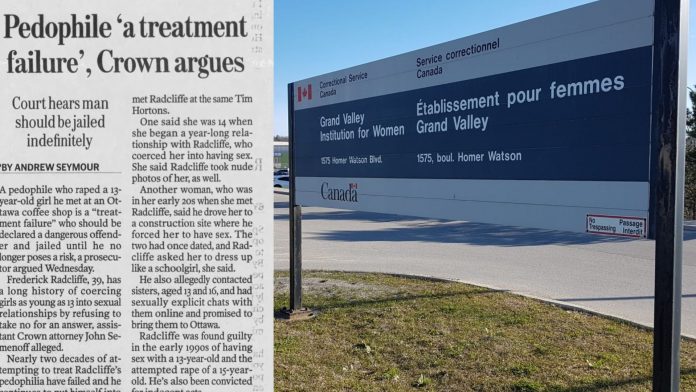
Frederick Radcliffe has been convicted of sexual offences against females — including the rape of a thirteen-year-old girl — across four separate criminal proceedings spanning 1989 to 2009, earning a Dangerous Offender designation and indeterminate sentence in 2010. After identifying as transgender in 2017 and undergoing a taxpayer-funded vaginoplasty, he was transferred to Grand Valley Institution for Women in 2023, where two female inmates subsequently filed official sexual assault reports against him.
text
Mika Lin Katz: The Trans-Identified Male Who Sexually Assaulted 4 Women at an Edmonton Women's Shelter and Was Released Before Being Arrested Again
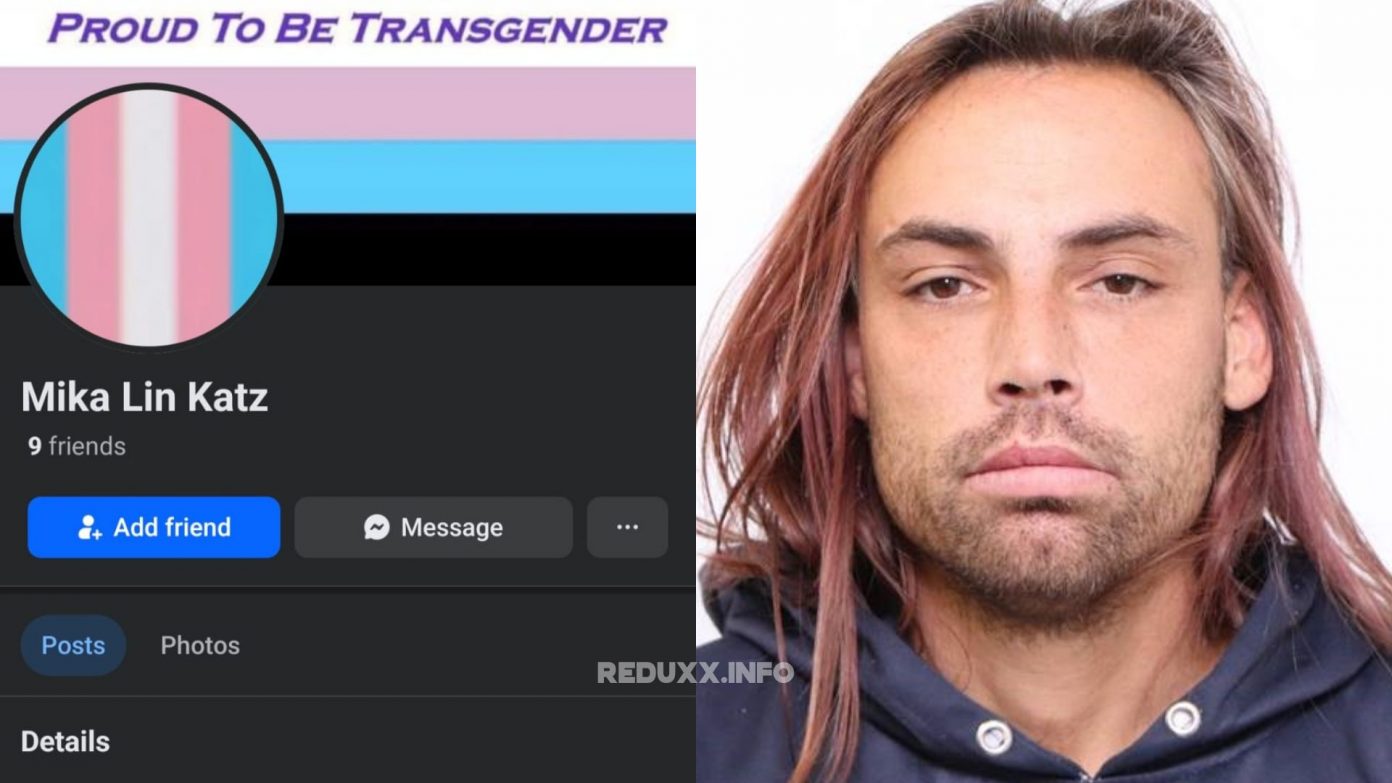
Mika Lin Katz, a thirty-seven-year-old trans-identified male, sexually assaulted at least four women at an Edmonton women's shelter in August 2024, was released after the first two complainants came forward, and was re-arrested in January 2025 after two additional victims reported assaults. The Edmonton Police Service publicly released his photograph and asked whether further victims existed, suggesting the four known charges may not represent the full scope of his offending.