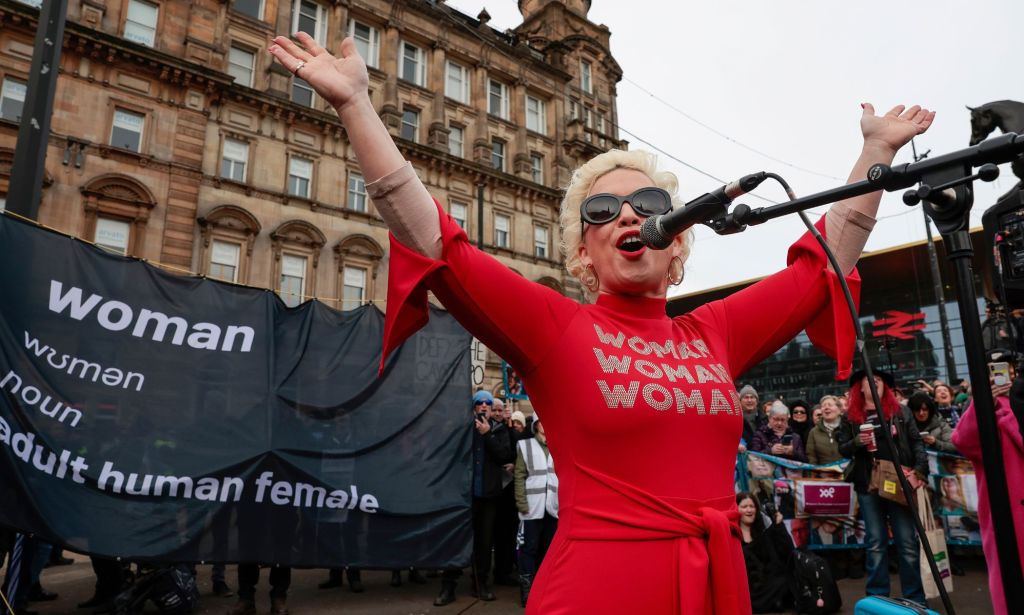


American lawyer, former ACLU senior counsel, and author of two books on women's sex-based rights. Kara has spent years making the legal and feminist case — from the left — for why replacing sex with gender identity in law harms women and girls.
The Reckoning: How the Democrats and the Left Betrayed Women and Girls (2023)
The Reckoning: How the Democrats and the Left Betrayed Women and Girls (2023) makes the case that the American progressive left's adoption of gender identity ideology represents a fundamental betrayal of feminist values — not despite its progressive framing, but because of it. Dansky, a Democrat and former ACLU senior counsel, argues that women's sex-based rights are not a conservative cause but a radical feminist one, and that the left's abandonment of biological sex as a meaningful legal and political category has disproportionately harmed the most vulnerable women: those in prisons, shelters, and sports.
Directed at readers who share Dansky's progressive political commitments, The Reckoning asks them to reckon with the internal contradictions of a movement that claims to protect women while dismantling the legal category of woman. It is a work of political accountability from inside the coalition — which is precisely what makes it uncomfortable and important.
The Abolition of Sex: How the 'Transgender' Agenda Harms Women and Girls (2021)
The Abolition of Sex: How the 'Transgender' Agenda Harms Women and Girls (2021) is an examination of how the legal replacement of sex with gender identity — in statute, institutional policy, and public discourse — functionally erases women as a recognized and protected category in law. Dansky argues from within a left-wing, ACLU-trained legal framework that the removal of sex as a protected characteristic is not a progressive step but a regressive one: it dismantles the legal architecture built over decades to protect women from discrimination, violence, and institutional exclusion. The book draws on her background in criminal justice law and policy to analyze how self-identification frameworks have been adopted across institutions from prisons to homeless shelters to collegiate athletics, and documents the consequences for the women those institutions were designed to protect.
Published by Bombardier Books, The Abolition of Sex is significant for who wrote it as much as for what it says. Dansky's left-wing credentials — her ACLU career, her Democratic Party affiliation, her background in civil rights law — make it impossible to dismiss the book as a conservative critique. She is arguing, from the inside, that the movement she belonged to has made a serious and consequential error.
Biography
Kara Dansky is an American lawyer, writer, and women's rights advocate with a J.D. from the University of Pennsylvania Law School and a B.A. from Johns Hopkins University. Before becoming one of the most prominent voices in the sex-based rights movement, she built a nearly two-decade career in criminal justice law and policy, including serving as senior counsel at the ACLU and as executive director of the Stanford Criminal Justice Center.
She is the author of two books. The Abolition of Sex: How the 'Transgender' Agenda Harms Women and Girls (2021) examines how the legal replacement of sex with gender identity erases the material category of women — and the protections built around it. The Reckoning: How the Democrats and the Left Betrayed Women and Girls (2023) makes the feminist case from within the political left that abandoning sex-based rights represents a profound failure of progressive values.
Kara served as President of the U.S. chapter of Women's Declaration International from 2021 to 2024, advocating for the Declaration on Women's Sex-Based Rights globally. She has testified before legislatures, appeared in major media, and writes The TERF Report, a widely read Substack on radical feminist advocacy in the United States.
Her willingness to speak plainly — as a Democrat, a feminist, and a former ACLU lawyer — about the legal consequences of gender identity ideology has made her an important voice across political lines in the debate over women's sex-based rights.