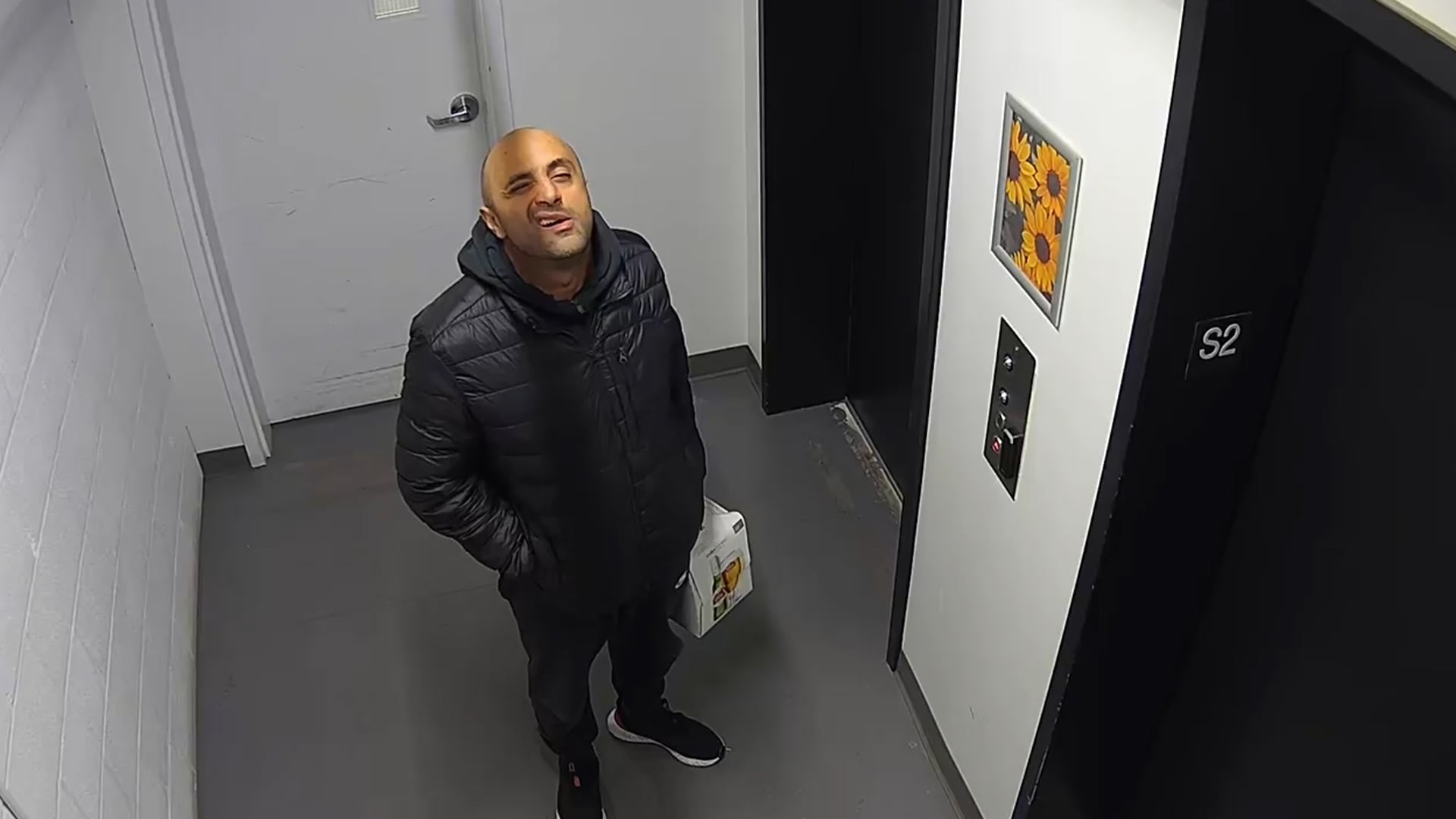
Mohamad Al Ballouz: The Triple Murderer Who Identified as Transgender After Arrest — and Whose Transfer Request Drove Quebec to Reform Its Prison Policy
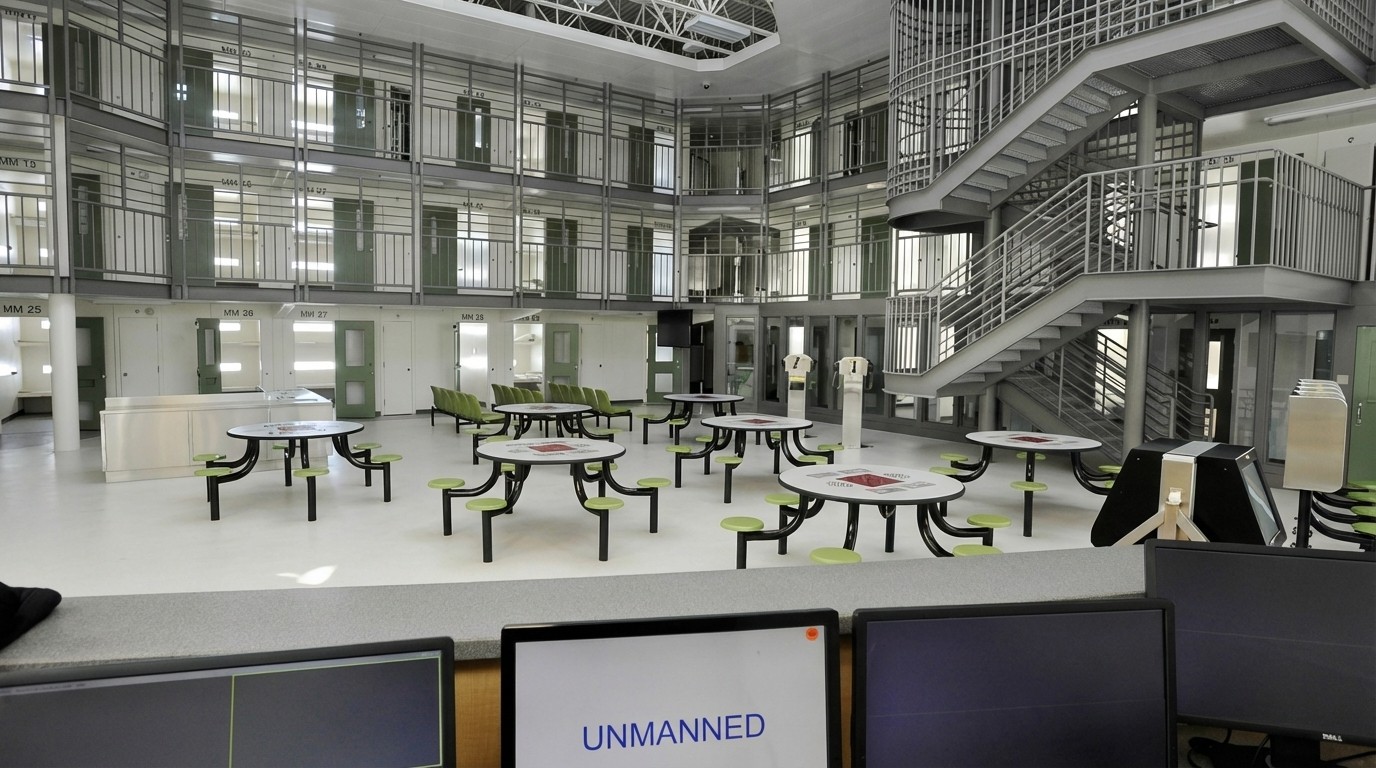
GIVEN NAME:
Mohamad Al Ballouz
ALIAS:
Levana Ballouz
DATE:
2022 (murders); December 2024 (conviction and sentencing); April 2025 (transfer request denied); June 2025 (Quebec policy change)
LOCATION:
Brossard, Quebec (murders); Montreal South Shore courthouse, Longueuil (trial); Joliette Institution for Women (requested, denied); men's federal institution (current)
Mohamad Al Ballouz stabbed his common-law partner Synthia Bussières twenty-three times in their Brossard, Quebec family home in 2022, then killed their five-year-old son Éliam and two-year-old son Zac, drank windshield wiper fluid, and set the family condo on fire to destroy evidence. After arrest, Al Ballouz began identifying as a woman, was briefly placed in a women's provincial facility during trial, and upon conviction in December 2024 requested transfer to the Joliette Institution for Women. CSC denied the request in April 2025. Al Ballouz's case directly prompted Quebec to announce in June 2025 that transgender provincial inmates would be housed according to anatomical sex — the first such provincial directive in Canada.
Full Story
Synthia Bussières was thirty-eight years old. She had two young sons: Éliam, five, and Zac, two. In 2022, she was stabbed twenty-three times by the man she lived with — Mohamad Al Ballouz, the father of her children.
At least eleven of the twenty-three stab wounds were defensive. The autopsy record of those eleven wounds is the record of Synthia Bussières fighting for her life.
After killing Bussières, Al Ballouz killed their children. An autopsy could not establish the exact cause of the boys' deaths. Then Al Ballouz drank windshield wiper fluid and set fire to the family condo. The fire was intended to destroy evidence.
He was arrested. After his arrest, he began identifying as a woman. He chose the name Levana.
During trial proceedings, he was briefly placed in a women's provincial facility. In the prisoner's box on trial for the murder of his partner and children, he wore a wig and had manicured red nails.
On December 16, 2024, he was convicted of three counts of murder and arson. He was sentenced to life in prison with no possibility of parole for twenty-five years. The sentencing judge, Quebec Superior Court Justice Eric Downs, described him as "sadistic" and remorseless.
Immediately upon conviction, Al Ballouz requested transfer to the Joliette Institution for Women, northeast of Montreal.
In April 2025, CSC denied the request. He will serve his life sentence in a men's federal prison.
In June 2025, Quebec announced that transgender provincial inmates would henceforth be housed according to anatomical sex, not gender identity. The mother of Synthia Bussières received a personal phone call from the minister before the announcement. "He said 'it's not right that a man who killed a woman and then two children is going to go to a women's prison,'" she recalled.
The Al Ballouz case is the only one in this database where the documented harm directly produced a documented policy change. It is also, at the federal level, the only case in this database where a transfer request for a women's institution was formally denied at the conclusion of a CSC assessment. Both outcomes are significant. Both require examination.
The Murders — 2022
Synthia Bussières
Synthia Bussières was a woman in a long-term relationship with Al Ballouz, with whom she had two young children. She was thirty-eight years old when she was murdered in her own home. Her death — twenty-three stab wounds, at least eleven of them defensive — was documented with clinical precision in the autopsy and in the trial evidence that followed.
The defensive wound count is what the record has to say about Synthia Bussières's last moments: she fought. Against a partner she lived with, in a home she shared with her children, she tried to survive. The wounds on her hands and arms and body tell the story of that attempt.
She did not survive.
Éliam and Zac
Éliam Al Ballouz was five years old. Zac Al Ballouz was two. They were killed after their mother. The autopsy could not establish the exact cause of the boys' deaths. This clinical limitation — the inability to determine precisely how two young children were killed — is its own form of horror.
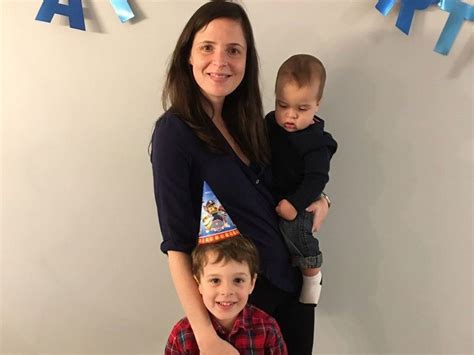
Their obituary photograph, reproduced in news coverage of the case, shows Synthia Bussières with her two small sons. That image exists in the public record of this case because it was used in reporting. They are real people, not case numbers. They were five and two years old when they were killed by their father.
The Scene After
After the murders, Al Ballouz drank windshield wiper fluid — an act whose precise purpose is unclear from the available reporting, whether attempted suicide, self-harm, or some other motivation. He then set fire to the family condo. The fire was deliberately set to destroy evidence of what had happened inside.
The fire failed its purpose. The murders were investigated, charged, and prosecuted.
The Trial — Transgender Identification After Arrest
When Al Ballouz Began Identifying as a Woman
Al Ballouz was known as Mohamad — a man — at the time of his arrest and at the time of the charges. Court documents, police records, and initial media coverage refer to him as Mohamad Al Ballouz, male.
After his arrest, he began identifying as a woman. He chose the name Levana. He subsequently appeared in the prisoner's box wearing a wig and with manicured red nails.
The timing of this identification — after arrest, during the period preceding a murder trial — is consistent with a pattern documented across multiple entries in this database. The identification did not predate the crimes. It emerged in the period following arrest, when the question of institutional placement first became practically relevant.
The available reporting does not describe any documented history of gender identity concerns in Al Ballouz's life prior to the murders or the arrest. Courts and most mainstream media subsequently adopted female pronouns and referred to the convicted murderer as Levana Ballouz.
Brief Placement in a Women's Provincial Facility
During the trial proceedings — a period covered by provincial jurisdiction, as Al Ballouz was held in pretrial detention in a provincial facility — he was briefly placed in a women's provincial facility.
Provincial jails in Quebec house people awaiting trial and people serving sentences of less than two years. At the time of Al Ballouz's pretrial detention, Quebec's provincial policy allowed transgender inmates to request housing at the facility of their choice. Al Ballouz made that request and was briefly accommodated.
This placement occurred before conviction, before the evidence of the crimes was fully established in open court, and before the question of what Al Ballouz had done to Synthia Bussières and her children was publicly adjudicated.
The women in that provincial facility did not know, before Al Ballouz's trial, the full nature of what he had done. The provincial policy did not require them to know. It required only the accommodation of a self-declared gender identity.
The Conviction — December 2024
On December 16, 2024, a Quebec Superior Court jury convicted Mohamad Al Ballouz — Levana — on three counts of murder and arson.
On December 20, 2024, Justice Eric Downs imposed the mandatory sentence: life in prison with no possibility of parole for twenty-five years. In his sentencing remarks, the judge described Al Ballouz as "sadistic" and remorseless.
Immediately upon conviction, Al Ballouz requested transfer to the Joliette Institution for Women — a federal women's prison northeast of Montreal. The request triggered a CSC assessment under the framework of Commissioner's Directive 100.
The Transfer Request and National Response
Pierre Poilievre's Statement
Al Ballouz's transfer request became public in December 2024. Conservative Leader Pierre Poilievre posted on X: "I can't believe I have to say this: but when I'm PM, there will be no male prisoners in female jails. Period."
The post attracted immediate attention and sparked national debate. Poilievre's statement was simple, direct, and politically effective. It was also, as legal observers noted, somewhat overconfident about what a prime minister's office can direct without amending the Canadian Human Rights Act or the Corrections and Conditional Release Act — both of which would need to change for a blanket federal ban on cross-sex prison placement to be legally sustainable.
But the political signal was received. The Al Ballouz case had become the most visible test of CSC's gender-diverse offender policy since the issue had entered national consciousness.
La Presse's Column
In January 2025, La Presse — one of Quebec's most widely read French-language newspapers — published a column by Isabelle Hachey arguing that Al Ballouz "has no place in a women's prison." The column was widely shared and represented an unusually direct statement from a mainstream Quebec media outlet on the placement question.
The Mother of Synthia Bussières
Sylvie Guertin, the mother of Synthia Bussières, became a public voice on the Al Ballouz case. She repeatedly spoke to media about her daughter's murder and about the prospect of her daughter's killer being housed in a women's prison.
Her advocacy — a bereaved mother demanding accountability for a murderer and for a policy that would have placed him in a women's institution — was part of the pressure that eventually reached the Quebec minister responsible for provincial corrections.
The CSC Decision — April 2025
The Assessment Process
Under Commissioner's Directive 100, CSC conducts a 60–90 day assessment when a convicted offender requests placement in an institution that does not correspond to their biological sex. The assessment considers security concerns, the nature of the offence, and the needs of both the requesting inmate and the population at the receiving institution.
Al Ballouz's assessment was conducted between December 2024 and April 2025. During the assessment, he was held in a men's federal institution.
The Denial
On April 9, 2025, CSC spokesperson Kevin Antonucci confirmed in an email that "the initial assessment in this case has been completed and that the designated place of incarceration will be a men's facility."
This denial is, within the documented history of this database, an unusual outcome. The pattern documented across other entries — Aubee, Radcliffe, Laboucan, Boulachanis, Lynn — is of assessments that, despite significant risk factors, ultimately resulted in transfers to women's institutions. The Al Ballouz case produced a different outcome.
Whether that outcome reflects a genuine change in how CSC applies CD-100 in cases of extreme violence, or whether it reflects the extraordinary public and political pressure that had built around this specific case, is not publicly disclosed. CSC did not explain the reasoning behind the denial.
What is documented is the result: a man who stabbed his partner twenty-three times, killed his two young sons, and drank wiper fluid before setting the family home on fire will serve his life sentence in a men's federal institution. The women at the Joliette Institution for Women will not share their facility with him.
The Quebec Provincial Policy Change — June 2025
The Announcement
On June 17, 2025, Quebec Public Security Minister François Bonnardel personally telephoned Sylvie Guertin — the mother of Synthia Bussières — to inform her that the province would be announcing a new directive the following day.
"Oh my God," Guertin said when he told her. "I was very happy to hear the news. It really touched me. They heard me."
On June 18, 2025, Bonnardel announced that transgender inmates in Quebec provincial jails would henceforth be housed according to anatomical sex — biological sex — not gender identity. The directive established that a trans woman who had undergone vaginoplasty would be housed with female inmates; a trans woman who had not undergone that surgery would be housed with male inmates.
Bonnardel quoted in the Journal de Montréal: "It's not true that I'm going to let a killer who has killed a woman, who has killed children, to go into a women's prison with male physical attributes. I won't accept that."
Quebec was the first Canadian province to implement such a directive.
What the Directive Does and Does Not Cover
The Quebec provincial directive applies to provincial jails — institutions holding pretrial detainees and people serving sentences of less than two years. It does not apply to federal prisons, which hold people serving sentences of two years or more.
Al Ballouz's federal life sentence means the new Quebec directive does not apply to his case. CSC's federal policy — Commissioner's Directive 100 — still governs federal placements, and CSC has not changed that framework. The two systems operate in parallel: Quebec has reformed provincial placements; federal placements remain under CD-100.
The practical significance of the Quebec directive is therefore significant but limited. It protects women in Quebec provincial jails from being housed with transgender-identified males who have not undergone surgery. It does not protect women in federal institutions from any male who identifies as transgender, surgical status notwithstanding.
But it is the first formal regulatory rollback of the self-identification placement standard in Canada. That makes it historically significant regardless of its jurisdictional scope.
The Response
The Quebec directive was condemned by transgender rights advocates as a violation of human rights. Xtra Magazine described it as "anti-trans." The legal clinic operator cited by CBC called it too conservative. The six transgender people currently incarcerated in Quebec provincial jails — 0.1% of the provincial prison population — would be directly affected.
These responses are part of the record. So is the response of Sylvie Guertin, the mother of a woman who was stabbed twenty-three times by the man she had lived with, to the news that Quebec would not place men who kill women in women's prisons.
"They heard me," she said.
Why This Case Matters in the Context of This Database
The Only Policy Change
The Al Ballouz case is the only documented instance in this database where the documented pattern of harm — the placement of a violent male offender in a women's institution based on self-declared gender identity — produced a formal policy change.
Every other case in this database documents harm, advocacy, testimony, parliamentary submissions, court proceedings, and institutional responses. None of them produced a formal change to the legal or policy framework in Canada at the federal level. The Al Ballouz case produced a provincial change — specifically in Quebec, driven by the specific visibility of a case involving a man who had murdered a woman and her two young children.
The lesson the policy change teaches is not reassuring. It suggests that the threshold for institutional response is not documentation of harm, testimony from survivors, parliamentary briefs, or advocacy. The threshold appears to be a case so extreme — a convicted triple murderer, a woman stabbed twenty-three times, two young children, a courtroom wig — that it generates political pressure at the ministerial level that cannot be managed any other way.
Every other case in this database documents harm that did not reach that threshold.
The Federal Gap
The Quebec provincial directive covers provincial jails. The federal system — which houses all offenders serving two years or more — has not changed. CD-100 remains in effect. The CSC denied Al Ballouz's specific transfer request, but did not change the policy framework that would apply to the next request.
The women in Canada's six federal women's institutions remain subject to a placement policy that the Al Ballouz case did not change. The advocacy by caWsbar, documented in the Heather Mason testimony entry of this database, continues before the Federal Court. The Charter challenge filed April 7, 2025, is the primary mechanism through which the federal framework is being contested.
Quebec's provincial directive shows that the legal and policy framework can be changed — that a minister with the political will to act can implement a sex-based placement standard without the sky falling. The question the federal government has not answered is why that political will does not exist at the federal level for the women in its institutions.
Conclusion
Synthia Bussières was stabbed twenty-three times. Her five-year-old son Éliam and her two-year-old son Zac were killed. The man who killed them drank wiper fluid and burned the evidence.
He was convicted of triple murder. He identified as a woman after arrest. He requested transfer to a women's prison.
CSC denied the request. Quebec changed its provincial policy. Synthia Bussières's mother received a phone call from the minister the night before the announcement.
This is the best outcome documented in this database. A transfer denied. A policy changed. A mother who said "they heard me."
It required the murder of a woman and her two young children, a national political controversy, and the personal advocacy of a bereaved mother over more than two years, to produce those outcomes.
The federal policy remains unchanged. The women in federal institutions remain subject to it. The Charter challenge continues.
Timeline
2022: Mohamad Al Ballouz stabs common-law partner Synthia Bussières, 38, twenty-three times in their family condo in Brossard, Quebec; at least eleven of the stab wounds are classified as defensive — indicating Bussières fought for her life; then kills five-year-old son Éliam Al Ballouz and two-year-old son Zac Al Ballouz; drinks windshield wiper fluid; sets fire to the family condo to destroy evidence
After arrest: Al Ballouz begins identifying as a woman under the name Levana; during trial proceedings, briefly placed in a women's provincial facility (provincial jails hold pretrial detainees)
During trial: Al Ballouz appears in the prisoner's box wearing a wig and with manicured red nails
December 16, 2024: Convicted of three counts of murder and arson
December 20, 2024: Sentenced to life in prison with no possibility of parole for 25 years by Quebec Superior Court Justice Eric Downs; judge describes Al Ballouz as "sadistic" and remorseless; immediately requests transfer to the Joliette Institution for Women, northeast of Montreal
December 2024: Conservative Leader Pierre Poilievre posts on X: "I can't believe I have to say this: but when I'm PM, there will be no male prisoners in female jails. Period."; case becomes major national political issue
December 2024 – January 2025: CSC conducts 60–90 day assessment of placement request; Al Ballouz held in men's federal institution during assessment
January 9, 2025: Globe and Mail and CBC report on the transfer request; La Presse columnist Isabelle Hachey writes that Al Ballouz "has no place in a women's prison"; national debate intensifies
April 9, 2025: CSC confirms assessment complete; Al Ballouz will serve his life sentence in a men's federal prison; transfer to women's institution denied
June 17, 2025: Quebec Public Security Minister François Bonnardel calls Sylvie Guertin — mother of murder victim Synthia Bussières — to inform her of an upcoming policy change; Guertin says: "Oh my God. I was very happy to hear the news. It really touched me. They heard me."
June 18, 2025: Quebec announces new provincial directive: transgender inmates in Quebec provincial jails will be housed according to anatomical sex, not gender identity; exception for trans women who have undergone vaginoplasty (will be housed with female inmates); all others housed according to biological sex; Quebec becomes first Canadian province to implement such a directive
Bonnardel quote: "It's not right that a man who killed a woman and then two children is going to go to a women's prison"
Impact: The new Quebec directive applies only to provincial jails (pretrial detention, sentences under two years); Al Ballouz's federal sentence means the federal CSC framework still governs his placement; he remains in a men's federal institution
References
CBC News (January 21, 2025). "Quebec murder case sparks debate over where trans inmates should serve time." https://www.cbc.ca/news/canada/montreal/quebec-murder-case-trans-inmates-1.7431025
CBC News (April 9, 2025). "Quebec trans woman convicted of triple homicide to serve time in men's prison." https://www.cbc.ca/news/canada/montreal/levana-ballouz-life-sentence-prison-1.7506051
CBC News (June 19, 2025). "Quebec's new trans inmate policy goes against human rights, advocates say." https://www.cbc.ca/news/canada/montreal/incarcerated-trans-inmates-gender-quebec-1.7564771
The Globe and Mail (January 9, 2025). "Convicted Quebec triple murderer in men's institution as request for women's prison studied." https://www.theglobeandmail.com/canada/article-convicted-quebec-triple-murderer-in-mens-institution-as-request-for/
Western Standard (December 23, 2024). "Quebec triple-murderer requests all-female prison after identifying as a woman." https://www.westernstandard.news/canadian/quebec-triple-murderer-requests-all-female-prison-after-identifying-as-a-woman/60727
The Canadian Press (June 18, 2025). "Quebec to jail inmates according to anatomical sex, not gender identity." https://www.thecanadianpressnews.ca/quebec/quebec-to-jail-inmates-according-to-anatomical-sex-not-gender-identity/
Correctional Service Canada, Commissioner's Directive 100: Gender Diverse Offenders (in effect May 9, 2022): https://www.canada.ca/en/correctional-service/corporate/acts-regulations-policy/commissioners-directives/100.html
Criminal Code, RSC 1985, c C-46, s 745 (first/second-degree murder sentencing): https://laws-lois.justice.gc.ca/eng/acts/c-46/
Canadian Women's Sex-Based Rights (caWsbar): https://cawsbar.ca/

text
Michael Williams: The Man Who Helped Murder Nina Courtepatte Has Been Transferred to Two Women's Federal Prisons — And Canada Barely Noticed
Michael Williams was seventeen years old in 2005 when he participated with four others in the deliberate abduction, gang rape, torture, and murder of thirteen-year-old Nina Courtepatte, who was lured from West Edmonton Mall to a golf course where she was beaten with a sledgehammer, choked, stabbed, and left to die. Sentenced to life in prison, Williams identified as transgender in 2014, was transferred to Fraser Valley Institution for Women in 2017 where he was caught having sex with female inmates, returned to a men's institution, and then transferred again to Grand Valley Institution for Women in 2025 — where he immediately threatened female inmates, produced a weapon, and was removed after a tactical standoff within days.
text
The Morning-After Pill at Grand Valley: What CSC Knew and Chose Not to Say
In June 2019, a female inmate at Grand Valley Institution for Women told Heather Mason by phone that medical staff were distributing the morning-after pill to female prisoners following sexual contact with male-bodied trans-identified inmates. At least three women required emergency contraception. One woman took the pill under the mistaken belief it offered protection against HIV and hepatitis B. The same period saw Steve Mehlenbacher — a career criminal transferred to Grand Valley from Edmonton Institution for Women — openly boasting of sexual activity with female inmates throughout the facility.