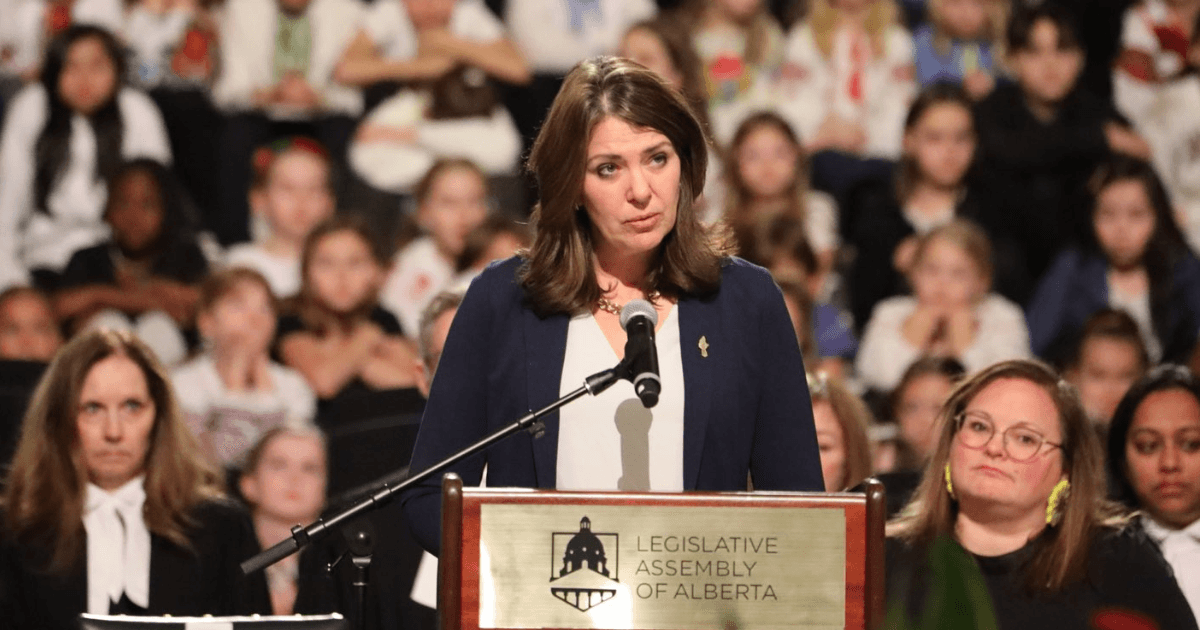
Education Amendment Act, 2024
Royal Assent December 5, 2024 — In force September 1, 2025 | Shielded by notwithstanding clause December 10, 2025 | Charter challenge ongoing on non-Charter constitutional grounds
Related Federal Legislation
Alberta Returns Schools to Parents: What the Education Amendment Act Actually Does and Why It Matters for Women and Girls
Before Bill 27 came into force on September 1, 2025, a teacher in an Alberta school could use a different name and set of pronouns for a student — one reflecting a gender identity different from the child's biological sex — without telling the child's parents. The school could facilitate a social transition in the classroom, in the hallways, and in the student record, while the parents remained entirely unaware. The rationale offered for this practice was child safety: that some children cannot safely disclose a transgender identity at home, and that school staff should be empowered to protect those children by keeping the transition confidential.
The practical effect was different. Schools were making significant, consequential decisions about a child's social identity and institutional record without the knowledge or consent of the people who bear legal and moral responsibility for that child's welfare. Parents were being treated not as partners in their child's education and development but as risks to be managed and, in some cases, actively deceived.
Bill 27 reversed that default. It is now the law in Alberta that parents must be notified, and for children under 16, must consent, before a school accommodates a gender identity change in the classroom. Instruction on gender identity and sexuality now requires active parental opt-in rather than opt-out. As of May 2026, that law is in force, shielded from Charter challenge by the notwithstanding clause, and being challenged in court on narrower constitutional grounds.
This is the story of what Bill 27 does, what policy environment it was responding to, and why the question of parental rights in schools is inseparable from the broader question of women's and girls' sex-based rights.
The Policy Environment Bill 27 Was Responding To
The practice of socially transitioning students without parental knowledge did not emerge from any single policy decision. It developed gradually across Canadian school systems through a combination of provincial human rights commission guidance, school board policies, and professional culture shifts within the teaching profession.
The logic driving the practice was grounded in a genuine concern: that some transgender-identified young people face rejection, hostility, or abuse at home, and that schools have an obligation to support those students. That concern is real. There are families in which a child's disclosure of a non-conforming gender identity would be met with harm rather than support, and the wellbeing of children in those situations matters.
But the policy response that developed — systematic concealment of a student's social gender transition from their parents as a default practice — was disproportionate to that concern and created serious problems of its own. It assumed the worst about the majority of parents on the basis of the behaviour of a minority. It removed parents from decisions that are fundamental to a child's development and that have potential long-term consequences for that child's medical trajectory. And it placed teachers and school administrators in the position of actively managing secrets from the families they are supposed to serve.
The scale of the practice in Alberta was not publicly documented before Bill 27 was introduced. But its existence was well-established. The Premier's announcement of the forthcoming legislation in January 2024 prompted immediate and strong reaction from teacher unions, school boards, and advocacy organizations — a reaction that confirmed the practice was widespread enough that its curtailment was experienced as a significant change to established professional norms.
What Bill 27 Actually Says
The Education Amendment Act, 2024 amends the Alberta Education Act in several specific ways.
On preferred names and pronouns, the legislation requires school authorities to notify parents where a student under 16 requests that teachers, principals, and other school staff refer to them by a new preferred name or pronoun related to gender identity. For students under 16, parental consent is required before school staff can honour that request. For students aged 16 and 17, notification is required but consent is not — the older student's decision is respected, but parents are informed.
On curriculum and resources, the legislation requires ministerial approval for learning and teaching resources that primarily deal with gender identity, sexual orientation, or human sexuality. Instruction on those topics now requires active parental opt-in, meaning parents must affirmatively choose for their child to participate rather than having to opt out.
What Bill 27 does not say is equally important. The legislation does not prohibit students from expressing their gender identity. It does not prevent students from using a preferred name or pronouns with peers, with other students, or in informal school settings. It does not require schools to misgender students in all contexts — it specifically governs the formal accommodation of a gender identity change by school staff. It does not prevent teachers from supporting gender-questioning students or providing a welcoming environment. What it does is require that parents be part of the formal process when a school is asked to officially accommodate a change in how a child is named and identified by institutional authority.
The distinction matters because the most common criticism of the legislation — that it puts vulnerable children at risk by forcing them to disclose a transgender identity to potentially hostile parents — conflates the disclosure with the accommodation. Bill 27 does not require a student to tell their parents anything. It requires the school, when asked to make an institutional accommodation, to bring parents into that process. A student who is not ready for that conversation is not required to have it. They are simply not entitled to have the school system keep it secret from their parents.
The September 1, 2025 Implementation
Bill 27 received Royal Assent on December 5, 2024, alongside Bills 26 and 29. Unlike Bill 26, which was immediately challenged and temporarily enjoined, Bill 27 did not come into effect immediately. Its educational provisions were anticipated for September 1, 2025 — the start of the school year — giving school authorities time to develop implementation protocols.
Egale Canada and Skipping Stone launched a legal challenge to Bill 27 on September 2, 2025, the day after the legislation came into force. The challenge was filed in the Court of King's Bench of Alberta, represented by lawyers from McCarthy Tétrault LLP and Egale Canada's legal team.
The challenge argued that Bill 27 violated students' rights under sections 2, 7, and 15 of the Canadian Charter of Rights and Freedoms — freedom of expression, security of the person, and equality rights. The Alberta Teachers' Association authorized financial support for the challenge.
Bill 9, passed on December 10, 2025, shielded Bill 27 from Charter review under the notwithstanding clause. Like Bill 26, Bill 27 is now also shielded from the Alberta Bill of Rights and the Alberta Human Rights Act in perpetuity under Bill 9's provisions. The challenge continues but must now proceed on constitutional grounds the notwithstanding clause cannot cover.
Why Parental Rights and Women's Rights Are Connected
The relationship between parental rights in schools and women's and girls' sex-based rights is not incidental. It is structural.
The social transition of children in schools — the use of different names and pronouns reflecting a gender identity different from biological sex — is the first step in a clinical pathway that, for a significant proportion of the adolescent females who enter it, ends in permanent medicalization: puberty blockers, cross-sex hormones, and surgery. The detransitioners who have spoken publicly about their experiences consistently identify social transition — in school, among peers, with institutional validation — as the environment that normalized and accelerated their entry into that pathway.
Parents who are not told their child has socially transitioned at school are parents who cannot participate in the clinical conversation that may follow. They cannot ask questions, seek second opinions, arrange psychological assessment, or bring any of the context about their child's life that a school counsellor or gender clinic may lack. They cannot, in short, do the thing that parents exist to do: protect their child from decisions whose consequences the child is not yet equipped to fully understand.
Bill 27 restores parents to that role. For girls specifically — who are disproportionately represented in the population seeking gender transition and who are, according to the Cass Review, the population for whom the evidence of harm from premature medicalization is most acute — parental involvement at the school stage may be the intervention that prevents or delays entry into a medical pathway that cannot be fully reversed.
This is not a theoretical concern. The detransition community — young women who transitioned as teenagers and are now living with the consequences — did not emerge from families where parents knew what was happening and chose not to intervene. It emerged, in significant part, from environments where social transition was normalized at school, where medical transition followed quickly, and where parental involvement was either absent or actively discouraged by the institutions that were supposed to serve the child's best interests.
Reaction and Opposition
Opposition to Bill 27 was immediate and organized. The Alberta Teachers' Association characterized the legislation as undermining trust between students, parents and teachers, and making schools feel less safe for vulnerable students. LGBTQ+ advocacy organizations argued that the legislation would out transgender youth to potentially hostile parents. Several school boards expressed concern about implementation.
These concerns deserve to be taken seriously. The category of families in which parental notification would be harmful rather than helpful is real, even if its size is contested. Bill 27's response to this concern — differential treatment for students aged 16 and 17, where notification without consent reflects a recognition of older adolescents' greater autonomy — acknowledges the nuance without abandoning the principle.
The broader opposition to parental rights legislation in schools reflects a view that schools have an independent duty of care to students that can properly override parental authority in certain circumstances. That view has a legitimate basis in child protection law. What it cannot sustain, as a policy matter, is the proposition that systematic concealment of institutional identity accommodations from parents is an appropriate default practice rather than a narrow exception available in genuinely dangerous situations.
Bill 27 requires parental notification and consent as the default. It does not prevent schools from taking protective action in genuinely dangerous situations — those situations are governed by existing child protection law, which Bill 27 does not alter. What it prevents is the routine practice of conducting gender-related institutional accommodations as a matter of institutional confidentiality from parents, as if parental involvement were categorically more dangerous than parental exclusion.
What Happens Next
The Egale Canada and Skipping Stone challenge to Bill 27 continues in the Court of King's Bench of Alberta. With Charter grounds foreclosed by Bill 9's notwithstanding clause invocation, the challenge must proceed on constitutional grounds the clause cannot cover — including federalism arguments and arguments grounded in the primacy of the Alberta Human Rights Act, the same approaches being explored in the Bill 26 litigation.
The Supreme Court of Canada cases being heard in 2026, including the UR Pride case from Saskatchewan, will help clarify whether declaratory relief remains available when the notwithstanding clause has been invoked — a question directly relevant to both the Bill 26 and Bill 27 challenges.
Also notable is a new bill introduced in the 2026 Alberta legislative session: Bill 25, An Act to Remove Politics and Ideology from Classrooms and Amend the Education Act, 2026. The details of that legislation's interaction with Bill 27's provisions are not yet fully established, but it signals that the Alberta government continues to move on the education policy front.
As of May 2026, Bill 27 is in force across Alberta schools. Parents are entitled to be notified and to consent to gender-related name and pronoun accommodations for their children under 16. The institutional practice of conducting those accommodations in secret from families has been made unlawful.
Conclusion: Schools Serve Families, Not the Reverse
The debate over Bill 27 is sometimes framed as a conflict between student safety and parental rights — as if these are necessarily in opposition, and as if the only way to protect vulnerable students is to exclude their parents from decisions that affect them.
That framing is wrong. It assumes that parental involvement is harmful and that institutional involvement is protective. The evidence from the detransition community, from the Cass Review, and from the experience of families who have navigated gender clinic pathways with limited information and no opportunity for meaningful participation, points in the opposite direction. Parental involvement — informed, engaged, and given the information needed to make decisions in their child's best interest — is not a threat to children's wellbeing. It is the primary mechanism through which children's wellbeing has historically been protected.
Bill 27 is not perfect. No legislation is. But its core principle is right: schools serve students and their families, and the families of children under 16 have a right to know what those schools are doing in their child's name.
Key Provisions
Required school authorities to notify parents where a student under 16 requests that teachers and school staff refer to them by a new preferred name or pronoun related to gender identity, and to obtain written parental consent before complying with that request.
For students aged 16 and 17, notification is required but parental consent is not. Required ministerial approval for learning and teaching resources primarily dealing with gender identity, sexual orientation, or human sexuality.
Mandated parental opt-in rather than opt-out for classroom instruction on those topics.
Shielded from Charter challenges under sections 2 and 7 through 15, and from the Alberta Bill of Rights and Alberta Human Rights Act, through Bill 9's invocation of the notwithstanding clause in December 2025.
Ministerial Chain of Custody:
Bill 27 was introduced on October 31, 2024 by the Alberta Ministry of Education and passed as part of the same legislative package as Bills 26 and 29. It received Royal Assent on December 5, 2024 and came into force on September 1, 2025. Its passage and subsequent protection under the notwithstanding clause through Bill 9 sit within the same ministerial chain as the broader legislative package.
Danielle Smith has served as Premier of Alberta since October 2022 and announced the policy framework underlying Bill 27 in January 2024, describing parental rights in schools as a fundamental principle of her government's education philosophy. Her government's announcement in January 2024 explicitly committed to requiring parental consent before schools could use different names or pronouns for students — a commitment that predated the legislation by nearly a year and that she characterized as a matter of basic transparency between schools and families. Smith's decision to include Bill 27 within the Bill 9 notwithstanding clause invocation in December 2025 extended the same constitutional protection to parental rights as to the medical provisions in Bill 26 and the sport provisions in Bill 29, treating all three as equally fundamental to the government's mandate.
Demetrios Nicolaides served as Minister of Education at the time Bill 27 was introduced and passed. As the portfolio minister responsible for the Education Act and for Alberta's school system, he bore direct ministerial responsibility for the legislation's design, its passage through the legislature, and its implementation framework for the September 1, 2025 school year start. The implementation guidance developed under his ministry required school authorities across Alberta to establish parental notification and consent protocols — a significant operational undertaking that involved every school board in the province.
Mickey Amery served as Minister of Justice and Attorney General and bears the same constitutional accountability for Bill 27 as for Bills 26 and 29 — the legal architecture of the notwithstanding clause invocation, the government's litigation strategy in response to Egale's challenge filed September 2, 2025, and the framing of Bill 9 as a response to the injunction risk that had materialized against Bill 26.
The Alberta Teachers' Association, as the professional body representing Alberta's teachers, bears institutional accountability for the professional norms and practices that Bill 27 was designed to address. The ATA's immediate and strong opposition to the legislation — and its financial support for the Egale Canada legal challenge — reflects an institutional position that school professionals should retain discretion to manage gender-related accommodations without mandatory parental involvement. That position, whatever its merits in individual cases, normalized a systemic practice of excluding parents from decisions about their children's institutional identity that the Alberta legislature has now declared unlawful.
References:
Bill 27, Education Amendment Act, 2024, 1st Sess, 31st Leg, Alberta, 2024 (Royal Assent 5 December 2024; in force 1 September 2025).
Bill 9, Protecting Alberta's Children Statutes Amendment Act, 2025, 2nd Sess, 31st Leg, Alberta, 2025 (Royal Assent 10 December 2025), invoking Canadian Charter of Rights and Freedoms, s 33.
Canadian Charter of Rights and Freedoms, Part I of the Constitution Act, 1982, being Schedule B to the Canada Act 1982 (UK), 1982, c 11, ss 2, 7, 15, 33, online: https://laws-lois.justice.gc.ca/eng/const/page-12.html.
Alberta Human Rights Act, RSA 2000, c A-25.5, online: https://www.qp.alberta.ca/documents/Acts/a25p5.pdf.
Canadian Bill of Rights, SC 1960, c 44, online: https://laws-lois.justice.gc.ca/eng/acts/c-12.3/.
Education Act, RSA 2012, c E-0.3, online: https://www.qp.alberta.ca/documents/Acts/e0p3.pdf.
Egale Canada Human Rights Trust et al v His Majesty the King in Right of Alberta et al (Bill 27 challenge), Court of King's Bench of Alberta (filed 2 September 2025; ongoing).
Egale Canada, "Egale Canada v Alberta — Education Amendment Act (Bill 27) — Name and Pronoun Restrictions" (updated 2026), online: https://egale.ca/awareness/egale-v-alberta-pronouns/.
Alberta Teachers' Association, "Bill 27 Statement" (2024), online: https://teachers.ab.ca/news/bill-27-statement.
Alberta Teachers' Association, "Council authorizes support for challenge of Bill 27" (October 2025), online: https://teachers.ab.ca/news/council-authorizes-support-challenge-bill-27.
Government of Alberta, "Supporting Alberta Students and Families," online: https://www.alberta.ca/supporting-alberta-students-and-families.
LawNow Magazine, "Will the Alberta Legislature use the Charter's Notwithstanding Clause to shield controversial Education Act changes?" (22 October 2025), online: https://www.lawnow.org/will-the-alberta-legislature-use-the-charters-notwithstanding-clause-to-shield-controversial-education-act-changes/.
LawNow Magazine, "Student Charter Rights in the Wake of Bill 27" (November 2024), online: https://www.lawnow.org/student-charter-rights-in-the-wake-of-bill-27/.
Cass, Hilary, Independent Review of Gender Identity Services for Children and Young People: Final Report (April 2024), online: https://cass.independent-review.uk/home/publications/final-report/.
Koshan, Jennifer, "Alberta's Bills Targeting Gender Diverse Youth: Comparisons, Constitutional Issues, and Challenges" (13 December 2024), online: ABlawg, http://ablawg.ca/2024/12/13/albertas-bills-targeting-gender-diverse-youth-comparisons-constitutional-issues-and-challenges/.
French, Janet, "Alberta to invoke notwithstanding clause to shield 3 transgender bills from court challenges" CBC News (19 November 2025), online: https://www.cbc.ca/news/canada/edmonton/alberta-government-notwithstanding-clause-bills-9.6983786.
Canadian Bar Association Alberta Branch, "Response to Bills 26, 27 and 29" (December 2024), online: https://cba-alberta.org/our-impact/submissions/response-to-bills-26-27-and-29/.
Calgary Board of Education, "Proposed Changes to Provincial Legislation" (October 2024), online: https://cbe.ab.ca/news-centre/Pages/Proposed-Changes-to-Provincial-Legislation.aspx.
Read More
text
Bill 13: Regulated Professions Neutrality Act, 2025
Passed December 9, 2025, this Act prohibits professional regulatory bodies from disciplining members for off-duty speech and bans mandatory DEI, cultural competency, and unconscious bias training. Applying to over 40 regulatory bodies and 100+ professions, it directly protects women professionals who have faced regulatory consequences for expressing sex-realist views.
text
Bill 9: Protecting Alberta's Children Statutes Amendment Act, 2025
Passed December 10, 2025, Bill 9 invoked the notwithstanding clause to shield Bills 26, 27, and 29 from Charter challenge, and additionally suspended the Alberta Bill of Rights and Alberta Human Rights Act in perpetuity — Alberta's most expansive use of override powers and the first notwithstanding clause invocation in Canadian history to protect sex-based rights legislation.