Protecting Alberta's Children Statutes Amendment Act, 2025
In force | Royal Assent December 10, 2025 | Court of King's Bench denied | amendment application May 2026 | Appeal pending
Related Federal Legislation
The Notwithstanding Clause as a Women's Rights Tool: What Alberta's Bill 9 Does and Why It Matters

Section 33 of the Canadian Charter of Rights and Freedoms has been called the notwithstanding clause, the override clause, and — by its critics — a constitutional escape hatch. It has been used by Quebec to protect French-language legislation from Charter challenge. It has been used by Ontario to set electoral boundaries. It has been used by Saskatchewan to impose a collective agreement on teachers. In each case its invocation generated controversy, because section 33 allows a legislature to declare that a law operates notwithstanding the fundamental freedoms, legal rights, and equality rights that the Charter otherwise guarantees.
Alberta's Bill 9 — the Protecting Alberta's Children Statutes Amendment Act, 2025 — invoked the notwithstanding clause for a different purpose than any of those predecessors. It used section 33 to protect legislation that restricts the medicalization of gender dysphoria in children, restores parental rights in schools, and maintains biological sex as the basis for female sport categories. It used the clause, in other words, not to override rights but to assert them — specifically, the sex-based rights of girls and women that courts were being asked to subordinate to gender identity claims.
Bill 9 passed on December 10, 2025. As of May 2026, every law it protects is in force in Alberta. The Court of King's Bench denied the application to continue the Bill 26 legal challenge on its amended grounds. An appeal is pending. The legislation stands.
This is the story of what Bill 9 does, why the Alberta government chose this constitutional tool, what it means for women's rights in Alberta and across Canada, and where the legal fight goes from here.
What Section 33 Is and What It Does
Section 33 of the Canadian Charter reads: "Parliament or the legislature of a province may expressly declare in an Act of Parliament or of the legislature, as the case may be, that the Act or a provision thereof shall operate notwithstanding a provision included in section 2 or sections 7 to 15 of this Charter."
A declaration under section 33 is valid for five years. It is renewable. It shields the legislation from judicial review under sections 2 (fundamental freedoms including freedom of expression), 7 through 14 (legal rights including life, liberty, and security of the person; protection against cruel and unusual punishment), and 15 (equality rights). It does not shield legislation from constitutional challenges on other grounds — including federalism arguments about the division of powers between federal and provincial governments, or arguments grounded in the preamble to the Constitution Act, 1867, or in unwritten constitutional principles.
Section 33 was included in the Charter as part of the political compromise that made the Constitution Act, 1982 possible. Provinces, including Saskatchewan and Manitoba, insisted on a mechanism that would allow legislatures to have the final word in certain circumstances — a recognition that courts and legislatures both have legitimate roles in a constitutional democracy, and that elected representatives should not always be subordinate to judicial interpretation of broadly worded rights provisions.
The clause has been controversial from the beginning. Critics argue it allows governments to weaponize rights overrides against vulnerable minorities. Defenders argue it is a democratic safety valve that prevents courts from having unchecked authority over legislative policy. That debate has acquired a new dimension in Alberta, where the clause has been used not to override minority rights but to protect the sex-based rights of the majority group — women and girls — that the Charter's equality provisions were themselves designed to protect.
What Bill 9 Actually Does
Bill 9 invokes the notwithstanding clause in three pieces of Alberta legislation: the sections of the Health Professions Act amended by Bill 26 to restrict gender-affirming medical care for minors; the sections of the Education Act amended by Bill 27 to require parental notification and consent for gender-related name and pronoun accommodations in schools; and the Fairness and Safety in Sport Act enacted by Bill 29 to restrict female sport categories to biological females.
The invocation shields those provisions from Charter review under sections 2 and 7 through 15 for five years from December 10, 2025 — meaning until December 2030, subject to renewal.
Bill 9 goes further than a standard notwithstanding clause invocation in one critical respect. It also suspends the application of the Alberta Bill of Rights and the Alberta Human Rights Act to the three protected statutes. Critically, this suspension applies in perpetuity — not for five years, but indefinitely, unless Bill 9 itself is repealed or amended. This means that a future government that allows the notwithstanding clause declaration to lapse after five years would still face a legislative landscape in which the Alberta Human Rights Act's gender identity provisions cannot be used to challenge the three protected statutes.
The practical consequence of the Alberta Human Rights Act suspension is significant. Challengers had identified AHRA primacy — the principle that human rights legislation takes precedence over conflicting ordinary legislation — as the most promising non-Charter avenue for challenging Bills 26, 27, and 29. Bill 9 eliminated that avenue not just for five years but permanently, unless the legislation is specifically amended.
The Bill 9 invocation also had an immediate operational effect: it ended the court injunction that had been in place since June 27, 2025, temporarily suspending Bill 26's operation. On December 18, 2025, the Alberta government formally ended the injunction on the basis of the notwithstanding clause. Bill 26 came into full force. Access to puberty blockers and cross-sex hormones for gender dysphoria treatment in minors was restricted in Alberta.
Why the Government Used This Tool
Premier Danielle Smith's explanation was direct. The government does not use the notwithstanding clause unless warranted, she said, and in this case, the stakes could not be higher. The injunction against Bill 26 had demonstrated that even a law passed with a clear democratic mandate could be suspended by a single court order while litigation proceeded — a process that could take years and that created ongoing uncertainty for the families, healthcare providers, and institutions trying to understand what the law required.
The injunction experience also created a strategic problem. If the government waited for the Charter challenges to conclude before invoking the notwithstanding clause, it would face a series of decisions at each stage of litigation — each injunction application, each Court of Appeal hearing, each potential Supreme Court application — about whether to invoke the clause. The more rational approach, from the government's perspective, was a single preemptive invocation that resolved the uncertainty comprehensively.
Justice Minister Mickey Amery was explicit about the tactical dimension: the government did not want to return to the legislature multiple times. Bill 9 addressed all three bills simultaneously, including Bill 29, against which no challenge had yet been filed, precisely to prevent the pattern from repeating.
The Alberta Teachers' Association characterized this as the notwithstanding clause being used for the fourth time in less than a month — the Back to School Act, which forced striking teachers to return to work, had been passed earlier in the same legislative session with its own notwithstanding clause invocation. The ATA described Bill 9 as demonstrating a flagrant disregard for basic human rights. The government described it as unapologetically defending parents' rights and the safety of girls' sport.
The Constitutional Significance
Bill 9 is constitutionally significant for reasons that extend beyond Alberta's borders.
It is the first time in Canadian history that a province has invoked the notwithstanding clause specifically to protect legislation aimed at preserving sex-based rights and child safeguarding against gender identity claims. Every previous invocation of the clause has been in other policy domains — language rights, labour relations, electoral boundaries. Bill 9 establishes a precedent: the notwithstanding clause is available as a constitutional tool for provinces that choose to legislate in defence of sex-based rights.
It also tests the limits of what the clause can accomplish. The clause shields legislation from Charter review. It does not shield it from all constitutional scrutiny. The federalism arguments being pursued in the Bill 26 litigation — that provincial legislation restricting medical care encroaches on federal criminal law jurisdiction — are not foreclosed by the clause. The Supreme Court of Canada is hearing cases in 2026, including the UR Pride case from Saskatchewan, that will clarify whether courts can grant declaratory relief — a finding that a law violates Charter rights without actually striking it down — when the notwithstanding clause has been invoked. The answers to those questions will shape the scope of what Bill 9 has accomplished.
The AHRA suspension in perpetuity is the most legally novel element of Bill 9. It has not previously been used by Alberta. Its validity — whether a legislature can suspend its own human rights statute's application to specific legislation indefinitely rather than through a time-limited override — has not been tested in the courts. That question may yet be litigated.
The National Dimension
Bill 9 has attracted attention from beyond Alberta's borders because it represents a model that other provinces could follow. Saskatchewan has used the notwithstanding clause to protect its own parental rights in schools legislation. New Brunswick has implemented policies — without invoking the clause — that require parental notification for gender-related school accommodations. The political conditions for similar legislative action exist in other provinces.
The federal government under Prime Minister Mark Carney has not moved to intervene legislatively in the Alberta situation, though the federal Department of Justice has been involved in related litigation. The Supreme Court cases being heard in 2026 on the limits of the notwithstanding clause — driven by the federal government's intervention in those proceedings — will have implications for how broadly Alberta's approach can be replicated.
For women's rights advocates nationally, Bill 9 demonstrates that constitutional tools exist to protect sex-based rights against judicial erosion. The notwithstanding clause has been characterised for decades as a provision that governments use reluctantly, in extremis, to protect majoritarian preferences against minority rights. Alberta's government has reframed it: as a provision that can protect the rights of the majority group — women and girls — whose sex-based protections are being systematically eliminated in the name of gender identity accommodation.
Where Things Stand in May 2026
The Court of King's Bench of Alberta denied Egale Canada's application to amend the Bill 26 legal challenge to include the non-Charter constitutional arguments in May 2026. Egale has stated its intention to appeal that decision. The federalism arguments — that Bill 26 encroaches on federal criminal law jurisdiction — and the declaratory relief question remain alive but have not yet produced a result that alters the operative legal landscape.
Bill 9 is in force. The three statutes it protects are in force. The notwithstanding clause declaration runs until December 2030. The Alberta Human Rights Act's gender identity provisions are suspended in their application to those statutes in perpetuity unless the legislation is amended.
Premier Smith has stated her government will unapologetically renew the notwithstanding clause declaration if necessary when it expires in 2030. Whether that government will still be in office to make that decision depends on the 2027 Alberta provincial election.
Conclusion: What the Notwithstanding Clause Actually Protected
The debate over Bill 9 has often been framed as a debate about the notwithstanding clause itself — whether it should exist, whether its use is legitimate, whether Alberta's government has deployed it responsibly. Those are real constitutional questions that deserve serious engagement.
But the more immediate question is what the clause was used to protect. It was used to protect a law restricting the administration of medical interventions to children that the most comprehensive independent clinical review in the world found to be of very low evidential quality. It was used to protect a law restoring parents' right to be informed about institutional decisions affecting their children's identity and social lives at school. It was used to protect a law maintaining that female sport categories serve female athletes.
Whatever one concludes about the constitutional propriety of invoking section 33, the things it was invoked to protect are defensible. The evidence supporting restrictions on pediatric gender medicine is real and growing. The principle that parents should be informed about decisions schools make in their children's names is not radical. The physiological case for sex-separated sport categories is documented and internationally accepted by elite governing bodies.
Alberta used its constitutional tools to hold a line that no other Canadian province was willing to draw. For girls competing in Alberta schools, for parents whose children navigate gender identity questions, and for the women whose sex-based rights have been systematically eroded in the name of gender identity accommodation, that line matters.
Key Provisions
Invoked the notwithstanding clause under section 33 of the Canadian Charter of Rights and Freedoms, shielding Bills 26, 27, and 29 from Charter review under sections 2 and 7 through 15 for a renewable five-year period.
Additionally suspended the application of the Alberta Bill of Rights and the Alberta Human Rights Act to the three protected statutes in perpetuity — a scope of override broader than any previous notwithstanding clause invocation in Alberta's history.
Ended the court injunction that had temporarily blocked Bill 26 from coming into force, effective December 18, 2025.
Re-enacted the substance of Bills 26, 27, and 29 within the shield.
Does not protect the three bills from constitutional challenges based on federalism arguments or other grounds outside the Charter sections covered by the clause.
Ministerial Chain of Custody:
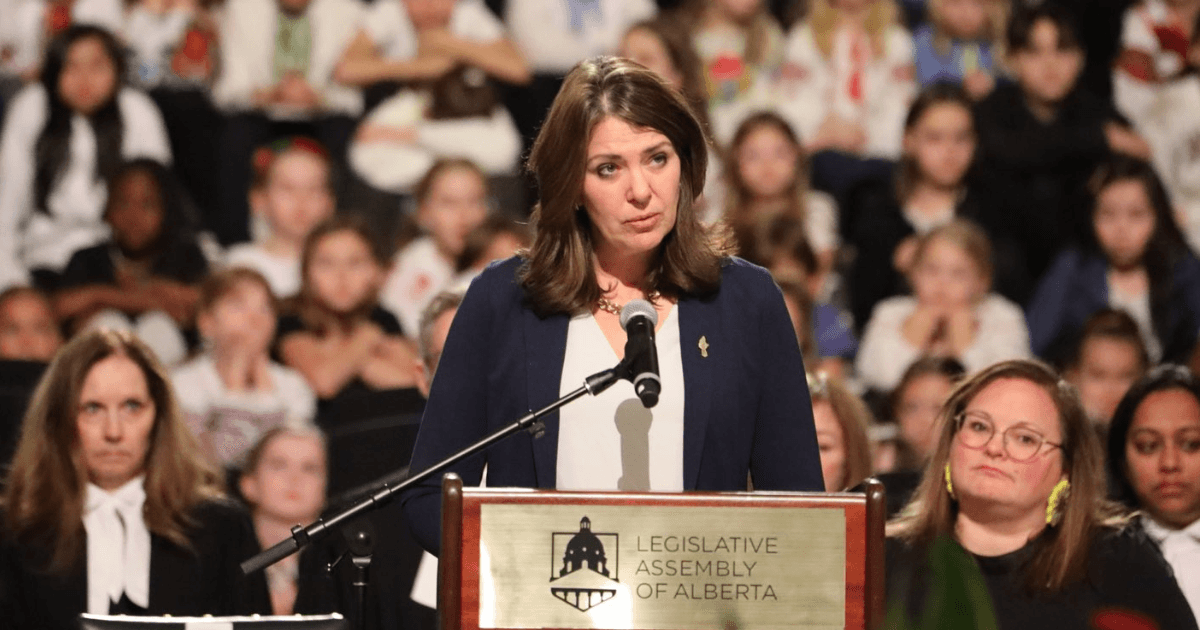
Danielle Smith has served as Premier of Alberta since October 2022 and bears full political accountability for Bill 9. She introduced the legislative package underlying it in January 2024, watched the first of those laws face an injunction in June 2025, and responded by invoking the most powerful constitutional tool available to a provincial government. Her statement that the stakes could not be higher was not rhetorical — it reflected a deliberate judgment that protecting legislation restricting pediatric medicalization, restoring parental rights, and maintaining sex-based sport categories was worth the political cost of a notwithstanding clause invocation that drew national and international criticism. Smith has committed to renewing the clause declaration when it expires in December 2030 if her government remains in office and the underlying laws remain in place.
Mickey Amery served as Minister of Justice and Attorney General and is the minister most directly accountable for Bill 9's constitutional architecture. He designed the invocation to be comprehensive — covering all three bills simultaneously, including Bill 29 against which no challenge had yet been filed, to avoid returning to the legislature multiple times. He extended the invocation to include the Alberta Bill of Rights and the Alberta Human Rights Act, not just the Charter — a move that went beyond what any previous Alberta government had done and that specifically foreclosed the AHRA primacy argument that challengers had identified as their strongest non-Charter avenue. His public statement that Bill 9 would terminate all ongoing court proceedings was ambitious and has been partially borne out: the Court of King's Bench denied the application to amend the Bill 26 challenge in May 2026, though the appeal remains live. Amery is the minister who converted a legislative package under legal threat into a package shielded from the most likely avenues of challenge.
Adriana LaGrange served as Minister of Health and Demetrios Nicolaides served as Minister of Education during the passage of the underlying bills. Both bear continued accountability for the implementation of the legislation Bill 9 protects — LaGrange for the healthcare provisions of Bill 26 that came into full force on December 18, 2025 when the injunction was ended, and Nicolaides for the education provisions of Bill 27 that had already been in force since September 1, 2025.
Mike Ellis served as Minister of Tourism and Sport and bears continued accountability for the implementation of the Fairness and Safety in Sport Act that Bill 9 protects — an Act that came into force September 1, 2025 and has since been implemented by provincial sport organizations including Athletics Alberta.
The Supreme Court of Canada does not bear ministerial accountability in the conventional sense, but its 2026 decisions on the limits of the notwithstanding clause — including the UR Pride case from Saskatchewan and related federal government interventions — will determine the outer boundaries of what Bill 9 has accomplished. If the Court holds that declaratory relief remains available even when the clause has been invoked, the legal challenge to Bill 26 may yet produce a judicial declaration that the legislation violates Charter rights, even without a strike-down remedy. That outcome would not undo the legislation but would create political and reputational consequences for any government that chooses to renew the clause declaration in December 2030.
References:
Bill 9, Protecting Alberta's Children Statutes Amendment Act, 2025, 2nd Sess, 31st Leg, Alberta, 2025 (Royal Assent 10 December 2025), online: https://www.alberta.ca/protecting-youth-supporting-parents-and-safeguarding-female-sport.
Canadian Charter of Rights and Freedoms, Part I of the Constitution Act, 1982, being Schedule B to the Canada Act 1982 (UK), 1982, c 11, s 33, online: https://laws-lois.justice.gc.ca/eng/const/page-12.html.
Alberta Human Rights Act, RSA 2000, c A-25.5, online: https://www.qp.alberta.ca/documents/Acts/a25p5.pdf.
Canadian Bill of Rights, SC 1960, c 44, online: https://laws-lois.justice.gc.ca/eng/acts/c-12.3/.
Bill 26, Health Statutes Amendment Act, 2024 (No. 2), 1st Sess, 31st Leg, Alberta, 2024 (Royal Assent 5 December 2024).
Bill 27, Education Amendment Act, 2024, 1st Sess, 31st Leg, Alberta, 2024 (Royal Assent 5 December 2024; in force 1 September 2025).
Bill 29, Fairness and Safety in Sport Act, 1st Sess, 31st Leg, Alberta, 2024 (Royal Assent 5 December 2024; in force 1 September 2025).
Egale Canada Human Rights Trust et al v His Majesty the King in Right of Alberta et al (Bill 26 challenge), Court of King's Bench of Alberta; application to amend denied May 2026; appeal pending.
Egale Canada, "The Fight Isn't Over: Egale Canada and Skipping Stone Continue Case Against Alberta Government" (11 December 2025), online: https://egale.ca/egale-in-action/fight-isnt-over/.
Egale Canada, "Egale Canada v Alberta — Health Statutes Amendment Act (Bill 26)" (updated May 2026), online: https://egale.ca/awareness/egale-v-alberta-healthcare/.
French, Janet, "Alberta to invoke notwithstanding clause to shield 3 transgender bills from court challenges" CBC News (19 November 2025), online: https://www.cbc.ca/news/canada/edmonton/alberta-government-notwithstanding-clause-bills-9.6983786.
Zhao, Emma, "Bill 9 not discouraging 2SLGBTQ+ groups challenging Alberta laws affecting transgender youth" CBC News (14 December 2025), online: https://www.cbc.ca/news/canada/edmonton/alberta-egale-canada-skipping-stones-bill-9-notwithstanding-clause-transgender-laws-9.7013063.
LawNow Magazine, "The Alberta Legislature repeatedly uses the Charter's notwithstanding clause to shield controversial laws from court challenges" (11 December 2025), online: https://www.lawnow.org/the-alberta-legislature-repeatedly-uses-the-charters-notwithstanding-clause-to-shield-controversial-laws-from-court-challenges/.
Policy Options, "When the notwithstanding clause becomes a political weapon" (18 December 2025), online: https://policyoptions.irpp.org/2025/12/notwithstanding-alberta/.
Alberta Teachers' Association, "Response to Bill 9: Alberta's flagrant disregard for basic human rights" (November 2025), online: https://teachers.ab.ca/news/response-bill-9-albertas-flagrant-disregard-basic-human-rights.
Amnesty International Canada, "Amnesty International Canada Condemns Alberta's Use of Notwithstanding Clause" (2025), online: https://amnesty.ca/press-releases/amnesty-international-canada-condemns-albertas-use-of-notwithstanding-clause-to-prop-up-anti-trans-policies/.
Cass, Hilary, Independent Review of Gender Identity Services for Children and Young People: Final Report (April 2024), online: https://cass.independent-review.uk/home/publications/final-report/.
Koshan, Jennifer, "Alberta's Bills Targeting Gender Diverse Youth: Comparisons, Constitutional Issues, and Challenges" (13 December 2024), online: ABlawg, http://ablawg.ca/2024/12/13/albertas-bills-targeting-gender-diverse-youth-comparisons-constitutional-issues-and-challenges/.
Read More
text
Bill 27: Education Amendment Act, 2024
In force September 1, 2025, Bill 27 requires schools to notify parents and obtain written consent before using a student's chosen name or gender-identity pronouns, and mandates parental opt-in for instruction on gender identity and sexuality. Shielded from Charter challenge by Bill 9; a constitutional challenge on non-Charter grounds continues.
text
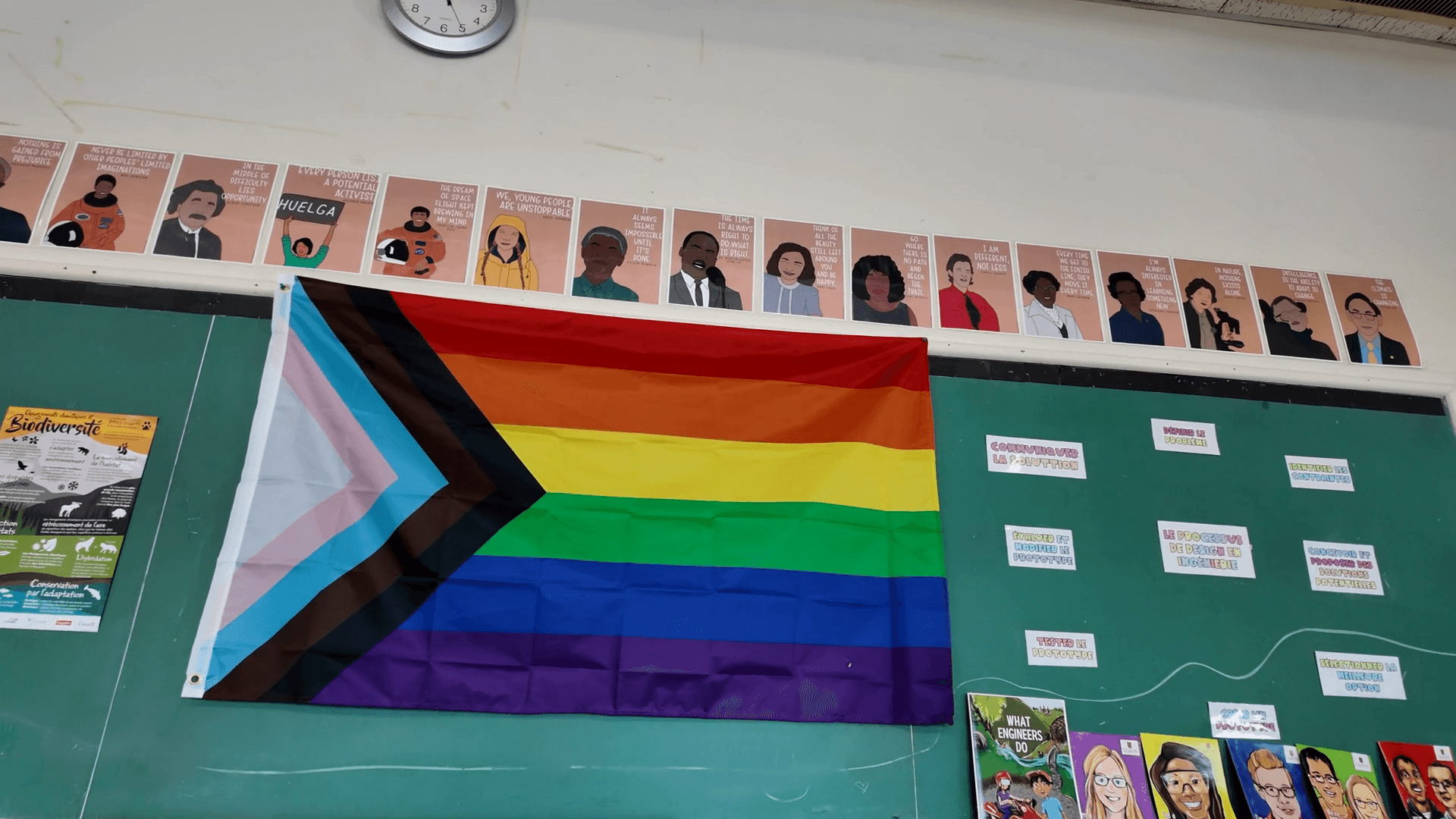
Bill 25: An Act to Remove Politics and Ideology from Classrooms, 2026
Introduced March 31, 2026, Bill 25 requires teachers and school boards to remain neutral on political, social, and ideological matters, restricts flags in schools to Alberta and Canadian flags, and removes the Education Act's requirement that schools nurture belonging and respect diversity. Not yet passed as of May 21, 2026.