An Act to Remove Politics and Ideology from Classrooms and Amend the Education Act, 2026
Introduced March 31, 2026 | Second Reading | Not yet passed as of May 21, 2026
Related Federal Legislation
Alberta's Classroom Neutrality Bill: What Bill 25 Does, What It Doesn't, and Why It Matters for Women and Girls

On March 31, 2026, Alberta's Minister of Education and Childcare, Demetrios Nicolaides, introduced Bill 25 — An Act to Remove Politics and Ideology from Classrooms and Amend the Education Act, 2026. The title is direct about its intent. The legislation proposes that Alberta's publicly funded schools be places of learning, not advocacy — that teachers remain neutral and impartial, that school boards refrain from taking positions on social and ideological matters, and that the school environment be defined by what students do rather than what the institution tells them they are owed.
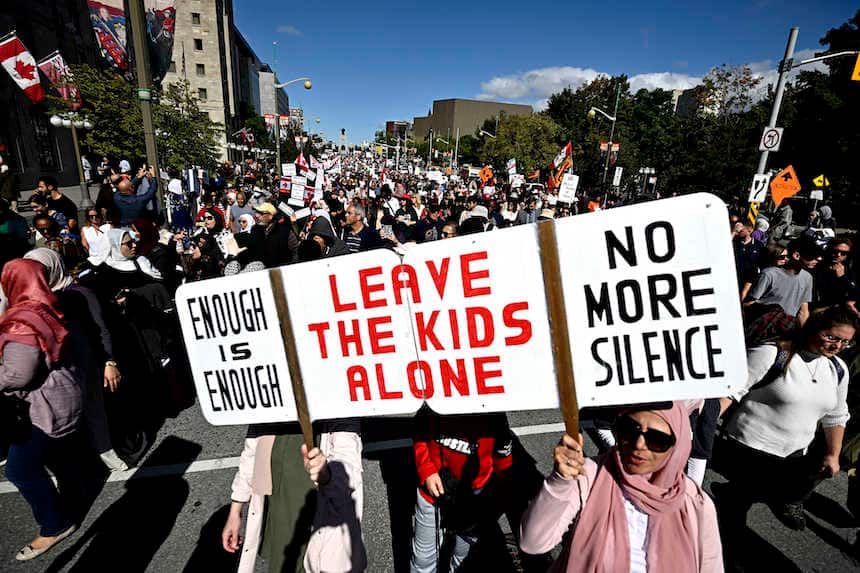
Critics called it censorship. The Alberta Teachers' Association called it a grab-bag of amendments. The Canadian Civil Liberties Association raised concerns about freedom of expression. Opposition parties argued it imposed rather than removed ideology. Those reactions were predictable and, in some respects, legitimate — the legislation raises real questions about the line between professional neutrality and the suppression of teachers' legitimate professional judgment.
But Bill 25 also represents the logical continuation of what Bills 26, 27, and 29 began. Those three pieces of legislation addressed gender-affirming medical care, parental rights over gender-related school accommodations, and the integrity of female sport categories. Bill 25 addresses the environment that surrounds all of those issues: the degree to which Alberta's publicly funded schools are permitted to promote ideological frameworks that underlie them. As of May 21, 2026, the bill has not yet passed. If it does, most provisions are anticipated to come into force September 1, 2026.
This is what Bill 25 actually does, what it changes from the existing law, and why it matters for the women and girls who have been the subject of this legislation's broader trajectory.
What Changed and What It Means
The most structurally significant change in Bill 25 is one that received relatively little attention compared to the flag provisions and the neutrality requirements. The existing Education Act contains a provision requiring that schools be welcoming, caring, respectful, and safe learning environments that respect diversity and nurture a sense of belonging and a positive sense of self. Bill 25 removes that language.
The replacement is behavioral rather than relational. Schools must foster and maintain respectful and responsible behaviors. The institution no longer owes the child belonging. The child owes the institution conduct.
That shift is not cosmetic. The language Bill 25 removes has been used as the legislative basis for school policies that affirm transgender identities, create gender-neutral washroom facilities, and implement inclusive curriculum — on the grounds that these policies are necessary to nurture belonging and a positive sense of self for gender-diverse students. Removing that language from the statute removes one of the primary legal hooks that school boards have used to justify those policies against parental objection.
The neutrality and impartiality requirements operate similarly. Requiring teachers and school boards to remain objective and present balanced perspectives on contested social and ideological matters does not prohibit discussion of gender identity in schools. It does constrain the degree to which the school institution can position itself as an advocate for a particular ideological framework — including the framework that gender identity supersedes biological sex for all educational and institutional purposes.
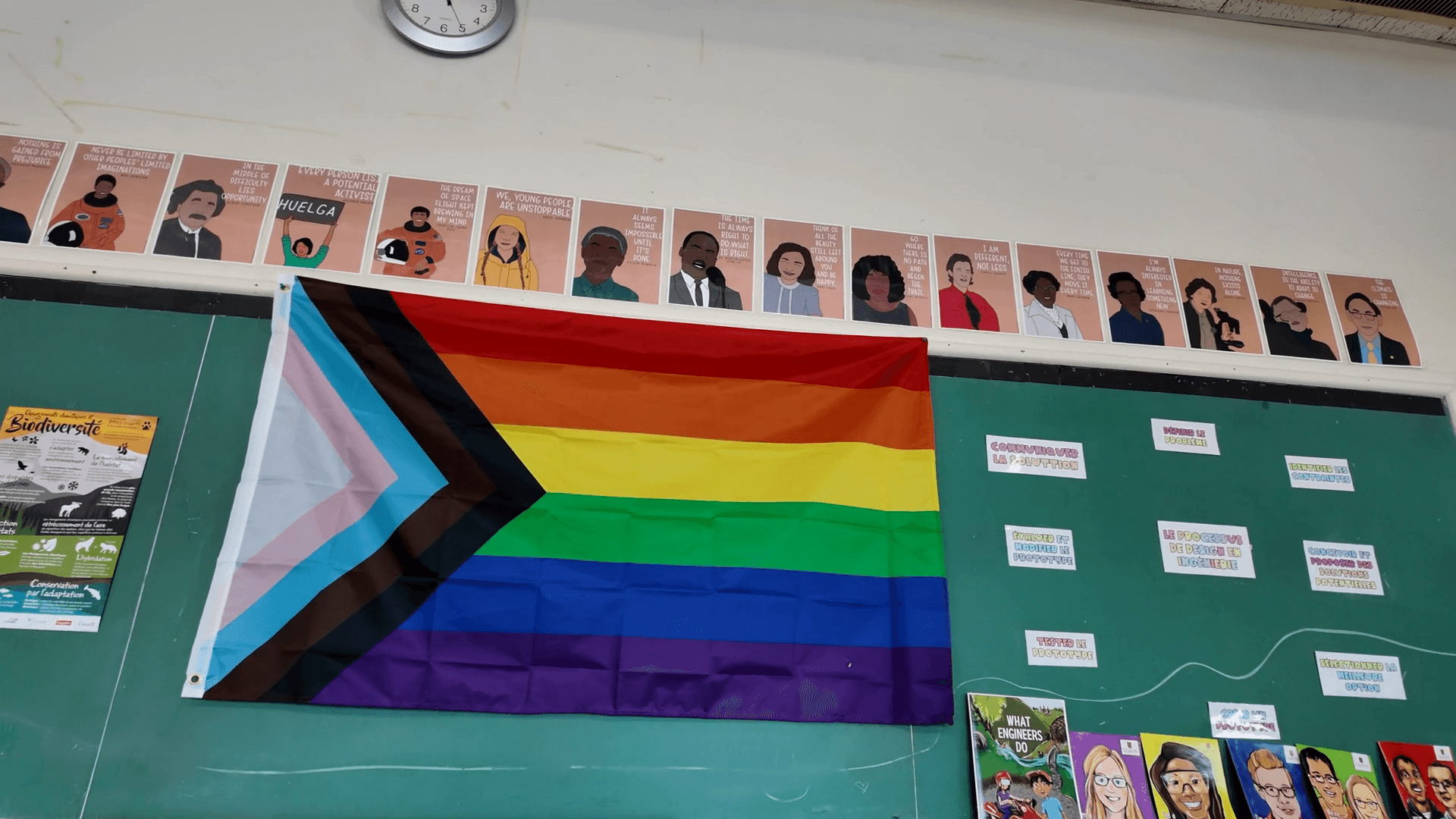
The flag restriction — prohibiting the display of any flags other than those of Alberta and Canada, with limited exemptions — attracted the most immediate public attention. Its connection to women's rights is indirect but real: the primary flags at issue in the policy debate that preceded this provision were Pride flags, which in some Alberta schools were flown alongside or in place of provincial and national flags. The restriction applies the same standard to all flags: only governmental symbols of Alberta and Canada are permitted. It is neutral on its face and targeted in its practical effect.
The Neutrality Requirement and Its Limits
The word Nicolaides kept reaching for in his introduction of Bill 25 was neutral. Teachers must be neutral. School boards must be impartial. Political and ideological matters have no place in Alberta schools.
The Alberta Teachers' Association's response was characteristically direct: true neutrality is not what this bill delivers. What it delivers, critics argue, is a constraint on one direction of advocacy while leaving others untouched — that requiring balance and objectivity on contested social questions operates asymmetrically in a school environment where the baseline position on gender identity has, over the past decade, shifted significantly toward affirmation.
There is something to that critique. Neutrality is never perfectly neutral — it always embeds assumptions about what the unmarked baseline is. A teacher who refers to a student by their biological sex is now neutral in Alberta law; a teacher who uses a student's preferred pronouns without parental consent is in breach of Bill 27. The legislation's neutrality requirements operate within a framework already shaped by Bills 27 and 29.
But the critique also proves too much. The argument that schools cannot be neutral because the baseline has already shifted is, at its core, an argument that ideological capture of educational institutions should be permanent once achieved — that the direction of travel cannot be reversed because the starting point has changed. That is not a defensible position in a democratic system in which electorates can change governments and governments can change policy.
For women's rights advocates, the neutrality requirement has a specific and important application. One of the consistent patterns in the broader debate about gender identity in schools has been the characterization of sex-realist positions — that biological sex is real and relevant, that women's sex-based rights matter, that the female category in sport and medicine serves a purpose — as bigotry rather than as legitimate perspectives on contested empirical and policy questions. Teachers who hold and express those views in their professional capacity have, in some school environments, faced professional consequences. Bill 25's employee-belief protections and neutrality requirements create a framework in which those views are not categorically excusable from the school environment.
The Parental Rights Connection
Bill 25 does not stand alone in Alberta's legislative landscape. It sits alongside Bill 27, which came into force September 1, 2025 and requires parental notification and consent for gender-related name and pronoun accommodations. Bill 25 extends the parental rights framework in a different direction: not by governing specific accommodations, but by governing the overall ideological orientation of the school environment within which those accommodations arise.
The combination of Bills 27 and 25, if both are in force, creates a school environment in which: gender-related identity accommodations require parental involvement; teachers are required to be neutral and impartial on contested social and ideological matters; school boards cannot take institutional positions on those matters; and the Code of Professional Conduct for teachers includes expectations of objectivity and balanced perspectives.
That is a materially different school environment from the one that existed before 2024. Whether it is better or worse depends on one's view of what schools are for. The Alberta government's view is that schools are for learning — academic rigor, intellectual integrity, preparation for adult life — and that advocacy for contested ideological frameworks is not part of that mandate. The opposition's view is that schools are communities that owe their students belonging, safety, and affirmation, and that Bill 25 removes the legislative foundation for that obligation.
For parents of daughters navigating gender identity questions in Alberta schools, the practical question is straightforward: is their child being taught to learn, or being taught to identify? Bill 25 is the Alberta government's legislative answer to that question.
What Happens Next
Bill 25 had not passed as of May 21, 2026. It was in second reading before the Alberta Legislative Assembly. The anticipated proclamation date of September 1, 2026 requires passage before the end of the current legislative session.
The Alberta Teachers' Association has stated it has not been consulted on the bill's regulatory implications and has called for consultation before any regulations are implemented. The Alberta School Boards Association stated it was analyzing the bill's governance and operational implications. The Canadian Civil Liberties Association raised concerns about freedom of expression. Opposition parties have signalled strong resistance.
If passed, Bill 25 will face the same legal landscape as Bills 26, 27, and 29: a potential Charter challenge that the government may or may not choose to shield with the notwithstanding clause. Premier Smith's government has demonstrated a willingness to use that tool. Whether it will be needed for Bill 25 depends on whether the legislation survives a challenge on its own terms — the neutrality and impartiality requirements are more defensible than the medical restrictions in Bill 26 as a matter of educational administration, but the removal of the belonging and diversity language from the Education Act creates a specific vulnerability that challengers will likely target.
Conclusion: The Classroom as a Site of Rights
The debate over Bill 25 is, at its core, a debate about what schools are authorized to tell children about themselves and the world. It is a debate about whether teachers have a professional obligation to affirm contested ideological frameworks, or a professional obligation to present contested questions as contested. It is a debate about whether school boards speak for communities or are constrained to speak only about educational administration.
For women and girls, those questions are not abstract. The ideological framework that has shaped Alberta classrooms over the past decade — that gender identity supersedes biological sex, that affirmation of a child's stated gender identity is a professional obligation, that questioning those positions is harmful — has had direct consequences for the girls who are the disproportionate subjects of pediatric gender medicine, for the female athletes who have competed against biological males, and for the parents who were excluded from decisions that affected their daughters' lives.
Bill 25, if passed, will not resolve those consequences. The harm to girls who underwent irreversible medical procedures is not undone by a flag policy or a neutrality requirement. But it will change the environment in which the next generation of Alberta girls develops — toward one in which schools teach rather than advocate, and in which the contested questions that have defined this policy debate are treated as contested rather than settled.
That is not nothing. For the girls it affects, it may be a great deal.
Key Provisions
Requires teachers and school authorities to remain neutral and impartial when delivering lessons and crafting the school environment, and restricts school boards from issuing statements or taking positions on political, social, or ideological matters not relevant to their Education Act obligations.
Bars the display of any flags inside or outside schools other than the flags of Alberta and Canada, with limited exemptions to be specified later.
Requires schools to play the Canadian national anthem at least once per week.
Removes the existing Education Act requirement that schools be welcoming, caring, respectful, and safe environments that respect diversity and nurture a sense of belonging and positive sense of self — replacing it with language requiring schools to foster respectful and responsible behaviours.
Adds employee-belief protections and updates parental-involvement requirements for non-instructional school activities.
Adds ministerial oversight of superintendent contracts.
Requires the Code of Professional Conduct for Teachers and Teacher Leaders to include expectations of objectivity and balanced perspectives.
Most provisions anticipated to come into force September 1, 2026 if passed.
Ministerial Chain of Custody:
Danielle Smith has served as Premier of Alberta since October 2022 and bears ultimate political accountability for the legislative direction of which Bill 25 forms a part. The bill is the fifth piece of major education and child policy legislation introduced under her government since 2024, following Bills 26, 27, 29, and Bill 9. Her government's consistent direction — restricting gender ideology in publicly funded schools, restoring parental rights, and defining the school environment in terms of academic rigor and behavioural standards rather than affirmation and belonging — is the political framework within which Bill 25 sits. Smith has not yet been required to decide whether to invoke the notwithstanding clause to protect Bill 25 if it passes and is challenged. Given her government's record on that question, the answer if the question arises is not difficult to anticipate.
Demetrios Nicolaides served as Minister of Education and Childcare and introduced Bill 25 on March 31, 2026. As the portfolio minister directly responsible for Alberta's Education Act and for the province's public school system, he bears primary ministerial responsibility for the bill's design, its parliamentary management, and its anticipated implementation on September 1, 2026 if passed. Nicolaides has been the education minister throughout the implementation of Bill 27, which came into force September 1, 2025 under his watch. Bill 25 is a continuation of the policy direction he has overseen — from the specific accommodation requirements of Bill 27 to the broader institutional neutrality requirements of Bill 25. His decision to introduce Bill 25 without prior consultation with the Alberta Teachers' Association — noted explicitly by the ATA in its initial response — reflects an approach to education policy reform that prioritises legislative speed over stakeholder process, consistent with the broader legislative pattern of his government.
Mickey Amery served as Minister of Justice and Attorney General and bears the constitutional accountability that applies to all significant Alberta legislation — assessing its defensibility against Charter challenge, advising on its interaction with existing provincial and federal law, and managing the government's legal strategy if the legislation is challenged. The specific vulnerability in Bill 25 — the removal of the belonging and diversity language from the Education Act and the potential freedom of expression implications of the neutrality requirements — will be questions his department has assessed. Whether the government will invoke the notwithstanding clause to protect Bill 25 if it is challenged will be a decision made on his advice.
The Alberta Teachers' Association, as the professional body representing Alberta's teachers, bears institutional accountability for the professional culture in Alberta schools that Bill 25 is responding to. The ATA's initial characterisation of Bill 25 as a grab-bag of amendments — and its statement that it has not been consulted on regulatory implications — reflects an institutional posture of resistance to the government's direction that has been consistent across Bills 27 and 25. The ATA's support for the Egale Canada challenge to Bill 27 and its public opposition to Bill 25 place it in explicit institutional opposition to the government's parental rights and classroom neutrality agenda. The relationship between the ATA and the Smith government will continue to shape how Bill 25 is implemented in Alberta schools, if it passes.
References:
Bill 25, An Act to Remove Politics and Ideology from Classrooms and Amend the Education Act, 2026, 2nd Sess, 31st Leg, Alberta, 2026 (introduced 31 March 2026), online: https://docs.assembly.ab.ca/LADDAR_files/docs/bills/bill/legislature_31/session_2/20251023_bill-025.pdf.
Government of Alberta, "Removing Politics and Ideology from Alberta Classrooms" (31 March 2026), online: https://www.alberta.ca/removing-politics-and-ideology-from-alberta-classrooms.
Government of Alberta, "Fact Sheet: Bill 25, An Act to Remove Politics and Ideology from Classrooms and Amend the Education Act, 2026" (31 March 2026), online: https://www.alberta.ca/system/files/ecc-bill-25-fact-sheet.pdf.
Education Act, RSA 2012, c E-0.3, online: https://www.qp.alberta.ca/documents/Acts/e0p3.pdf.
Bill 27, Education Amendment Act, 2024, 1st Sess, 31st Leg, Alberta, 2024 (Royal Assent 5 December 2024; in force 1 September 2025).
Bill 9, Protecting Alberta's Children Statutes Amendment Act, 2025, 2nd Sess, 31st Leg, Alberta, 2025 (Royal Assent 10 December 2025).
Canadian Charter of Rights and Freedoms, Part I of the Constitution Act, 1982, being Schedule B to the Canada Act 1982 (UK), 1982, c 11, ss 2(b), 15, online: https://laws-lois.justice.gc.ca/eng/const/page-12.html.
Alberta Human Rights Act, RSA 2000, c A-25.5, online: https://www.qp.alberta.ca/documents/Acts/a25p5.pdf.
French, Janet, "Alberta government says new bill intended to remove politics, ideology from schools" CBC News (31 March 2026), online: https://www.cbc.ca/news/canada/edmonton/alberta-education-bill-ideology-politics-classroom-9.7148982.
Alberta Teachers' Association, "Statement Regarding Bill 25 and Amendments to the Education Act" (31 March 2026), online: https://teachers.ab.ca/news/statement-regarding-bill-25-and-amendments-education-act.
Alberta School Boards Association, "ASBA Statement on Bill 25" (April 2026), online: https://www.asba.ab.ca/asba-statement-bill-25.
Alberta Record, "Bill 25 — An Act to Remove Politics and Ideology from Classrooms and Amend the Education Act, 2026" (April 2026), online: https://takealbertaback.ca/events/bill-25-removing-politics-ideology-classrooms-2026.
Canadian Civil Liberties Association, Press Release on Bill 25 (April 2026), online: https://ccla.org/press-release/alberta-education-b.
Public Interest Alberta, "Bill 25 is a Far-Right Attack on Public Education" (31 March 2026), online: https://www.pialberta.org/bill_25.
Koshan, Jennifer, "Alberta's Bills Targeting Gender Diverse Youth: Comparisons, Constitutional Issues, and Challenges" (13 December 2024), online: ABlawg, http://ablawg.ca/2024/12/13/albertas-bills-targeting-gender-diverse-youth-comparisons-constitutional-issues-and-challenges/.
Read More
text
Bill 9: Protecting Alberta's Children Statutes Amendment Act, 2025
Passed December 10, 2025, Bill 9 invoked the notwithstanding clause to shield Bills 26, 27, and 29 from Charter challenge, and additionally suspended the Alberta Bill of Rights and Alberta Human Rights Act in perpetuity — Alberta's most expansive use of override powers and the first notwithstanding clause invocation in Canadian history to protect sex-based rights legislation.
text
Bill 28: Municipal Affairs and Housing Statutes Amendment Act, 2026
Passed as part of Alberta's spring 2026 legislative session, Bill 28 extends the province's child access restrictions on explicit sexual content from school libraries to all public libraries, requiring materials containing explicit visual depictions of sexual acts to be kept behind the counter or in areas inaccessible to youth aged 15 and under. No books are banned — physical separation and parental consent for borrowing are the operative requirements. The legislation also introduces a universal municipal code of conduct and bans vacant home taxes.