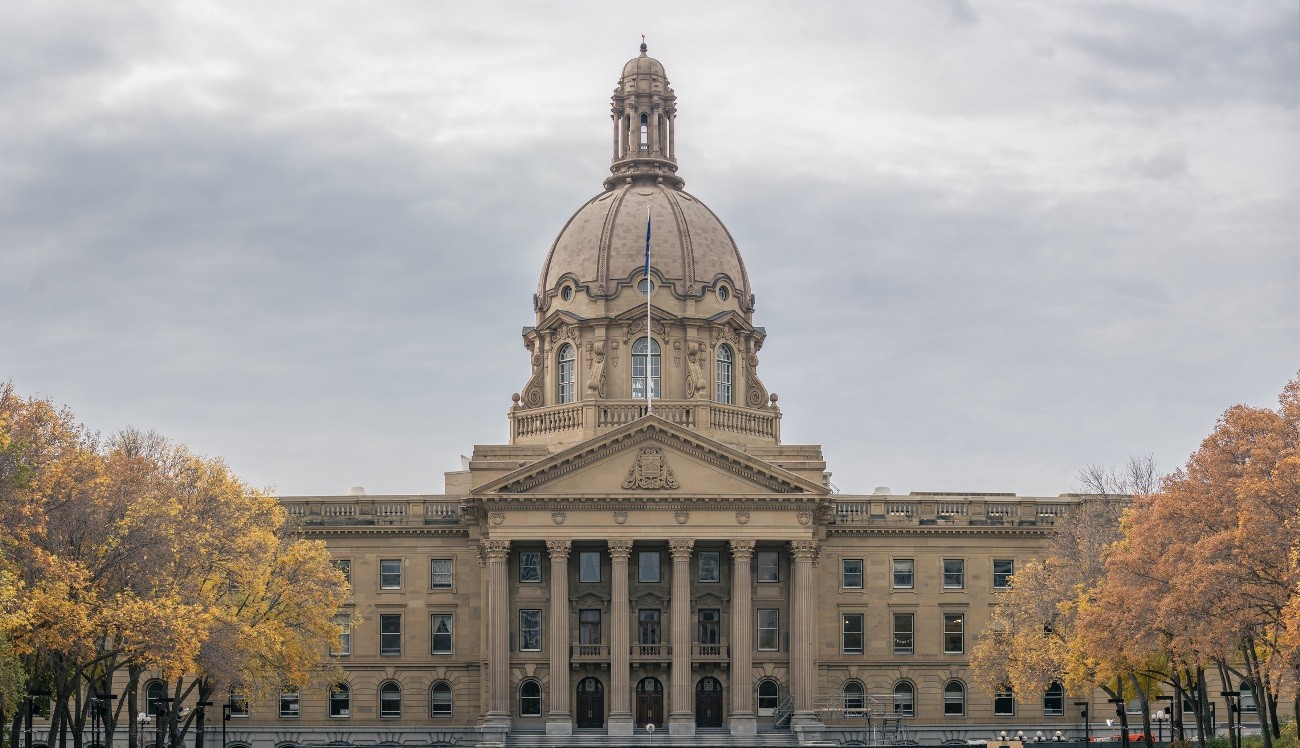
Alberta Human Rights Act, R.S.A. 2000, c. A-25.5
Alberta's provincial human rights law; amended in 2015 to add 'gender identity' and 'gender expression' as protected grounds; applies to provincial services but federal prisons fall under federal jurisdiction.
Alberta Human Rights Act: Provincial Protections and Limitations
The Alberta Human Rights Act is Alberta's provincial human rights statute. It prohibits discrimination in employment, tenancy, and the provision of goods and services. It is administered by the Alberta Human Rights Commission. It binds the provincial government, Alberta employers, landlords, and service providers — but not federal institutions, not federally regulated industries, and not federal correctional facilities.
In 2015, the Act was amended to add "gender identity" and "gender expression" to the list of protected grounds. The amendment was Bill 7 — An Act to Amend the Alberta Bill of Rights and Related Legislation — passed under Rachel Notley's NDP government, two years before Bill C-16 added the same grounds at the federal level.
Alberta was first. And because Alberta was first, Alberta is also the jurisdiction where the tension between "gender identity" protections and sex-based rights has been most visibly contested — in schools, in sport, in healthcare, and now in the province's willingness to invoke the notwithstanding clause to defend legislation the courts would otherwise have struck down.
This is the story of a provincial human rights statute that sits at the centre of an unfinished fight.
What the Act Actually Does
The Alberta Human Rights Act establishes a provincial prohibition on discrimination in four specific areas:
Publications, notices, and signs
Goods, services, accommodation, or facilities customarily available to the public
Tenancy
Employment
The protected grounds are listed in the Act's preamble and operative sections: race, religious beliefs, colour, gender, gender identity, gender expression, physical disability, mental disability, age, ancestry, place of origin, marital status, source of income, family status, and sexual orientation.
The Act is enforced through complaints to the Alberta Human Rights Commission. Complaints that are not resolved through investigation or mediation proceed to tribunal hearings. The Commission has the power to order remedies including financial compensation, cease-and-desist orders, and policy changes.
The Act's reach is provincial — which is a critical limit. Federal institutions operating in Alberta, including Correctional Service Canada's Edmonton Institution for Women, federally regulated employers, and federal departments, are subject to the federal Canadian Human Rights Act instead. A female inmate at the Edmonton Institution for Women cannot use the AHRA to challenge her cross-sex placement. She must use the federal Act, before the federal Canadian Human Rights Commission, subject to federal jurisprudence.
The 2015 Amendment: Bill 7
Before 2015, the Alberta Human Rights Act protected "gender" but did not separately protect "gender identity" or "gender expression." In practice, claims involving transgender discrimination were handled through the "gender" ground — a route that required complainants to frame their claims as sex-based.
Bill 7 changed that. Passed in the first session of the 29th Legislature under Premier Rachel Notley's NDP government, Bill 7 amended both the Alberta Bill of Rights and the Alberta Human Rights Act to add "gender identity" and "gender expression" as distinct protected grounds.
The amendment was presented as a straightforward equality measure. The legislative debate was brief. The bill received royal assent in December 2015. Alberta became the ninth Canadian jurisdiction to include "gender identity" in provincial human rights law, two years before the federal Parliament passed Bill C-16.
What the amendment did not include is as important as what it did include:
"Gender identity" was not defined in the Act
"Gender expression" was not defined in the Act
No guidance was provided on how the new grounds were to be reconciled with the existing protection on the basis of "gender"
No exception was built in for sex-segregated services or spaces
The Alberta Human Rights Commission subsequently issued interpretive guidance adopting, in substance, the position taken by the Ontario Human Rights Commission: that self-declared gender identity is determinative, that access to sex-specific spaces and services should be based on gender identity rather than biological sex, and that refusal to use a person's preferred pronouns may constitute discrimination.
None of that interpretive framework appears in the text of Bill 7. It was added by administrative interpretation — and, because administrative interpretation is what most Alberta employers, landlords, and service providers rely on to assess their compliance obligations, it has had the practical effect of law without the debate that would attend a statute written to say the same thing.
Protected Grounds Versus Sex
The tension at the heart of the Alberta Human Rights Act, after the 2015 amendment, is structural. The Act simultaneously protects:
"Gender" (understood in practice as biological sex)
"Gender identity" (understood as a self-declared internal sense of oneself)
"Gender expression" (understood as outward presentation)
The Act does not say which of these takes precedence when they conflict. It does not say whether a woman's right to be free from discrimination on the basis of gender includes the right to sex-segregated services that exclude male-bodied individuals. It does not define any of the three grounds.
The Commission's interpretive position has been that the grounds do not conflict — that accommodating gender identity does not limit sex-based rights. This position is tenable only if one accepts that "gender identity" is functionally equivalent to "sex" for all rights-bearing purposes, which is both philosophically contested and, in the experience of women whose sex-segregated spaces have been reconstituted as gender-identity-segregated spaces, practically incorrect.
The result is a provincial human rights regime in which a female Albertan who claims her right to a single-sex space is told that the Act protects gender identity, and that her sex-based claim is therefore unsuccessful. This is not what the statute says. It is what the statute has been read to mean.
What the Act Covers
Within its provincial jurisdiction, the Alberta Human Rights Act reaches into most of Albertans' daily lives:
Provincial public services — Alberta Health Services facilities, provincial government employment, Alberta court services, Service Alberta
Education — all Alberta public, separate, charter, and private schools operating under the Education Act
Employment — all Alberta employers not federally regulated
Tenancy — all residential and commercial tenancies in Alberta
Goods and services — businesses, clubs, and organizations providing services customarily available to the public
Provincial correctional facilities — Alberta remand centres and provincial correctional institutions
For each of these areas, the question of how "gender identity" protections interact with sex-based protections has arisen in one form or another over the past decade. The answers have generally been harmonized by the Commission in the direction of prioritizing gender identity — a harmonization that has, in turn, prompted the Alberta legislature to intervene directly with statute.
What the Act Does Not Cover
The most important exclusion from the Alberta Human Rights Act's jurisdiction is federal corrections. The Edmonton Institution for Women — the federal women's prison serving the Prairie region — is operated by Correctional Service Canada, which is a federal institution subject to federal human rights legislation and federal correctional policy.
A woman incarcerated at the Edmonton Institution for Women who objects to the placement of male-bodied inmates in her institution cannot bring a complaint under the AHRA. Her recourse is through:
The federal Canadian Human Rights Act
The Canadian Charter of Rights and Freedoms
Internal CSC grievance processes
The Office of the Correctional Investigator
The federal Charter challenge filed by caWsbar and the Justice Centre for Constitutional Freedoms on April 7, 2025
This jurisdictional line is significant. It means that approximately 70% of the women incarcerated at the Edmonton Institution for Women — who are Indigenous — face a federal regime in which the Alberta government's recent provincial legislative direction has no direct legal effect. Whatever Alberta does under its provincial authority to protect sex-based rights, the federal institution operating inside Alberta's borders operates under its own rules.
The Bona Fide Justification Exception
Like other Canadian human rights statutes, the Alberta Human Rights Act recognizes that not every distinction based on a protected ground constitutes discrimination. Sections 7(3) and 8(2) of the Act allow distinctions that are based on a bona fide and reasonable justification — the provincial equivalent of the federal bona fide occupational requirement framework developed in British Columbia (Public Service Employee Relations Commission) v BCGSEU (the Meiorin decision).
In theory, this exception would support sex-segregated services where such segregation is reasonably required for the purpose the service is designed to serve — women's shelters, rape crisis centres, intimate medical services, corrections. In practice, the Commission has interpreted the exception narrowly, and has required service providers to demonstrate that accommodation of gender identity within otherwise sex-segregated services is impossible or would cause undue hardship.
This interpretation effectively reverses the analytic starting point. Rather than beginning from the premise that sex-based segregation is a legitimate service design choice that requires justification only if someone is excluded for reasons unrelated to the service's purpose, the Commission has begun from the premise that any exclusion of a gender-identity-based claimant requires extraordinary justification. The practical effect is that sex-segregated services in Alberta have been operationally deprecated — not by statute, but by interpretation of statute.
Bills 26, 27, and 29: The 2024 Legislative Response
In October 2024, the Alberta government introduced three bills that represented the most direct legislative pushback on gender-identity-based interpretation of Alberta human rights law anywhere in Canada:
Bill 26 — Health Statutes Amendment Act, 2024 — Prohibited regulated health professionals from prescribing puberty blockers and cross-sex hormones to minors for the treatment of gender dysphoria, with limited exceptions for those 16 and 17 with parental, physician, and psychologist approval, and for those already receiving such treatment. Prohibited gender-affirming surgeries for minors.
Bill 27 — Education Amendment Act, 2024 — Required parental notification and consent before school staff could use a gender-identity-related chosen name or pronoun for a student under 16, with notification (but not consent) required for 16- and 17-year-olds. Required ministerial approval for learning and teaching resources primarily dealing with gender identity, sexual orientation, or human sexuality. Required parental opt-in for instruction on those topics.
Bill 29 — Fairness and Safety in Sport Act — Authorized the creation of sex-based divisions in school and certain amateur sport, to preserve fair competition for biological females.
All three bills received Royal Assent on December 5, 2024.
The bills were not passed against a background of legal clarity. They were passed against a background of legal tension — specifically, against a background of the Alberta Human Rights Act's gender identity provisions, which, on the Commission's prevailing interpretation, would forbid much of what Bills 26, 27, and 29 authorize or require.
This is not an accidental tension. It is the intended structural effect of the 2024 legislative package: to establish by statute a set of rules that administrative interpretation of the AHRA had been moving in the opposite direction.
The Constitutional Challenges and Bill 9
Within 24 hours of Royal Assent, Egale Canada, Skipping Stone, and several Alberta families filed suit challenging Bill 26 on Charter grounds. The challenges to Bills 27 and 29 followed.
On June 27, 2025, the Court of King's Bench of Alberta granted an injunction blocking the Bill 26 prohibition on gender-affirming hormone therapy for minors, pending determination of the Charter challenge. The injunction was a significant victory for the challengers and a signal that Alberta's courts were prepared to scrutinize the 2024 legislation closely.
In December 2025, the Alberta government responded with Bill 9 — the Protecting Alberta's Children Statutes Amendment Act — which re-enacted the substance of Bills 26, 27, and 29 and invoked the notwithstanding clause of section 33 of the Canadian Charter of Rights and Freedoms. The notwithstanding clause, where properly invoked, shields provincial legislation from judicial review under sections 2 and 7 through 15 of the Charter for a renewable five-year period.
Bill 9 is now itself the subject of ongoing litigation. Challengers have filed to amend their applications to seek remedies on constitutional grounds not covered by the notwithstanding clause — including federalism-based arguments and grounds rooted in the Alberta Human Rights Act itself, which, by its own terms, takes precedence over conflicting provincial legislation.
This is where Alberta's legal landscape now sits: with sex-based protections enacted in three statutes, Charter challenges blocked by the notwithstanding clause, and the Alberta Human Rights Act itself being advanced by challengers as the vehicle for overriding those statutes. The Act that was expanded in 2015 to include gender identity protections is now being used to attempt to dismantle sex-based legislation the Alberta legislature has intentionally enacted.
The Primacy Clause
Alberta human rights legislation includes, by longstanding judicial interpretation and by provisions elsewhere in the statutory scheme, a primacy principle: human rights protections take precedence over conflicting ordinary legislation unless the conflicting legislation expressly overrides them.
This principle is the argument now being advanced against Bills 26, 27, and 29, and by extension against Bill 9's re-enactment of them: even if Bill 9 is shielded from Charter review by the notwithstanding clause, the Alberta Human Rights Act still protects gender identity and gender expression, and its protections take precedence over the new statutes' restrictions.
The counter-argument — which will be made in the defence of Bill 9 and any subsequent legislation — is that the primacy principle is a principle of statutory interpretation, not a constitutional rule, and that a later-in-time statute with clear legislative intent can modify the Act's application in a specific domain. This is a more technical argument, but it is not a weaker one. Its success will depend on how the Alberta courts weigh the Act's foundational status against the legislature's expressed will in the 2024 and 2025 statutes.
The AHRA is not neutral in this fight. It is one of the instruments being fought over.
Coordination with Federal Law
Even where the Alberta Human Rights Act's provincial jurisdiction is secure, its interaction with federal law creates enforcement gaps that affect Alberta women directly.
Federal corrections. Women in the Edmonton Institution for Women rely on federal law, not the AHRA, for their rights claims. The Act provides them no remedy.
Federal employment. Alberta women working for federally regulated employers — banks, airlines, interprovincial transport, broadcasting — rely on the Canadian Human Rights Act, not the AHRA.
Federal benefits and services. Employment Insurance, Old Age Security, Canada Pension Plan, and other federal services operate under federal law.
Federal facilities. RCMP detachments, federal courthouses, federal port and airport infrastructure operate under federal law.
The Act is a provincial instrument. It is effective within its provincial reach. But the federal government's parallel framework operates independently, and the Alberta government cannot legislate to close the gaps that the federal framework leaves open.
What Happens Next
Three intersecting processes will determine the Alberta Human Rights Act's direction over the next several years:
The Bills 26/27/29 litigation, now continuing despite the notwithstanding clause invocation in Bill 9, on non-Charter constitutional grounds and on AHRA primacy grounds. The outcome will shape whether Alberta's sex-based legislative framework can coexist with the AHRA's gender identity provisions — or whether one will effectively override the other.
Possible further amendment of the AHRA itself. The Alberta legislature has, to date, not directly amended the gender identity and gender expression provisions of the Act. A future government inclined to clarify the Act could do so by defining the terms, by inserting a sex-based rights priority, by creating a statutory sex-segregated spaces exception, or by some combination. The political conditions for such an amendment exist; the legislative vehicle has not yet been introduced.
Federal-provincial coordination. As caWsbar's federal Charter challenge proceeds, Alberta's position in the broader Canadian legal environment will shift. If the federal courts conclude that sections 7, 12, and 15 of the Charter require protection of women's sex-based rights in federal corrections, Alberta's provincial framework will gain an ally rather than a constraint.
The Alberta Human Rights Act is, in short, a statute in transition. Its 2015 amendment was understood at the time as a routine expansion of protected grounds. It has proved to be anything but routine. The legal infrastructure Alberta built in 2015 is now the battleground over which Alberta's 2024 legislation must be fought — and whether the province's democratic choice to restore sex-based protections will survive depends, in significant part, on how the Act is interpreted in the years ahead.
Key Provisions
Section 4: Prohibits discrimination in employment, tenancy, goods/services based on protected grounds including 'gender identity' and 'gender expression' (added 2015)
Provincial Jurisdiction: Applies to provincial government, employers, landlords, service providers in Alberta
Federal Prisons Exempt: Federal prisons (Edmonton Institution for Women) fall under federal jurisdiction, not provincial human rights law
Relevance: Demonstrates Alberta was already ahead of federal law in adding gender identity protections
Provincial Remand: Alberta provincial remand facilities (not federal prisons) are subject to this Act
Ministerial Chain of Custody:
The Alberta Human Rights Act is provincial legislation, which means its ministerial chain runs through the Government of Alberta rather than Ottawa. The minister responsible for the Act is the Alberta Attorney General and Minister of Justice, whose portfolio includes oversight of the Alberta Human Rights Commission.
The current Alberta Human Rights Act came into force on June 1, 2009, replacing the Individual Rights Protection Act that had been in place since 1972. It was enacted under Premier Ed Stelmach's Progressive Conservative government.
Alison Redford served as Alberta's Minister of Justice and Attorney General from 2008 to 2011, during the period when the current Act was drafted and brought into force. She was the provincial minister responsible for the transition from the IRPA to the AHRA. Redford subsequently served as Premier of Alberta from 2011 to 2014.
The Alberta Human Rights Act, like its federal counterpart, prohibits discrimination on the basis of both sex and gender identity — a ground added to Alberta's legislation by the NDP government of Rachel Notley through Bill 7 in 2015. The Act does not define gender identity and does not provide guidance on how to resolve conflicts between sex-based protections and gender identity accommodation. The ministers responsible for that omission include those who served as Attorney General and Justice Minister under both the Notley NDP government and the subsequent United Conservative Party governments.
Tyler Shandro served as Minister of Justice and Attorney General of Alberta from 2021 to 2022 under Premier Jason Kenney.
Kaycee Madu served as Minister of Justice and Solicitor General of Alberta from 2022 to 2023 under Premier Danielle Smith.
Mickey Amery has served as Minister of Justice and Attorney General of Alberta under Premier Danielle Smith from 2023 to present. His portfolio includes oversight of the Alberta Human Rights Commission and responsibility for whether the provincial government chooses to clarify, through legislation or policy, how sex-based protections interact with gender identity provisions under Alberta's human rights framework.
References:
Alberta Human Rights Act, RSA 2000, c A-25.5, online: https://www.qp.alberta.ca/documents/Acts/a25p5.pdf
Bill 7, An Act to Amend the Alberta Bill of Rights and Related Legislation, 1st Sess, 29th Leg, Alberta, 2015 (Royal Assent 18 December 2015).
Alberta Bill of Rights, RSA 2000, c A-14, online: https://kings-printer.alberta.ca/1266.cfm?page=A14.cfm
Alberta Human Rights Commission, online: https://www.albertahumanrights.ab.ca/
Bill 26, Health Statutes Amendment Act, 2024 (No. 2), 1st Sess, 31st Leg, Alberta, 2024 (Royal Assent 5 December 2024).
Bill 27, Education Amendment Act, 2024, 1st Sess, 31st Leg, Alberta, 2024 (Royal Assent 5 December 2024).
Bill 29, Fairness and Safety in Sport Act, 1st Sess, 31st Leg, Alberta, 2024 (Royal Assent 5 December 2024).
Bill 9, Protecting Alberta's Children Statutes Amendment Act, 2025, 2nd Sess, 31st Leg, Alberta, 2025 (invoking s 33 of the Canadian Charter of Rights and Freedoms).
Canadian Charter of Rights and Freedoms, Part I of the Constitution Act, 1982, being Schedule B to the Canada Act 1982 (UK), 1982, c 11, ss 2, 7, 12, 15, 33, online: https://laws-lois.justice.gc.ca/eng/const/page-12.html
Canadian Human Rights Act, RSC 1985, c H-6, online: https://laws-lois.justice.gc.ca/eng/acts/h-6/
Bill C-16: An Act to amend the Canadian Human Rights Act and the Criminal Code, 1st Sess, 42nd Parl, 2017 (Royal Assent 19 June 2017), online: https://www.parl.ca/DocumentViewer/en/42-1/bill/c-16/royal-assent
British Columbia (Public Service Employee Relations Commission) v BCGSEU, [1999] 3 SCR 3 [Meiorin], online: https://scc-csc.lexum.com/scc-csc/scc-csc/en/item/1724/index.do
Canadian Bar Association, Alberta Branch, Response to Bills 26, 27 and 29 (December 2024), online: https://cba-alberta.org/our-impact/submissions/response-to-bills-26-27-and-29/
Jennifer Koshan, "Alberta's Bills Targeting Gender Diverse Youth: Comparisons, Constitutional Issues, and Challenges" (13 December 2024), online: ABlawg, http://ablawg.ca/2024/12/13/albertas-bills-targeting-gender-diverse-youth-comparisons-constitutional-issues-and-challenges/
Egale Canada et al v His Majesty the King in Right of Alberta et al, Court of King's Bench of Alberta (ongoing), Charter challenge to Bills 26, 27, and 29; injunction granted 27 June 2025.
Government of Alberta, Supporting Alberta Students and Families, online: https://www.alberta.ca/supporting-alberta-students-and-families
Canadian Women's Sex-Based Rights (caWsbar), online: https://cawsbar.ca/
Justice Centre for Constitutional Freedoms, Charter Challenge on Behalf of caWsbar Regarding Male Inmates in Women's Federal Prisons (filed 7 April 2025), online: https://www.jccf.ca/
Read More
text
Access to Information Act
Federal law allowing public to request government documents; critical tool for advocates seeking data on male transfers to women's prisons, assaults, and CSC policy decisions.
text
Bill C-16
Added 'gender identity or expression' to federal anti-discrimination and hate crime laws, creating legal framework that CSC used to justify self-identification prison policies without explicit legislative mandate.