Definitional & Economic Opportunities
When 'Woman' Means Anyone: How Erasing Definitions Undermines Women's Rights
What does it mean to be a woman?
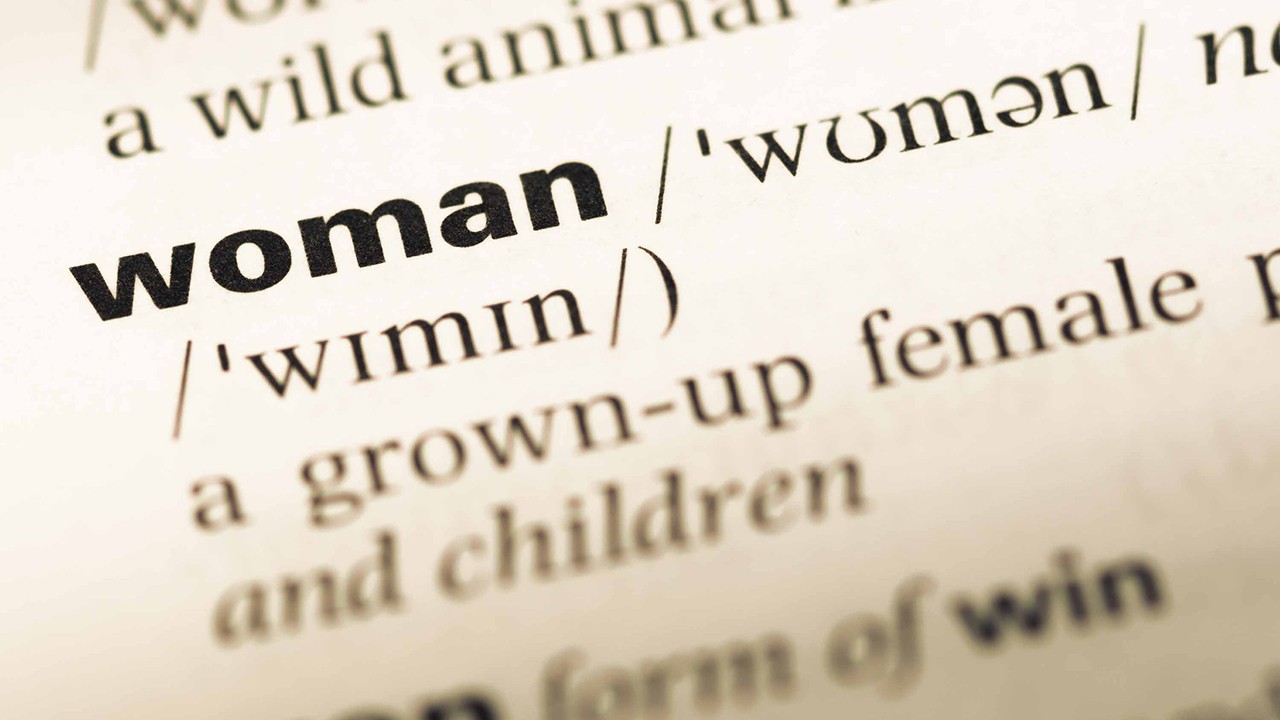
For most of human history, this question had a straightforward answer rooted in biological reality: a woman is an adult human female. This definition wasn't arbitrary—it reflected observable, material facts about human sexual dimorphism and formed the foundation for understanding sex-based oppression and organizing for women's rights.
Today, that definition has been systematically erased from Canadian law and policy. In its place stands a circular, unfalsifiable claim: a woman is anyone who identifies as a woman.
This shift might seem like a semantic quibble, an expansion of inclusivity that harms no one. But the consequences for women's rights are profound and far-reaching.
The Problem with Circular Definitions
When "woman" becomes a matter of self-identification rather than biological reality, several critical problems emerge:
First, the definition becomes meaningless. A definition that includes anyone who claims it, describes nothing. It's circular reasoning: "A woman is someone who identifies as a woman" tells us nothing about what a woman actually is. This isn't expanded understanding—it's the absence of definition.
Second, we cannot protect what we cannot define. Women's rights laws, policies, and protections were created to address discrimination and oppression based on biological sex. When the law no longer recognizes biological sex as a meaningful category distinct from self-declared identity, it becomes impossible to identify, measure, or remedy sex-based discrimination.
Third, material reality disappears. Treating sex as "assigned at birth" rather than "observed at birth" suggests it's arbitrary—a social construct imposed by doctors rather than a biological fact. This language denies that female bodies are meaningfully different from male bodies in ways that create specific vulnerabilities, needs, and experiences of oppression.
Erasing Sex-Based Analysis
The women's liberation movement has always centered a clear-eyed analysis of how female reproductive capacity, physical differences and vulnerability to male violence—creates the conditions for women's oppression. This sex-based analysis recognizes that:
Women are oppressed because they are female
Pregnancy, menstruation, and menopause are female experiences with social and economic consequences
Male violence against women is sex-specific and pervasive
Economic inequality stems partly from women's reproductive role and care work
Female genital mutilation, forced marriage, and sex trafficking target biological females
When we can no longer discuss these realities as female-specific experiences—when we must instead speak of "people who menstruate" or "individuals with uteruses"—we lose the ability to analyze the root causes of women's oppression.
Major institutions now insist that pregnancy is "not just a women's issue," that female genital mutilation affects "people with vulvas," and that sex trafficking is "not gender-specific." This linguistic erasure makes feminist analysis impossible and obscures who is being harmed and why.
The Loss of Women as a Political Class
Political movements require clear group identity. Workers organize as workers. Racialized people organize around shared experiences of racism. Women organize as women—as a sex class united by shared biology and resulting lived experiences and oppression.
But how can women organize politically when the category "women" has no stable definition? When any man can claim membership simply by identifying into the group?
The answer is: we can't. And that may be precisely the point.
Women's organizing is being systematically disrupted. Women's groups that try to maintain sex-based membership face accusations of discrimination. Feminist analysis centered on female biology is labeled "exclusionary." Lesbian organizations—founded on the reality of female homosexuality—are pressured to include males who identify, not only as women, but also as lesbians. Sexual orientation has been labeled transphobic.
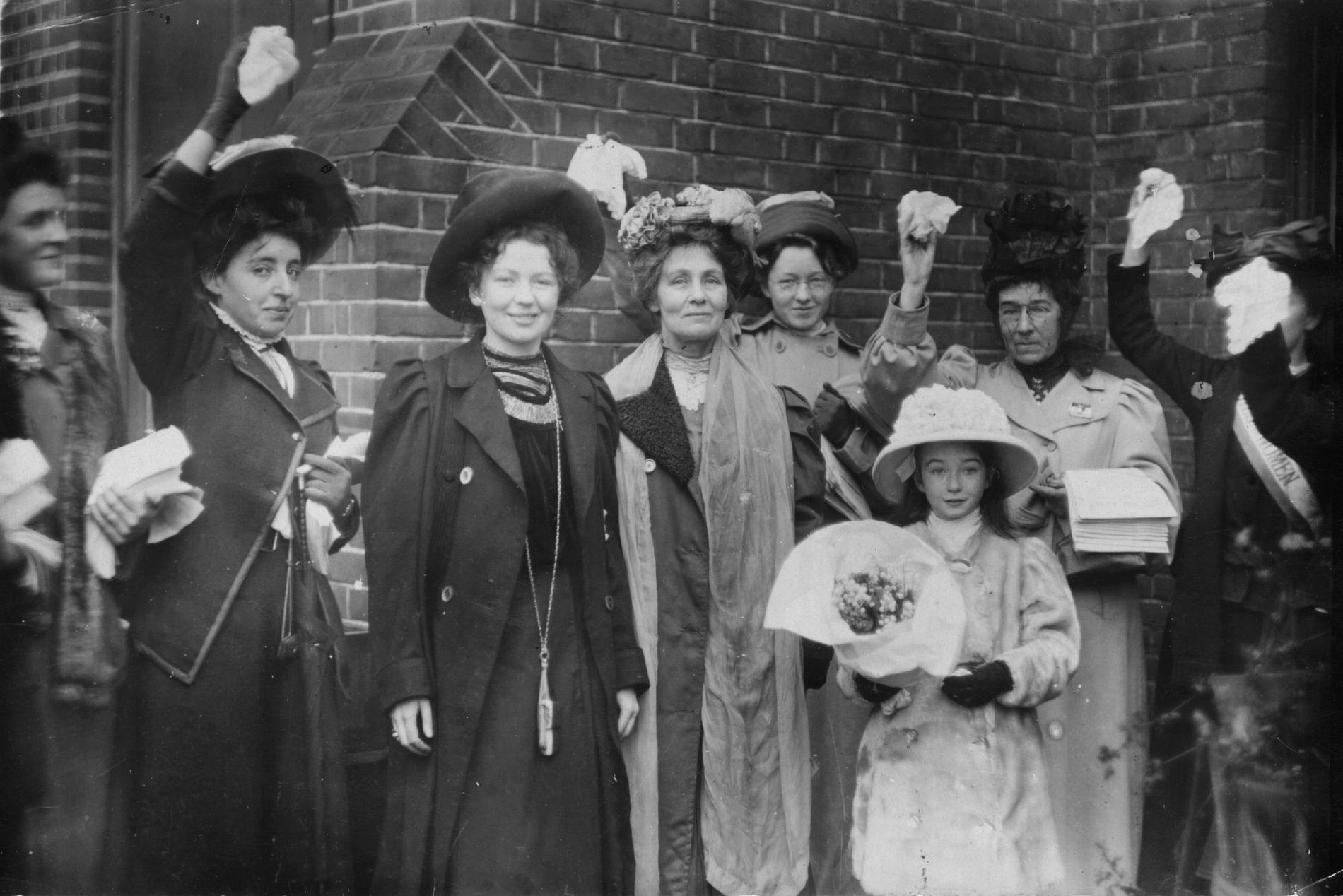
The historical victories of the women's movement were won through sex-class consciousness and organizing. Suffrage, reproductive rights, workplace protections, violence prevention laws—all emerged from women recognizing their shared interests as females and demanding change. When we cannot name ourselves or organize around our material reality, that power dissipates.
Economic Opportunities Diverted
The definitional confusion has concrete economic consequences. Programs and positions created to address women's under representation are being diverted to biological males:
Employment Equity: Gender diversity mandates can now be met by hiring males who identify as women. A company could theoretically have zero female employees while claiming perfect gender parity—as long as enough men self-identify as women. This means programs meant to remedy actual discrimination against biological females are failing to reach their intended beneficiaries.
Scholarships and Awards: Women's scholarships exist because girls and women face specific barriers to education and advancement. When these scholarships go to biological males, they're not serving their purpose. Resources meant to compensate for sex-based disadvantage are being redirected.
Board Positions and Leadership: Corporate and organizational policies requiring women's representation on boards and in leadership can be satisfied with males. This allows institutions to claim progress on gender equity while actual female representation stagnates or declines.
Professional Networks: Women's business and professional networks were created because women were excluded from male networking spaces and needed separate venues to build connections and support. When these networks must include males who identify as women, they lose their function as spaces for women to organize around shared interests and challenges.
Recognition and Visibility: When "Woman of the Year" awards go to biological males, when "first woman" positions in various fields are claimed by males, women's achievements are being rendered invisible. This isn't just symbolic—visibility matters for inspiring future generations and documenting women's contributions.
How federal programs built for women were redefined to include males
Every major federal program designed to address women's economic disadvantage was created when "woman" meant adult human female. Since 2017, a series of legislative and policy changes has redefined "woman" to include any male who self-identifies — without amending the programs themselves or adjusting the resources allocated. Click any program to see what changed.
The Circular Logic Problem
Defenders of current gender identity policies often argue that “transgender women are women” and therefore should be treated identically to women in law, policy, language, and access to female spaces.
However, the central issue in this debate is the definition of the word woman itself.
The disagreement is not about whether transgender individuals deserve dignity, safety, or legal protection from unjust discrimination. The disagreement is whether the category woman refers to:
Adult human females (a sex-based definition), or
Anyone who identifies as a woman (an identity-based definition).
Simply asserting that “transgender women are women” does not resolve this dispute. It assumes the conclusion by adopting one definition of woman as already settled, when that definition is precisely what remains contested.
This distinction matters because many sex-based rights, protections, and social realities exist specifically because women are female.
Female people experience:
reproductive vulnerability,
pregnancy and childbirth,
sex-based violence,
historical legal inequality,
and socialization tied to being born and recognized as female from childhood onward.
A male who identifies as a woman may experience discrimination, including hostility toward gender non-conformity. However, that experience is not identical to the lifelong social, legal, and biological realities associated with being female.
Recognizing these differences is not an expression of hatred or exclusion. It is an argument that sex remains a meaningful and material category in law, policy, medicine, sport, data collection, safeguarding, and the protection of women’s rights.
The question being debated is not whether transgender people deserve respect and legal protections. The question is whether gender identity should replace biological sex as the basis for defining the category woman in public policy and law.
What's at Stake
When we lose the ability to define "woman," we lose:
Legal protections against sex-based discrimination (because we can't identify the protected class)
Data integrity for tracking women's status (because we can't count who we can't define)
Political organizing power (because we can't mobilize as a class without boundaries)
Resources and opportunities meant to remedy historical discrimination (because they're diverted elsewhere)
Feminist analysis of the root causes of women's oppression (because we can't discuss female-specific realities)
This isn't a theoretical concern or a distant possibility. It's happening now, across Canada, in policy and practice.
The Path Forward
Protecting women's rights requires reinstating clear, sex-based definitions:
Legal Clarity: Canadian law should explicitly define "woman" and "female" as referring to biological sex—adult human females. This doesn't erase anyone else's existence; it simply maintains clarity about a protected category.
Distinguishing Sex and Gender Identity: Policy should distinguish between "sex" (biological category) and "gender identity" (internal sense of gender). Both can be recognized without conflating them. In contexts where sex matters—healthcare, sports, data collection, single-sex spaces—sex should govern. In contexts where gender identity is relevant—personal documentation, social recognition—gender identity can be accommodated.
Protecting Women's Organizing: Women have the right to organize as women, around female-specific issues, without being compelled to include males. This is basic freedom of association.
Honest Language: Using accurate language like "women" rather than euphemisms like "people who menstruate" or "individuals with uteruses." This isn't about excluding anyone—it's about speaking clearly about reality.
Resource Protection: Ensuring programs, positions, and resources designated for women actually go to biological females, the group they were designed to serve.
Conclusion
Definitions matter. They're not arbitrary or oppressive—they're how we make sense of reality and organize to address injustice.
The erasure of "woman" as a meaningful term isn't progressive. It's regressive, undermining decades of feminist organizing and analysis. It prevents us from naming the problem, counting the affected, and organizing for change.
Women deserve the right to be counted, protected, and recognized as a distinct sex class. That requires definitions rooted in biological reality, not circular claims that "woman" means whatever anyone says it means.
The women's movement was built on consciousness-raising—on women recognizing their shared reality and refusing to be silenced. We cannot allow that consciousness, that reality, that shared identity to be erased through definitional games.
Women are adult human females. That truth is worth defending.
What's Being Lost
Definition of "Woman" | No legal definition of woman as adult human female
|
Recognition of Sex as Material Reality | Sex treated as "assigned" not observed
|
Sex-Based Analysis of Women's Oppression | Cannot discuss female-specific oppression
|
Women as a Political Class | Cannot organize as women
|
Affected Populations
No federal law defining "woman" or "female"
Gender identity prioritized over sex in policy
Feminist organizing restricted
References
Canadian Human Rights Act, R.S.C. 1985, c. H-6 (as amended by Bill C-16, 2017). Retrieved from https://laws-lois.justice.gc.ca/eng/acts/h-6/
Employment Equity Act, S.C. 1995, c. 44. Retrieved from https://laws-lois.justice.gc.ca/eng/acts/e-5.401/
Canadian Charter of Rights and Freedoms, Part I of the Constitution Act, 1982, being Schedule B to the Canada Act 1982 (UK), 1982, c. 11. Retrieved from https://laws-lois.justice.gc.ca/eng/const/page-12.html
Murray, D. (2019). The madness of crowds: Gender, race and identity. Bloomsbury Continuum. https://www.bloomsbury.com/us/madness-of-crowds-9781635579987/
Stock, K. (2021). Material girls: Why reality matters for feminism. Fleet. https://www.littlebrown.co.uk/titles/kathleen-stock/material-girls/9780349726861/
Women's Human Rights Campaign. (2023). Declaration on women's sex-based rights. Retrieved from https://www.womensdeclaration.com/en/declaration-womens-sex-based-rights-full-text/
Raymond, J. (2021). Doublethink: A feminist challenge to transgenderism. Spinifex Press. https://www.spinifexpress.com.au/products/doublethink-a-feminist-challenge-to-transgenderism