
Corrections and Conditional Release Act, S.C. 1992, c. 20
Federal law governing operation of federal prisons and parole system; gives CSC broad authority but does NOT mandate gender self-identification policies or address transgender placement.
The Corrections Act: Where Parliament Failed to Legislate
The Corrections and Conditional Release Act (CCRA) is the federal law that governs how Canada's prison system operates. Enacted in 1992, it establishes the framework for everything from inmate classification to institutional security to parole decisions.
When Parliament passed Bill C-16 in 2017, adding "gender identity or expression" to Canada's anti-discrimination laws, the CCRA was the obvious place to provide guidance on how this new protection should be operationalized in federal prisons. Parliament could have amended the Act to specify:
How gender identity should be verified or assessed
What factors CSC should consider in placement decisions
How to balance gender identity accommodation with security and privacy concerns
What protections must remain in place for female inmates
Parliament did none of this. Instead, Parliament left the CCRA completely unchanged, creating a legislative vacuum that Correctional Service Canada filled six months later with Interim Policy Bulletin 584—an administrative policy that fundamentally altered prison operations without any explicit legislative mandate.
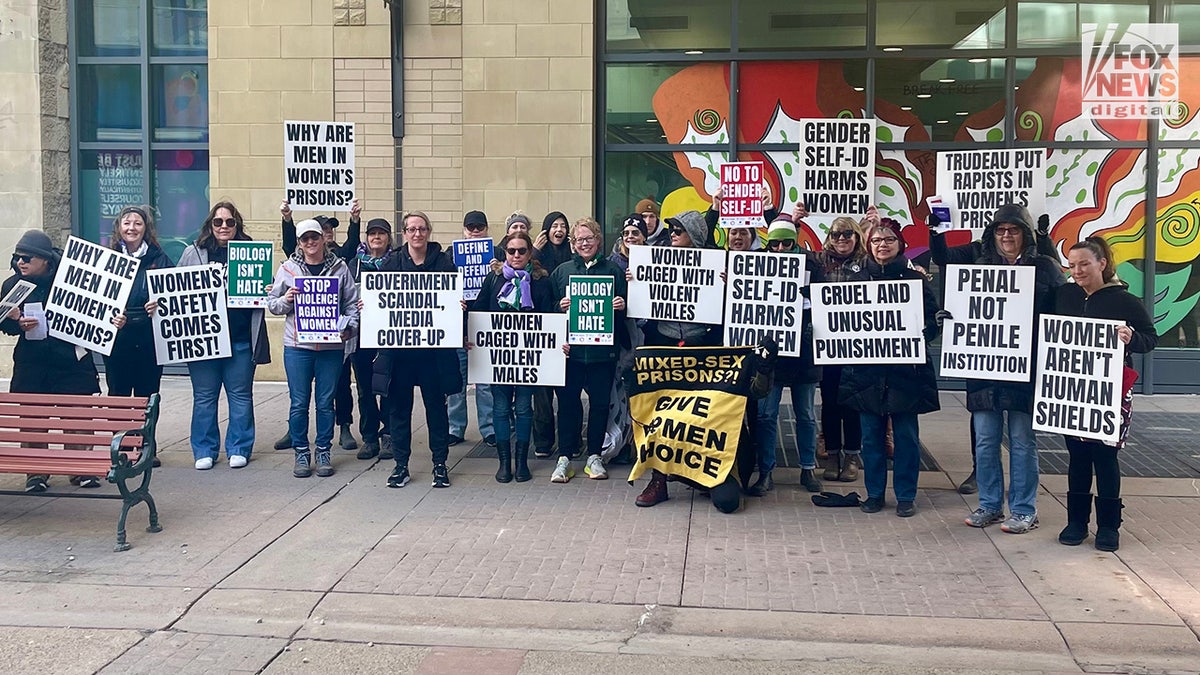
This is the story of Parliament's failure to legislate on one of the most significant and controversial changes to federal corrections in decades—and the consequences of that failure for incarcerated women across Canada.
What the Corrections Act Actually Says
The CCRA is a comprehensive statute covering virtually every aspect of federal corrections. At over 150 sections, it addresses inmate rights, institutional operations, use of force, disciplinary procedures, temporary absences, parole eligibility, and much more.
The Guiding Principles: Section 4
Section 4 establishes the principles that guide the operation of Canada's federal prison system:
(a) The sentence is the punishment
(b) Correctional policies and programs should promote rehabilitation and reintegration
(c) CSC will use the least restrictive measures consistent with protection of the public, staff, and offenders
(d) Offenders retain rights except those necessarily limited by incarceration
(e) CSC shall provide essential services and programs to address offenders' needs
(f) Decisions should be made at the lowest appropriate level with national standards
(g) Offenders should be expected to obey rules and respect others
(h) Staff are entitled to working conditions that provide safety
(i) The CCRA should be carried out in a manner that respects "gender, ethnic, cultural and linguistic differences"
That last principle—Section 4(i)—is the only mention of "gender" in the entire Act. And critically, the CCRA does not define what "gender" means.
What "Gender" Meant in 1992
When the CCRA was enacted in 1992, "gender" was commonly understood as a synonym for sex—the biological categories of male and female. In fact, many people used "gender" specifically to avoid saying "sex," which they found awkward in formal contexts.
The concept of "gender identity" as distinct from biological sex—referring to a person's internal sense of being male, female, or something else regardless of anatomy—was not part of mainstream legal or policy discourse in Canada in 1992. It would be another 25 years before "gender identity or expression" appeared in federal anti-discrimination law.
So when Parliament wrote "respect for gender... differences" into the CCRA in 1992, they almost certainly meant: respect differences between male and female inmates, provide appropriate programming and services for both sexes, and operate sex-separated facilities with dignity and professionalism.
They did not mean: allow inmates to be placed based on subjective self-identification regardless of biological sex.
Institutional Management: Sections 70-86
The CCRA address institutional management and give CSC broad authority over inmate classification and placement:
Section 28 | gives CSC authority to assign inmates to security classifications (minimum, medium, maximum) |
Section 30 | requires CSC to place inmates in facilities with the least restrictive security level consistent with protecting society, staff, and other inmates |
Sections 70-73 | address inmate transfers between institutions |
Section 81 | allows for agreements with Indigenous communities for alternative facilities |
Throughout these provisions, the CCRA emphasizes:
Security and safety of the public, staff, and other inmates
Using the least restrictive placement consistent with safety
Individual assessment based on specific risks and needs
Flexibility for CSC to make operational decisions
Notably absent from these provisions is any mention of gender identity, any requirement to place inmates based on self-identification, or any guidance on how to handle requests for gender-based placement different from biological sex.
The "Least Restrictive" Principle: Section 4(g)
Section 4(g) requires that CSC use "the least restrictive measures consistent with the protection of the public, staff members and offenders."
CSC has cited this principle to justify gender identity-based placement, arguing that placing transgender inmates in institutions matching their gender identity is "less restrictive" than alternative accommodations.
But Section 4(g) doesn't say "least restrictive for the requesting inmate." It says least restrictive "consistent with the protection of the public, staff members and offenders"—plural, meaning all inmates.
If placing a male-bodied inmate in a women's institution creates fear, anxiety, or safety risks for female inmates, that placement is not consistent with protecting those other offenders. The "least restrictive" principle requires balancing the requesting inmate's interests against the safety and security of everyone else affected.
CSC has interpreted "least restrictive" as if it applies only to the transgender inmate making the request. This reading ignores the statutory requirement to consider protection of "offenders"—including the female inmates whose security and privacy are impacted.
What the Act Does NOT Say
Just as important as what the CCRA contains is what it does not contain:
No definition of "gender": The Act uses the term once (Section 4(i)) without defining itNo mention of "gender identity" or "gender expression": These concepts don't appear anywhere in the ActNo reference to transgender inmates: The Act is silent on how to accommodate inmates whose gender identity differs from their sexNo self-ID provisions: Nothing requires CSC to accept self-identification as determinative of placementNo guidance on balancing rights: No framework for resolving conflicts between gender identity accommodation and sex-based protectionsNo mandate for policy changes: Nothing requires CSC to change long-standing sex-based placement practices
These omissions are not accidental oversights. They reflect the state of law and policy in 1992 when the Act was written. Gender identity as a legal concept distinct from biological sex was not on Parliament's radar.
The 2017 Opportunity Parliament Missed
When Parliament passed Bill C-16 in June 2017, adding "gender identity or expression" to the Canadian Human Rights Act and Criminal Code, Parliament knew this change would have implications for federal prisons.
The debate over Bill C-16 was extensive. Critics raised concerns about:
The lack of clear definitions
Potential conflicts with other rights
Implications for sex-separated spaces
Compelled speech issues
Implementation challenges
Yet even with these concerns aired publicly during months of parliamentary debate, Parliament did not amend the Corrections and Conditional Release Act.
This was a deliberate choice. Parliament could have:
1. Added definitions to the CCRA Define "gender identity" and specify what evidence establishes it for correctional purposes
2. Created placement criteria Establish factors CSC must consider when transgender inmates request placement matching their gender identity (criminal history, behavioral record, length of identification, surgical status, risk assessment, impact on other inmates)
3. Required assessments Mandate medical or psychological evaluation for placement requests
4. Established safeguards Specify that sex-based placement remains default unless specific criteria are met
5. Protected female inmates Clarify that maintaining women's prisons as female-only spaces is not discriminatory and serves legitimate penological objectives
6. Created oversight Require reporting to Parliament on implementation, including numbers, decisions, and incidents
Parliament did none of this. Bill C-16 amended the Canadian Human Rights Act and Criminal Code but left the Corrections and Conditional Release Act—the statute actually governing prisons—completely untouched.
Why This Matters: Legislative vs. Administrative Authority
The distinction between legislative action (Parliament passing laws) and administrative action (agencies creating policies) is fundamental to Canadian democracy and the rule of law.
Parliament's Role:
Passes laws that establish policy and set boundaries
Debates openly with multiple perspectives represented
Is accountable to voters
Can be held to account through elections
CSC's Role:
Implements laws passed by Parliament
Creates operational policies within legislative boundaries
Is accountable to the Minister of Public Safety and through them to Parliament
Should not create major policy changes without legislative mandate
When Parliament passes a law like Bill C-16 that will clearly have significant operational implications for federal prisons, Parliament should amend the statute governing prisons to provide guidance. This ensures:
Democratic legitimacy: Elected representatives make major policy choices
Public debate: Different perspectives are heard before decisions are made
Legal clarity: Agencies know what Parliament expects them to do
Accountability: If the policy fails, voters know who to hold responsible
Instead, Parliament passed Bill C-16, said nothing about prisons, and walked away—leaving CSC to interpret a general anti-discrimination law and apply it to the unique security context of corrections without any legislative guidance.
CSC Fills the Vacuum: Policy Bulletin 584
Six months after Bill C-16 received Royal Assent, CSC issued Interim Policy Bulletin 584. This policy states:
"CSC is committed to providing a safe and humane environment for all offenders, including those who are transgender. When an offender requests consideration to be placed in a facility that aligns with their gender identity, CSC will take into account all relevant information... Placement decisions will be made on a case-by-case basis, with gender identity being a significant factor. Placement will be made based on gender identity unless there are overriding health or safety concerns which cannot be resolved."
The policy allows inmates to request placement "regardless of their anatomy (sex) or gender on their identification documents."
This represents a fundamental change to federal corrections policy:
From sex-based placement to gender identity-based placement
From anatomical verification to self-identification
From categorical placement to individual assessment (but with presumption in favor of transfer)
From protecting female inmates through sex-separation to requiring them to accept male-bodied cellmates
These are exactly the kind of significant policy changes that should require legislative authorization. Yet CSC made these changes through administrative policy, citing compliance with Bill C-16—which, as discussed, never mentions prisons and certainly doesn't mandate this specific approach.
The CCRA's Existing Framework Could Accommodate Different Approaches
Here's what Parliament's failure to amend the CCRA means in practice: The existing statutory framework is broad enough to permit multiple different approaches to transgender inmate placement. Without legislative guidance, CSC chose one approach—but the CCRA would equally permit much more restrictive approaches.
Under the existing CCRA, CSC could:
Option 1: Maintain sex-based placement Argue that Section 4(i)'s "respect for gender differences" means maintaining separate facilities for males and females, with gender identity accommodated through programming, medical care, and respectful treatment without institution transfer
Option 2: Require surgical transition Use Section 30's security and safety provisions to require inmates to have undergone sex reassignment surgery before placement in institutions for the opposite sex
Option 3: Create separate units Establish specialized units for transgender inmates within existing facilities, maintaining sex-separated institutions while providing appropriate accommodation
Option 4: Risk-based assessment Allow transfers only after extensive risk assessment showing minimal security concerns, taking criminal history and institutional behavior into account
Option 5: Current self-ID policy Accept self-identification as sufficient unless "overriding health or safety concerns which cannot be resolved"
The CCRA's broad language permits all of these approaches. Some prioritize security and sex-based protections. Others prioritize gender identity accommodation. The Act itself doesn't clearly favor one over another.
That's the problem. When fundamental rights are at stake—women's security, privacy, and dignity versus transgender inmates' identity accommodation—Parliament should decide which approach to take. Not CSC bureaucrats interpreting vague statutory language.
What Responsible Legislation Would Look Like
If Parliament had fulfilled its responsibility to legislate rather than leaving CSC to fill the vacuum, amendments to the CCRA might have looked like this:
Proposed Section 4(i.1): Gender Identity Accommodation in Institutional Placement
"For the purposes of institutional placement under this Act:
(a) 'gender identity' means an individual's deeply-felt internal experience of gender, which may or may not correspond with the sex assigned at birth;
(b) Initial placement of inmates shall be based on biological sex as documented at birth or through medical records;
(c) An inmate may request consideration for placement in an institution corresponding to their gender identity if they can demonstrate:
(i) consistent identification as that gender for a minimum of 24 months prior to incarceration,
(ii) medical or psychological assessment supporting the gender identity claim,
(iii) behavioral record indicating low risk to other inmates,
(iv) no convictions for sexual offences against persons of the sex of the requested institution;
(d) In considering such requests, CSC shall assess:
(i) the inmate's criminal history and risk to others,
(ii) the security level and capacity of the requested institution,
(iii) the impact on other inmates in the institution,
(iv) alternative accommodations that could address the inmate's needs while maintaining sex-based placement;
(e) CSC may approve placement based on gender identity only if:
(i) the criteria in paragraph (c) are met,
(ii) the safety and security of all inmates can be reasonably assured,
(iii) alternative accommodations are insufficient to address the inmate's legitimate needs;
(f) Decisions under this section shall be made by the Deputy Commissioner and shall be subject to internal review;
(g) CSC shall report annually to Parliament on the number of requests, approvals, denials, and any incidents or concerns arising from gender identity-based placements."
This is just one possible approach. Parliament might choose different criteria—more restrictive or less restrictive. The point is that Parliament should make these choices, not administrative bureaucrats.
The Constitutional Dimensions
Parliament's failure to legislate has created not just policy confusion but potential constitutional problems.
The Canadian Charter of Rights and Freedoms guarantees:
Section 7: Security of the person Section 15: Equality rights, including sex-based equality Section 28: Rights guaranteed equally to male and female persons
Female inmates have launched a Charter challenge arguing that CSC's policy violates their security rights (Section 7) and their equality rights (Section 15), and that maintaining sex-based protections is guaranteed under Section 28.
If Parliament had amended the CCRA to authorize CSC's current approach, courts would need to assess whether Parliament's choice to prioritize gender identity accommodation over sex-based protections is constitutional. This would be a Section 1 analysis: Is the limitation on women's rights "demonstrably justified in a free and democratic society"?
But because Parliament never made that choice—because CSC created the policy administratively without clear legislative mandate—courts are instead assessing whether CSC's interpretation of vague statutory language violates the Charter.
This puts CSC in a much weaker position. If Parliament had explicitly authorized the policy after full debate and consideration of competing interests, courts would likely defer to Parliament's judgment. But because CSC made these choices unilaterally based on an interpretation of the CCRA that the statute doesn't clearly require, courts may find the policy exceeds CSC's authority or violates the Charter without sufficient justification.
International Standards Parliament Ignored
When Bill C-16 passed, Parliament should have considered Canada's international obligations regarding prison conditions.
The International Covenant on Civil and Political Rights (ICCPR), ratified by Canada in 1976, requires humane treatment of prisoners and respect for their dignity.
The UN Standard Minimum Rules for the Treatment of Prisoners (the Mandela Rules) specify:
Rule 11(a): "Men and women shall so far as possible be detained in separate institutions"
Rule 11(b): "In an institution which receives both men and women, the whole of the premises allocated to women shall be entirely separate"
The Convention on the Elimination of All Forms of Discrimination against Women (CEDAW), ratified by Canada in 1981, obligates Canada to eliminate discrimination against women and ensure their safety and dignity.
Parliament could have amended the CCRA to acknowledge these international obligations and specify how gender identity accommodation should be implemented consistent with sex-separated detention and women's rights to safety. Instead, Parliament was silent, and CSC's policy arguably conflicts with Canada's treaty commitments.
The Accountability Gap
When Parliament fails to legislate and allows administrative agencies to make major policy choices, accountability breaks down.
If there are problems with CSC's policy:
Should voters blame their MPs? (MPs never voted on this policy)
Should they blame the Minister? (The Minister didn't create the policy, CSC did)
Should they blame CSC? (CSC claims it's just implementing Bill C-16)
Should they blame the judges who might invalidate the policy? (Judges don't make policy, they assess legality)
This diffusion of responsibility means no one is clearly accountable. Each actor can point to someone else:
MPs say "We passed Bill C-16, CSC implemented it"
Ministers say "CSC has operational independence"
CSC says "We're complying with the law Parliament passed"
Courts say "We only assess whether the policy is legal, not whether it's wise"
Compare this to what would happen if Parliament had amended the CCRA:
If the policy fails, voters know exactly who to blame: the MPs who voted for it
Those MPs would face electoral consequences
Parliament could amend the law based on evidence of what works and what doesn't
Democratic accountability would function properly
Other Jurisdictions Show Legislative Guidance Is Possible
Canada is not the only country grappling with how to accommodate transgender inmates. Other jurisdictions have shown that legislative guidance is possible:
England and Wales have detailed policy guidance developed by the Ministry of Justice specifying assessment criteria, case-by-case evaluation, and maintenance of women's safety as paramount.
Some U.S. states have passed legislation establishing criteria for transgender inmate placement rather than leaving it to administrative policy.
Scotland developed detailed policy only after extensive consultation and with explicit consideration of impacts on female inmates.
These jurisdictions recognized that major changes to prison policy require careful consideration, public input, and clear legal authority—not just administrative interpretation of general anti-discrimination laws.
Canada could have learned from these examples. Instead, Parliament abdicated its responsibility and left CSC to figure it out alone.
What Parliament Must Do Now
Parliament's failure to legislate in 2017 can be corrected. Here's what Parliament should do now:
1. Amend the CCRA Add specific provisions addressing gender identity accommodation in federal prisons, establishing clear criteria, assessment processes, and safeguards.
2. Define Terms Provide statutory definitions of "gender identity," "gender expression," and clarify what "gender differences" means in Section 4(i).
3. Establish Criteria Specify what evidence supports a gender identity claim for correctional purposes and what factors CSC must consider in placement decisions.
4. Protect Female Inmates Explicitly state that maintaining sex-based facilities for women is not discriminatory and serves legitimate correctional objectives.
5. Create Safeguards Require risk assessment, consider criminal history (especially sexual offences), and maintain ability to deny requests when safety cannot be assured.
6. Mandate Transparency Require CSC to publish statistics on transfers, incidents, and outcomes, and report annually to Parliament.
7. Enable Review Create mechanisms for internal review of decisions and external oversight of policy implementation.
8. Pilot Programs Before universal implementation, require evidence-based evaluation of different approaches in select institutions.
The Rule of Law Requires Legislative Action
At its core, this issue is about the rule of law and democratic governance.
The rule of law means that major policy changes—especially those affecting fundamental rights like security, privacy, and dignity—should come through legislation passed by elected representatives after public debate.
Democratic governance means that when policies fail or create harms, voters can hold decision-makers accountable and force change through the political process.
CSC's policy does neither. It's an administrative interpretation of vague statutory language, created without legislative mandate, implemented without meaningful consultation, and insulated from democratic accountability.
This is not how major policy should be made in a democracy.
Conclusion: Parliament's Responsibility
The Corrections and Conditional Release Act gives CSC broad operational authority to run federal prisons. This makes sense—day-to-day prison operations require expertise and flexibility that legislation cannot provide.
But when Bill C-16 passed in 2017, everyone knew it would have significant implications for federal corrections. This was not a minor operational adjustment. It was a fundamental change in how inmates would be classified and placed, affecting the safety and dignity of Canada's most vulnerable incarcerated women.
Parliament should have amended the CCRA to provide clear direction. Parliament should have debated the competing interests openly. Parliament should have established criteria and safeguards. Parliament should have made the hard choices about how to balance gender identity accommodation with sex-based protections.
Parliament did none of this.
Instead, Parliament passed Bill C-16, left the CCRA unchanged, and walked away—leaving CSC to interpret a general anti-discrimination statute and apply it to the unique and complex prison context without legislative guidance.
CSC filled that vacuum with Policy Bulletin 584—a policy that prioritizes gender identity accommodation over sex-based protections, accepts self-identification without verification, and places the burden on CSC to prove transfers are unsafe rather than on requesting inmates to demonstrate they're necessary.
This policy was not required by Bill C-16. It was not mandated by the CCRA. It was a choice—a choice that should have been made by Parliament through legislation, not by CSC bureaucrats through administrative policy.
The consequences of Parliament's failure are now clear: female inmates living in fear, safety incidents, constitutional challenges, and a policy that cannot be reformed through democratic accountability because it was never democratically authorized in the first place.
Parliament can fix this. The question is whether MPs have the courage to take responsibility for a policy they allowed to be created in their absence—and the wisdom to finally legislate on an issue they should have addressed seven years ago.
Key Provisions
Section 4: Guiding principles include 'respect for gender, ethnic, cultural and linguistic differences' but does NOT define 'gender' or require self-ID accommodation
Sections 70-86: Institutional management provisions give CSC authority to classify and place inmates
Section 4(g): Requires decisions be made in 'least restrictive manner' but also considers 'protection of society'
Critical Gap: Does NOT address transgender inmates, does NOT mandate self-ID placement, does NOT establish how to balance rights when they conflict
Parliament's Failure: Did not amend this Act when passing Bill C-16, leaving CSC to create policy without legislative guidance
Ministerial Chain of Custody:
The Corrections and Conditional Release Act has two ministerial chains: the officials responsible for its enactment in 1992, and the officials responsible for failing to amend it when Bill C-16 created an obvious legislative gap in 2017.
Brian Mulroney served as Prime Minister of Canada from 1984 to 1993. The Corrections and Conditional Release Act was passed under his government and came into force on November 6, 1992. The Act established the legal framework for federal corrections that remains in force today — a framework that gives Correctional Service Canada broad operational authority but does not mention gender identity, does not address transgender inmate placement, and does not define what "gender" means in the single reference it makes to the concept in Section 4.
Kim Campbell served as Minister of Justice and Attorney General of Canada from February 1990 to January 1993, the period during which the CCRA was developed and passed. As the minister responsible for criminal law and the justice portfolio, she bore oversight of the legislation as it moved through Parliament.
Doug Lewis served as Solicitor General of Canada from April 1991 to June 1993, the minister directly responsible for Correctional Service Canada. The CCRA was enacted under his ministerial authority over federal corrections. The Act's broad operational grant to CSC — without any legislative guidance on how to handle conflicts between competing rights — was the product of a political era in which gender identity as a legal concept distinct from biological sex did not exist in Canadian law.
Ralph Goodale served as Minister of Public Safety and Emergency Preparedness from November 2015 to November 2019, the successor portfolio to Solicitor General. He was the minister responsible for CSC when Bill C-16 received Royal Assent in June 2017, and when CSC issued Interim Policy Bulletin 584 in December 2017 — a policy that made sweeping changes to federal corrections based on an interpretation of Bill C-16 that the CCRA itself does not require or authorize. Goodale had the authority and the opportunity to direct CSC to seek legislative amendment to the CCRA before implementing that policy. He did not do so.
Don Head served as Commissioner of Correctional Service Canada from June 2008 to 2018. He was the most senior CSC official when Interim Policy Bulletin 584 was issued on December 27, 2017. The policy that fundamentally altered inmate placement in federal prisons was implemented under his operational authority, on the basis of an interpretation of the CCRA and Bill C-16 that CSC developed without legislative mandate and without meaningful consultation with affected women.
References:
Corrections and Conditional Release Act, SC 1992, c 20, online: https://laws-lois.justice.gc.ca/eng/acts/C-44.6/.
Bill C-16: An Act to amend the Canadian Human Rights Act and the Criminal Code, 1st Sess, 42nd Parl, 2017 (Royal Assent 19 June 2017), online: Parliament of Canada https://www.parl.ca/DocumentViewer/en/42-1/bill/c-16/royal-assent.
Correctional Service Canada, Interim Policy Bulletin 584: Gender Identity or Expression (27 December 2017), online: Public Safety Canada https://www.publicsafety.gc.ca/cnt/trnsprnc/brfng-mtrls/prlmntry-bndrs/20200621/023/index-en.aspx.
Canadian Human Rights Act, RSC 1985, c H-6, online: https://laws-lois.justice.gc.ca/eng/acts/h-6/.
Canadian Charter of Rights and Freedoms, Part I of the Constitution Act, 1982, being Schedule B to the Canada Act 1982 (UK), 1982, c 11, online: https://laws-lois.justice.gc.ca/eng/const/page-12.html.
International Covenant on Civil and Political Rights, 19 December 1966, 999 UNTS 171, Can TS 1976 No 47 (entered into force 23 March 1976, accession by Canada 19 May 1976), online: https://www.ohchr.org/en/instruments-mechanisms/instruments/international-covenant-civil-and-political-rights.
United Nations Standard Minimum Rules for the Treatment of Prisoners (the Mandela Rules), GA Res 70/175, UNGAOR, 70th Sess, UN Doc A/RES/70/175 (2015).
Convention on the Elimination of All Forms of Discrimination against Women, 18 December 1979, 1249 UNTS 13, Can TS 1982 No 31 (entered into force 3 September 1981, ratification by Canada 10 December 1981), online: https://www.ohchr.org/en/instruments-mechanisms/instruments/convention-elimination-all-forms-discrimination-against-women.
Read More
text
CEDAW
The foundational international treaty on women's rights, ratified by Canada in 1981; requires states to eliminate discrimination against women in all its forms and to protect women's safety and dignity — obligations Canada is violating by housing male-bodied inmates in women's federal prisons and by failing to maintain sex-based data on violence against women.
text
Criminal Code of Canada
Federal criminal law; Bill C-16 amended hate crime provisions to add 'gender identity or expression'; creates potential for criminalizing women who advocate for sex-based rights.