Convention on the Elimination of All Forms of Discrimination against Women (ratified by Canada 1981)
The foundational international treaty on women's rights, ratified by Canada in 1981; requires states to eliminate discrimination against women in all its forms and to protect women's safety and dignity — obligations Canada is violating by housing male-bodied inmates in women's federal prisons and by failing to maintain sex-based data on violence against women.
CEDAW: How Canada Violates Women's International Rights
CEDAW is the most comprehensive international human rights treaty dedicated specifically to women. It has been called the international bill of rights for women. Adopted by the UN General Assembly in 1979, it entered into force in 1981 — the same year Canada ratified it. For over forty years, Canada has reported periodically to the CEDAW Committee on its compliance, submitted to country reviews, and accepted recommendations about how it can better protect women's rights.
Canada has never told the CEDAW Committee that since December 2017 it has been housing male-bodied inmates — including those convicted of violent and sexual offences against women — in its federal women's prisons based on self-declared gender identity.
It has never sought the Committee's assessment of whether that policy is compatible with Canada's obligations to eliminate discrimination against women. It has never explained how a policy that removes the sex-based protections incarcerated women depend on is consistent with the treaty Canada has spent four decades championing in international forums.
The silence is not accidental. It is a choice. And it is a choice that stands in direct contradiction to the treaty's foundational demand: that states pursue, by all appropriate means, a policy of eliminating discrimination against women.
What CEDAW Is and Why It Matters
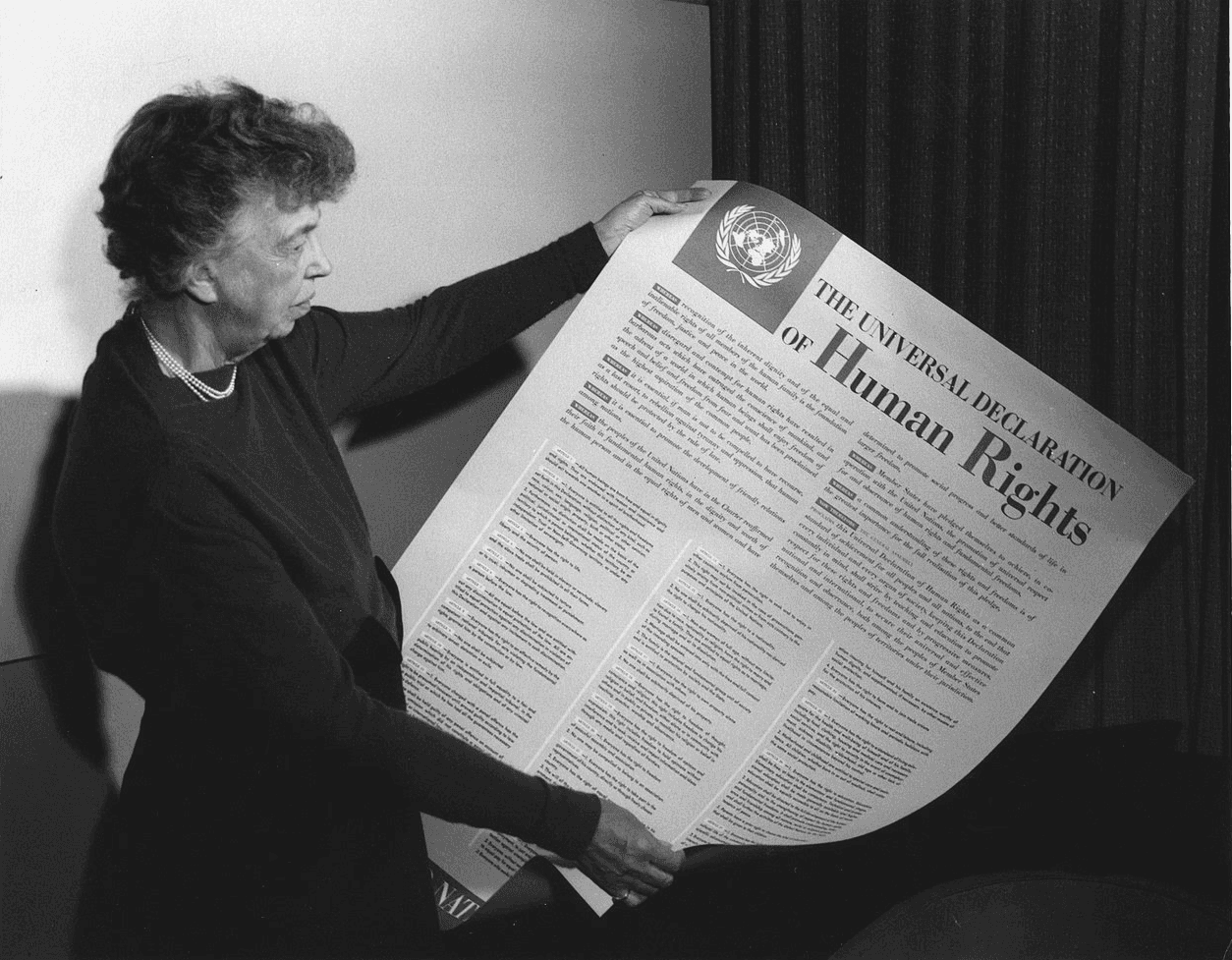
CEDAW emerged from decades of women's rights advocacy within the United Nations system. The Universal Declaration of Human Rights (1948) and the International Covenant on Civil and Political Rights (1966) established general human rights protections — but their drafters did not specifically address the systemic discrimination that women faced as women. The structural subordination of women, the particular vulnerabilities created by biological sex, the patterns of male violence against female bodies — none of these were adequately captured in the general human rights framework.
CEDAW was the international community's answer to that gap. It defines discrimination against women in Article 1 as "any distinction, exclusion or restriction made on the basis of sex which has the effect or purpose of impairing or nullifying the recognition, enjoyment or exercise by women, irrespective of their marital status, on a basis of equality of men and women, of human rights and fundamental freedoms in the political, economic, social, cultural, civil or any other field."
This definition is broad and deliberate. It captures not only intentional discrimination but also policies and practices that have the effect of impairing women's rights — regardless of whether discrimination was intended. Under CEDAW's framework, a policy that eliminates sex-based protections for women, exposing them to elevated risk of male violence, constitutes discrimination against women even if the policy was adopted with the stated intention of protecting another group.
Article 2: The Obligation to Eliminate Discrimination
Article 2 is CEDAW's operational heart. It requires states to:
Pursue by all appropriate means and without delay a policy of eliminating discrimination against women. Embody the principle of equality in national constitutions or other appropriate legislation. Establish legal protection for women's rights on an equal basis with men. Refrain from engaging in any act or practice of discrimination against women. Take all appropriate measures to eliminate discrimination against women by any person, organization, or enterprise. Take all appropriate measures to modify or abolish existing laws, regulations, customs, and practices that constitute discrimination.
Canada's Commissioner's Directive 100 — which places male-bodied inmates in women's federal institutions — violates Article 2 in multiple ways.
It constitutes an act of discrimination against women by the state itself: by removing the sex-based protections that incarcerated women's safety depends on, CSC is engaged in discriminatory practice against a group the CEDAW treaty exists to protect.
It fails to take appropriate measures to eliminate discrimination against incarcerated women: rather than modifying a practice that exposes female inmates to elevated risk of male violence, Canada has created a new policy that increases that exposure.
It fails to protect women's rights on an equal basis with men: male inmates continue to be housed in sex-separated institutions; female inmates do not.
Article 5: Challenging Stereotypes and Harmful Practices
Article 5 requires states to "take all appropriate measures to modify the social and cultural patterns of conduct of men and women, with a view to achieving the elimination of prejudices and customary and all other practices which are based on the idea of the inferiority or superiority of either of the sexes."
This provision is typically cited in the context of cultural practices that subordinate women — child marriage, female genital mutilation, gender-based dress codes. But it has a direct and underexplored application to gender ideology as it affects women's rights.
Gender ideology — the claim that gender identity supersedes biological sex for all legal and social purposes — is a practice based on a specific idea: that the category "woman" is defined by self-perception rather than by biological reality. Applied to corrections policy, this idea produces the practice of housing biological males with biological females on the grounds that the males' internal sense of identity makes them functionally women for all institutional purposes.
CEDAW's Article 5 requires Canada to challenge and modify practices based on the subordination of either sex. A practice that redefines "woman" in ways that eliminate sex-based protections for biological women — and that does so in service of an ideology that has not been democratically debated or legislatively enacted — is precisely the kind of social and cultural pattern Article 5 was designed to address.
This argument has not yet been made before the CEDAW Committee in the Canadian context. It is an argument that the evidence assembled for the Charter challenge, and the testimony of incarcerated women, would support.
General Recommendations 19 and 35: Violence Against Women
The CEDAW Committee issues General Recommendations that interpret the treaty's obligations in light of emerging issues and evidence. Two General Recommendations are directly relevant to the situation of incarcerated women under CD-100.
General Recommendation 19 (1992) established that gender-based violence — violence directed against a woman because she is a woman — constitutes discrimination within the meaning of CEDAW. The Recommendation made clear that states are responsible for private acts of violence when they fail to take adequate measures to prevent, investigate, and punish such acts.
In the prison context, General Recommendation 19 means that when a male-bodied inmate assaults a female inmate in a women's institution, and that assault was made possible by a state policy that placed the male in the women's institution, the state bears responsibility for the discriminatory harm. CSC's policy is not a neutral administrative choice that happens to create risk. It is a choice that the state made, knowing that male-bodied inmates with histories of violence against women would be transferred to women's institutions, and accepting that risk on behalf of the women who had no choice but to share space with them.
General Recommendation 35 (2017) updated and expanded General Recommendation 19, recognizing that gender-based violence is a manifestation of historically unequal power relations between women and men and that it perpetuates women's subordination. The Recommendation specifically addresses women in institutionalized settings, including prisons, and recognizes their heightened vulnerability to violence.
General Recommendation 35 was issued in the same year that Canada adopted Interim Policy Bulletin 584. Canada adopted a policy creating elevated risk of gender-based violence against incarcerated women in the same year the CEDAW Committee updated its authoritative interpretation of states' obligations to prevent exactly that kind of violence. The coincidence is striking. Canada's failure to assess IPB 584 against General Recommendation 35 before adopting it is a concrete illustration of the accountability failure this series of posts documents.
The Definition Problem: What Is a Woman Under CEDAW?
CEDAW is built on the category of "women" — a category the treaty defines by reference to sex. Article 1's definition of discrimination is discrimination "on the basis of sex." The treaty's protections are protections for female persons. Its obligations are obligations to protect biological women from discrimination based on their biological sex.
The treaty does not define "gender identity" as equivalent to sex for the purpose of its protections. It does not contemplate a scenario in which the category "women" is redefined to include biological males for the purpose of federal corrections policy. It was drafted — and has been consistently interpreted by the CEDAW Committee — on the basis that "women" means biological females.
Canada's gender-diverse offender policy substitutes self-declared gender identity for biological sex in corrections placement decisions. Under that policy, a biological male who declares a female gender identity is treated as a woman for the purpose of prison placement. The women in the receiving institution — biological females who meet CEDAW's definition of women — are not consulted, not informed, and not given the option to decline.
This substitution creates a structural problem for CEDAW compliance. The treaty's protections for women are protections for biological females. A policy that erodes those protections in the name of accommodating biological males who identify as women is not implementing CEDAW — it is undermining it. The women the treaty was designed to protect are losing protections that CEDAW requires Canada to maintain, in service of a policy CEDAW does not require and does not contemplate.
The Optional Protocol: A Path to International Accountability
Canada ratified the Optional Protocol to CEDAW in 2002, allowing individuals and groups of individuals to bring complaints directly to the CEDAW Committee when they have exhausted domestic remedies and believe their rights under the Convention have been violated.
This mechanism is significant in the current context for two reasons.
First, it provides an avenue for incarcerated women who have been harmed by CSC's placement policy to seek international accountability if the domestic Charter challenge does not produce adequate remedy. A female inmate who has been sexually assaulted by a male-bodied inmate in a women's federal institution, and whose complaint has not been adequately addressed through domestic legal processes, may have grounds for an Optional Protocol complaint alleging violations of Articles 2, 3, and 5 of CEDAW, read together with General Recommendations 19 and 35.
Second, it provides an avenue for women's organizations — including caWsbar — to bring the systemic pattern of CEDAW violations to international attention. The Optional Protocol allows inquiries into grave or systematic violations, which may be conducted even without an individual complainant. The pattern of placing male-bodied inmates in women's federal prisons, withholding data about the consequences, and failing to disclose the policy in treaty reporting constitutes a pattern of systematic violation that the inquiry procedure was designed to address.
Neither avenue has yet been activated. The Charter challenge, filed April 7, 2025, is the current primary litigation vehicle. But the Optional Protocol stands as a backstop — an international forum in which Canada would be required to defend its policy against CEDAW's standards if the domestic process fails to produce adequate accountability.
Canada's Reporting Failure
Canada submits periodic reports to the CEDAW Committee, typically every four to five years, describing its progress on women's rights and responding to the Committee's previous recommendations. These reports are supposed to be comprehensive accounts of how Canada is fulfilling its CEDAW obligations.
Canada's most recent periodic report, reviewed by the CEDAW Committee in 2023, did not disclose the adoption of Commissioner's Directive 100. It did not describe the policy of placing male-bodied inmates in women's federal prisons. It did not seek the Committee's assessment of whether that policy is compatible with Canada's CEDAW obligations.
The Committee's concluding observations on Canada's report addressed numerous areas of concern — Indigenous women's rights, missing and murdered Indigenous women, women in the justice system. They did not address CSC's gender-diverse offender policy, because the Committee was not told it existed.
This reporting failure is consequential. The CEDAW Committee's concluding observations carry significant domestic and international weight. A finding from the Committee that Canada's corrections policy violates CEDAW would strengthen the legal and political case for reform in ways that domestic advocacy alone cannot. Canada's choice not to disclose the policy in treaty reporting is a choice to deprive Canadian women of that international support.
What CEDAW Compliance Would Require
CEDAW does not require Canada to ignore the rights or welfare of transgender-identified inmates. It requires Canada to protect women from discrimination — including the discrimination of being forced to share intimate spaces with male-bodied individuals who pose elevated risk of violence.
A CEDAW-compliant approach to transgender inmate accommodation would maintain sex-separated institutions for female inmates, consistent with Canada's obligation to protect women from gender-based violence and discrimination. It would accommodate transgender-identified male inmates through individualized, less invasive means that do not require eliminating sex-based protections for women. It would collect and publish sex-disaggregated data on violence in federal institutions, consistent with Canada's obligation to monitor and address gender-based violence. And it would disclose its gender-diverse offender policy to the CEDAW Committee and invite assessment of its compatibility with Canada's treaty obligations.
None of this has been done. Canada has instead adopted a policy that conflicts with CEDAW's core obligations, concealed it from the treaty body responsible for assessing compliance, and continued to present itself internationally as a champion of women's rights while dismantling those rights domestically for its most vulnerable female population.
Conclusion: The Treaty Canada Claims to Champion
Canada has a long and genuine history of leadership on women's rights in international forums. It has ratified CEDAW, its Optional Protocol, and a comprehensive suite of related instruments. It has participated in Beijing Platform for Action reviews. It has funded international women's rights programming. It presents itself, at the United Nations and in multilateral settings, as a committed partner in the global project of eliminating discrimination against women.
That self-presentation is now in direct contradiction with what Canada is doing in its federal women's prisons.
CEDAW requires Canada to eliminate discrimination against women. Canada is forcing incarcerated women — who are disproportionately Indigenous, overwhelmingly survivors of male violence, and among the most vulnerable women in the country — to share intimate spaces with male-bodied inmates, including those convicted of sexual offences against women. This is not a marginal edge case in Canada's women's rights record. It is a systematic violation of the treaty Canada claims to uphold, affecting women who have no power to protect themselves and no platform from which to demand accountability.
The CEDAW Committee has not been told this is happening. The Optional Protocol provides a path to make it known. The Charter challenge provides a domestic path to accountability. And caWsbar's advocacy — at home and internationally — is the mechanism through which the women the treaty was designed to protect are insisting that Canada live up to the commitments it has made in their name.
Key Provisions
Article 1: Defines discrimination against women as any distinction, exclusion, or restriction made on the basis of sex that impairs women's enjoyment of human rights — the definitional foundation for all subsequent obligations
Article 2: Requires states to pursue by all appropriate means a policy of eliminating discrimination against women, including through law, policy, and practice
Article 3: Requires states to ensure the full development and advancement of women for the purpose of guaranteeing them the exercise and enjoyment of human rights
Article 5: Requires states to modify social and cultural patterns that are based on the idea of the inferiority or superiority of either sex — relevant to gender ideology's redefinition of "woman"
Article 15: Requires states to accord women equality with men before the law
General Recommendation 19: Recognizes gender-based violence as a form of discrimination — directly applicable to the exposure of incarcerated women to male-perpetrated violence under CSC's placement policy
General Recommendation 35: Updates GR19 on gender-based violence, recognizing the particular vulnerability of incarcerated women and the state's obligation to protect them
Optional Protocol: Canada has ratified the Optional Protocol allowing individuals and groups to bring complaints to the CEDAW Committee — a potential avenue for incarcerated women harmed by CD-100
Reporting Failure: Canada has not disclosed its self-identification prison placement policy to the CEDAW Committee in its periodic reports
Ministerial Chain of Custody:
Canada's CEDAW obligations are administered through two ministerial chains: the Minister of Foreign Affairs, responsible for treaty reporting and international human rights commitments, and the Minister for Women and Gender Equality, whose portfolio exists specifically to advance women's rights and ensure Canada meets its commitments to women under international law. Both chains bear accountability for Canada's failure to disclose its gender-diverse offender policy to the CEDAW Committee and for the broader pattern of CEDAW violations the policy represents.
Ministers of Foreign Affairs responsible for Canada's CEDAW
Reporting since 2017 include Chrystia Freeland (2017–2019), François-Philippe Champagne (2019–2021), Marc Garneau (2021), and Mélanie Joly (2021–2025). Canada's most recent CEDAW periodic report, reviewed by the Committee in 2023, was prepared and submitted during Mélanie Joly's tenure. The report did not disclose Commissioner's Directive 100 or the policy of housing male-bodied inmates in women's federal prisons. Minister Joly has not explained this omission publicly.
Mélanie Joly continues as Minister of Foreign Affairs under Prime Minister Mark Carney's government as of May 2026. Canada's next periodic CEDAW report will be prepared under her continued oversight. The accountability for whether that report discloses Canada's gender-diverse offender policy — and for whether Canada finally invites international scrutiny of a policy it has concealed for eight years — sits with her office.
Ministers for Women and Gender Equality bear the most direct accountability for the CEDAW violations this entry describes. Their portfolio exists to ensure that Canadian women's rights are advanced in domestic law and policy and that Canada meets its international obligations to women. The ministers who have held this portfolio since 2017 include:
Maryam Monsef served as Minister of Status of Women from 2017 to 2019 and as Minister for Women and Gender Equality from 2019 to 2021. She was the minister of record when Interim Policy Bulletin 584 was adopted in December 2017, when Canada's obligation to assess that policy against CEDAW's requirements first arose. No GBA+ analysis of IPB 584's impact on incarcerated women was published under her tenure. No CEDAW compliance assessment was conducted.
Marci Ien served as Minister for Women and Gender Equality from 2021 through the remainder of the Trudeau government. Commissioner's Directive 100 took effect in May 2022 under her tenure, formalizing the CEDAW-violating policy into permanent form. Canada's CEDAW periodic report was reviewed by the Committee in 2023 — a review that occurred under her ministerial oversight and that did not disclose CD-100 to the Committee. Minister Ien lost her seat in the 2025 federal election.
The current Minister for Women and Gender Equality under the Carney government bears responsibility for Canada's CEDAW compliance going forward. The policy that violates CEDAW remains active. The Optional Protocol mechanism that could produce international accountability remains available. The CEDAW Committee that has not been told this policy exists is preparing for Canada's next review cycle. The political accountability for whether Canada comes into compliance — or continues to violate the foundational international treaty on women's rights while claiming to champion it — sits with this minister's office.
References:
Convention on the Elimination of All Forms of Discrimination against Women, 18 December 1979, 1249 UNTS 13, Can TS 1982 No 31 (entered into force 3 September 1981, ratification by Canada 10 December 1981): https://www.ohchr.org/en/instruments-mechanisms/instruments/convention-elimination-all-forms-discrimination-against-women
Optional Protocol to the Convention on the Elimination of All Forms of Discrimination against Women, GA Res 54/4, 6 October 1999 (ratification by Canada 18 October 2002): https://www.ohchr.org/en/instruments-mechanisms/instruments/optional-protocol-convention-elimination-all-forms-discrimination
CEDAW Committee, General Recommendation No 19: Violence against women (1992): https://www.ohchr.org/en/documents/general-comments-and-recommendations/general-recommendation-no-19-violence-against-women
CEDAW Committee, General Recommendation No 35 on gender-based violence against women, updating General Recommendation No 19 (2017): https://www.ohchr.org/en/documents/general-comments-and-recommendations/general-recommendation-no-35-gender-based-violence
CEDAW Committee, Concluding Observations on Canada's Combined Eighth and Ninth Periodic Reports (2023): https://www.ohchr.org/en/treaty-bodies/cedaw/country-reports
Correctional Service Canada, Commissioner's Directive 100: Gender Diverse Offenders (in effect 9 May 2022): https://www.canada.ca/en/correctional-service/corporate/acts-regulations-policy/commissioners-directives/100.html
Corrections and Conditional Release Act, SC 1992, c 20: https://laws-lois.justice.gc.ca/eng/acts/C-44.6/
Canadian Charter of Rights and Freedoms, Part I of the Constitution Act, 1982, ss 7, 15, 28: https://laws-lois.justice.gc.ca/eng/const/page-12.html
International Covenant on Civil and Political Rights, 19 December 1966, 999 UNTS 171, Can TS 1976 No 47: https://www.ohchr.org/en/instruments-mechanisms/instruments/international-covenant-civil-and-political-rights
United Nations Rules for the Treatment of Women Prisoners (the Bangkok Rules), GA Res 65/229 (2010): https://www.unodc.org/documents/justice-and-prison-reform/Bangkok_Rules_ENG_22032015.pdf
Justice Centre for Constitutional Freedoms, Charter Challenge on Behalf of caWsbar (filed 7 April 2025): https://www.jccf.ca/
Canadian Women's Sex-Based Rights (caWsbar): https://cawsbar.ca/
Read More
text
Canadian Human Rights Act
Federal anti-discrimination law prohibiting discrimination in federally-regulated employment and services based on protected grounds including sex (1985) and gender identity/expression (added 2017 via Bill C-16).

text
Corrections and Conditional Release Act
Federal law governing operation of federal prisons and parole system; gives CSC broad authority but does NOT mandate gender self-identification policies or address transgender placement.