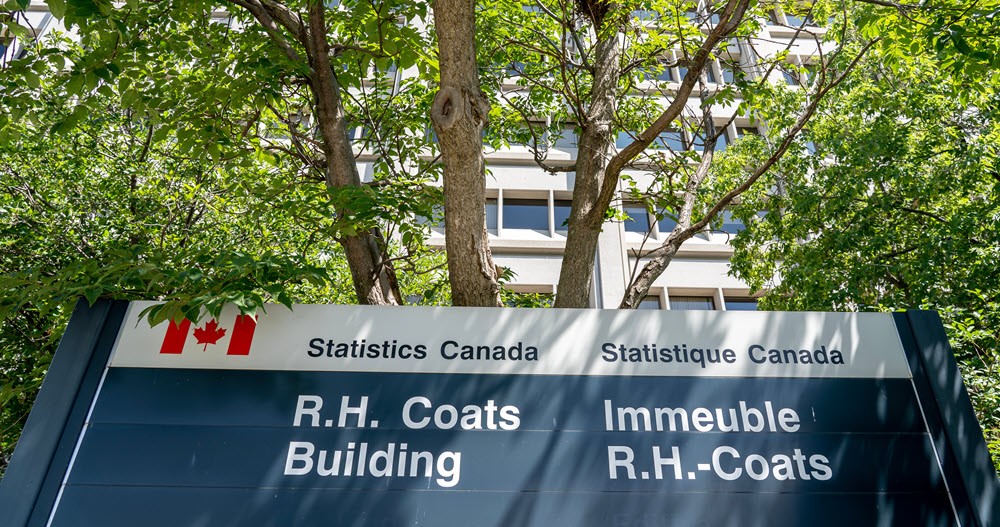
Statistics Act, R.S.C. 1985, c. S-19
Federal law governing Statistics Canada's data collection; critically undermined for women's safety research since 2019, when Statistics Canada replaced biological sex with self-declared gender in crime reporting — making it impossible to accurately track male violence against women, including in federal prisons.
The Statistics Act: Why Data Integrity Matters for Women's Safety
In January 2019, Statistics Canada did something that most Canadians never noticed. Quietly, without a press release designed to reach the general public, without parliamentary debate, and without amendment to any statute, Statistics Canada changed the variable it uses to record the sex of criminals and victims of crime in Canada's national crime database.
The variable "sex" — a biological category — was replaced with "gender" — a self-declared identity. Since that change, a male offender who identifies as a woman is recorded in Canada's Uniform Crime Reporting Survey as a female perpetrator. A male who sexually assaults a woman in a federal prison and identifies as a woman is recorded, in the national crime data, as a female sexual offender.
The Statistics Act did not require this change. Parliament did not vote for it. No minister publicly announced it. The Chief Statistician of Canada made an administrative decision — in consultation with the Canadian Association of Chiefs of Police — that has fundamentally altered Canada's ability to track violence against women, including violence committed by males housed in women's federal prisons.
This is the story of how Canada's national statistical infrastructure became a tool for hiding male violence rather than measuring it.
What the Statistics Act Does
The Statistics Act establishes Statistics Canada as Canada's central statistical office. Under Section 3, Statistics Canada is mandated to "collect, compile, analyse, abstract and publish statistical information relating to the commercial, industrial, financial, social, economic and general activities and condition of the people of Canada."
The Act grants Statistics Canada sweeping authority to collect data. Under Section 8, the Chief Statistician may require any person, business, or institution to provide information on virtually any subject relevant to national statistics. Section 22 mandates a national census of population every five years — the foundational data collection exercise from which much of Canada's social policy research flows.
The Act also grants Statistics Canada significant discretion in how it collects that data. It does not specify which variables must be included in which surveys. It does not require that biological sex be recorded separately from gender identity. It does not prohibit the substitution of self-declared gender for biological sex.
This discretion is the source of the problem. Statistics Canada used its discretionary authority to make a methodological change — replacing sex with gender in crime reporting — that has profound consequences for women's safety data, without any statutory requirement to do so and without the public scrutiny that a legislative change would have required.
The 2019 Crime Reporting Change
The Uniform Crime Reporting Survey is Canada's primary national database for tracking the characteristics of criminal incidents reported to police. It captures offence type, victim characteristics, and accused characteristics — including, until 2019, the biological sex of both victims and accused.
In 2019, Statistics Canada and the Canadian Association of Chiefs of Police jointly replaced the sex variable with a gender variable. The new framework asks police services to record the self-declared gender of accused persons and victims, with options including "man," "woman," and "gender diverse."
The stated rationale was inclusivity — ensuring that transgender and non-binary Canadians are accurately represented in crime data. This is a legitimate statistical concern. Transgender individuals do experience crime, including violent crime, at elevated rates, and understanding that experience requires data.
But the solution Statistics Canada chose does not collect additional data. It replaces existing data. Rather than adding gender identity as a separate variable alongside biological sex, Statistics Canada eliminated biological sex and substituted self-declared gender. The result is a dataset that can tell researchers how many people of each self-declared gender were accused of offences — but cannot tell researchers how many biological males were accused of offences, because that variable no longer exists.
For researchers studying violence against women — a field in which biological sex is the defining variable — this is not a methodological refinement. It is a methodological catastrophe. Violence against women is defined by the sex of the victim and the sex of the perpetrator. Replacing both variables with self-declared gender makes it impossible to measure sex-based violence using national crime data.
What This Means for Women's Prisons
The consequences of the 2019 crime reporting change are especially acute in the federal corrections context, where the stakes of accurate data are immediate and physical.
Since the introduction of Correctional Service Canada's self-identification placement policy in December 2017, male-bodied inmates have been housed in federal women's institutions. Some of those inmates have histories of violent and sexual offences. The risk that male-bodied inmates will commit offences against female inmates in women's prisons is the central safety concern driving caWsbar's Charter challenge, filed April 7, 2025.
Now consider what happens when such an offence is reported to police and recorded in the Uniform Crime Reporting Survey under the post-2019 framework.
A male inmate who identifies as a woman — housed in a women's federal institution under CD-100 — commits a sexual assault against a female inmate. The incident is reported. Police record the accused's self-declared gender: woman. The victim's self-declared gender: woman. The offence is entered into the national crime database as a female-on-female sexual assault in a federal correctional institution.
The male perpetrator disappears from the data. The female victim's experience of male violence is recorded as something categorically different. The national dataset that researchers and policymakers use to understand violence in women's prisons cannot reveal that a male committed violence against a woman in a space that was supposed to be sex-segregated. Because Statistics Canada eliminated the variable that would have captured that fact.
This is not a theoretical scenario. It is the operational reality of Canada's crime data infrastructure applied to the consequences of a prison placement policy whose safety implications have never been properly measured — and which the data system has now been redesigned, however unintentionally, to obscure.
The 2021 Census Change
The crime reporting change was not the only significant modification to Canada's statistical framework in this period. The 2021 national census — Canada's foundational data collection exercise, mandated by the Statistics Act — also eliminated the biological sex variable at the population level.
Previous censuses asked respondents to identify their sex as male or female. The 2021 census replaced this with a gender question allowing write-in responses, with guidance that respondents should answer based on their gender identity. Statistics Canada published a separate voluntary survey on sex at birth — the Gender and Sexual Diversity Survey — but this was not included in the census itself, and its results cannot be reliably linked to other census variables at the population level.
The practical consequences cascade through every area of federal policy that relies on census data to measure sex-based gaps and outcomes:
Employment equity reporting — which depends on census data to establish workforce representation benchmarks — now uses gender rather than biological sex as its baseline. The gap between female representation in federal employment and female representation in the Canadian labour force, which the Employment Equity Act was designed to close, is now measured against a population figure that includes self-identified women rather than biological women.
Health research — which depends on census data to study sex-based differences in disease incidence, treatment outcomes, and healthcare access — has lost the population-level sex variable that anchored much of this research.
Violence against women research — which depends on population data to calculate victimization rates by sex — now uses gender rather than biological sex in the denominator, making historical trend comparisons unreliable.
Statistics Canada did not publish a comprehensive impact assessment of these consequences before implementing the census change. The methodological rationale focused on inclusivity for gender-diverse respondents. The implications for sex-based research and policy were treated as secondary.
What the Act Permits and What Has Been Chosen
The Statistics Act does not require Statistics Canada to collapse biological sex and gender identity into a single variable. It does not prohibit collecting both as separate data points. The discretion the Act grants Statistics Canada is broad enough to support a methodology that captures biological sex, self-declared gender, and the relationship between them — a methodology that several national statistical agencies in comparable countries have adopted or are developing.
The UK's Office for National Statistics, following extensive public consultation, committed to collecting both sex and gender identity as separate census variables. The Australian Bureau of Statistics developed a Standard for Sex, Gender, Variations of Sex Characteristics and Sexual Orientation Variables that collects all four dimensions independently. Both approaches acknowledge that biological sex and gender identity are distinct characteristics with distinct policy relevance — and that collapsing them serves neither population well.
Statistics Canada chose differently. The choice was methodological, not statutory. The Statistics Act does not compel it. The Chief Statistician made it. It can be unmade.
What would a reformed approach look like? Statistics Canada could collect biological sex — defined as sex assigned at birth or sex at birth as recorded in medical records — as one variable, and self-declared gender identity as a separate variable. Crime reporting could capture both the biological sex of accused persons and their self-declared gender. The census could restore the biological sex question alongside the gender question.
This would produce richer, more accurate data on both biological women and gender-diverse Canadians. It would restore the ability to track sex-based violence in national crime data. It would allow employment equity programs to measure actual female representation. It would allow health researchers to study sex-based outcomes without confounding them with gender identity data.
Most importantly, it would restore what the Statistics Act was designed to produce: accurate national data that policymakers can use to understand and address the real conditions of Canadians' lives.
The Accountability Gap
The 2019 crime reporting change was never brought to Parliament for debate. It was announced in a Statistics Canada methodology document. The minister responsible — the Minister of Innovation, Science and Economic Development, who oversees Statistics Canada — did not make a public statement about the change or its implications for women's safety research.
The 2021 census gender question change was announced as part of Statistics Canada's census planning process. Public consultation occurred, but the consultation focused primarily on inclusivity for gender-diverse respondents. Women's organizations that raised concerns about the loss of biological sex data in the census were not, to caWsbar's knowledge, meaningfully incorporated into the final methodology.
The consequence is a set of policy decisions with profound implications for women's safety data that were made administratively, without legislative authority, without parliamentary debate, and without transparent public accounting for the tradeoffs involved.
The officials responsible for these decisions — the Chief Statistician and the minister responsible for Statistics Canada — made choices that serve one set of policy interests while undermining another. They did so without being required to justify those choices to Parliament or to the Canadian public.
Conclusion: Data Is Not Neutral
Statistics are not neutral. They reflect choices about what to count, how to count it, and whose experience the counting is designed to capture. When Statistics Canada replaced biological sex with self-declared gender in crime reporting, it made a choice about whose experience the national crime data would be designed to measure.
The choice it made means that biological women's experience of male violence — including violence committed by male-bodied inmates in women's federal prisons — is now systematically misclassified in Canada's national crime database. The male perpetrators are recorded as women. The female victims' experience of male violence is recorded as something it is not.
This matters beyond the epistemological. The data produced by the Uniform Crime Reporting Survey informs policing priorities, correctional policy, and legislative decisions about violence against women. If that data cannot distinguish male perpetrators from female ones, it cannot accurately inform any of those decisions.
The Statistics Act gives Statistics Canada the authority to collect accurate national data. It does not require Statistics Canada to collect inaccurate data. The choice to replace biological sex with self-declared gender was a policy choice — one that can and should be reversed, alongside a restoration of biological sex as a mandatory census variable collected separately from gender identity.
Women's safety depends on accurate data. Canada has chosen to make that data less accurate. The Statistics Act permits better. Parliament should require it.
Key Provisions
Section 3: Establishes Statistics Canada as the central national statistical office with authority to collect, compile, analyse, and publish statistical information on virtually all aspects of Canadian life
Section 22: Mandates a national census of population every five years
Section 8: Allows the Chief Statistician to collect information from any person, business, or institution required by the Minister
2019 Crime Reporting Change: Statistics Canada, in collaboration with the Canadian Association of Chiefs of Police, replaced biological "sex" with self-declared "gender" in the Uniform Crime Reporting Survey — meaning male offenders who identify as women are recorded as female perpetrators
2021 Census Change: The 2021 census replaced the binary "sex" question with a "gender" question allowing write-in responses — eliminating the collection of biological sex data at the national population level
Prison Data Impact: If male inmates who identify as women commit offences in women's prisons and are recorded as female perpetrators, the crime data cannot reveal that male violence occurred in a women's institution
Reform Need: The Act does not prohibit collecting both biological sex and gender identity as separate variables — Statistics Canada has chosen to collapse them, a policy choice that can be reversed
Ministerial Chain of Custody:
The Statistics Act's definitional problems are the product of administrative decisions made under ministerial oversight, not of statutory requirements. The ministers responsible for Statistics Canada had the authority to direct a different approach at each decision point. None did.
Navdeep Bains served as Minister of Innovation, Science and Economic Development from 2015 to 2021, the portfolio responsible for Statistics Canada. He was the minister of record when Statistics Canada replaced biological sex with self-declared gender in the Uniform Crime Reporting Survey in 2019. His office had the authority to direct Statistics Canada to collect both biological sex and gender identity as separate variables. No such direction was given. No public justification for the choice to eliminate biological sex from crime reporting was offered under his tenure.
He was also the minister responsible when Statistics Canada announced the 2021 census gender question, replacing the biological sex question with a gender identity question. The decision was made under his portfolio. He made no public statement on the implications of that decision for sex-based research and women's safety data.
François-Philippe Champagne succeeded Bains as Minister of Innovation, Science and Economic Development in 2021, through the period when the 2021 census was conducted and its results published. The gender question methodology was finalized and implemented under his tenure.
François-Philippe Champagne subsequently became Minister of Finance under Prime Minister Mark Carney's government in 2025. He has not, in either portfolio, addressed the question of restoring biological sex as a census variable or reversing the Uniform Crime Reporting Survey's gender substitution.
Sylvie Bérubé, Pablo Rodriguez, and subsequent ministers responsible for Statistics Canada under the Carney government have not indicated any intention to reform Statistics Canada's approach to sex and gender data collection.
The Chief Statistician of Canada — a statutory officer appointed by the Governor in Council — bears direct administrative accountability for the methodological decisions. Anil Arora has served as Chief Statistician since 2016 and has presided over both the crime reporting change (2019) and the census gender question change (2021). The Chief Statistician operates with significant professional independence under the Statistics Act, and the decision to replace biological sex with self-declared gender in national data collection was made under his authority.
Ministers responsible for Women and Gender Equality — including Maryam Monsef, Marci Ien, and their successors — have not publicly addressed the consequences of Statistics Canada's sex/gender data decisions for women's safety research or for the ability to track male violence against women in federal prisons. Their portfolio exists to advance women's interests in federal policy. The degradation of sex-based data infrastructure falls squarely within their mandate — and has gone unaddressed.
References:
Statistics Act, RSC 1985, c S-19: https://laws-lois.justice.gc.ca/eng/acts/S-19/
Statistics Canada, Uniform Crime Reporting Survey: https://www23.statcan.gc.ca/imdb/p2SV.pl?Function=getSurvey&SDDS=3302
Statistics Canada and Canadian Association of Chiefs of Police, Gender and the Uniform Crime Reporting Survey — methodology update (2019): https://www.statcan.gc.ca/en/statistical-programs/document/3302_D51_T9_V1
Statistics Canada, 2021 Census of Population — Gender of Person: https://www23.statcan.gc.ca/imdb/p3Var.pl?Function=DEC&Id=410445
Statistics Canada, Gender and Sexual Diversity Survey: https://www23.statcan.gc.ca/imdb/p2SV.pl?Function=getSurvey&SDDS=5265
UK Office for National Statistics, Sex and gender identity question development for Census 2021: https://www.ons.gov.uk/census/censustransformationprogramme/questiondevelopment/sexandgenderidentity
Australian Bureau of Statistics, Standard for Sex, Gender, Variations of Sex Characteristics and Sexual Orientation Variables (2021): https://www.abs.gov.au/statistics/standards/standard-sex-gender-variations-sex-characteristics-and-sexual-orientation-variables/2021
Bill C-16: An Act to amend the Canadian Human Rights Act and the Criminal Code, 1st Sess, 42nd Parl, 2017 (Royal Assent 19 June 2017): https://www.parl.ca/DocumentViewer/en/42-1/bill/c-16/royal-assent
Canadian Human Rights Act, RSC 1985, c H-6, s 3(1): https://laws-lois.justice.gc.ca/eng/acts/h-6/
Correctional Service Canada, Commissioner's Directive 100: Gender Diverse Offenders (in effect 9 May 2022): https://www.canada.ca/en/correctional-service/corporate/acts-regulations-policy/commissioners-directives/100.html
Justice Centre for Constitutional Freedoms, Charter Challenge on Behalf of caWsbar (filed 7 April 2025): https://www.jccf.ca/
Canadian Women's Sex-Based Rights (caWsbar): https://cawsbar.ca/
Read More

text
Sport Canada Funding Framework
Sport Canada administers hundreds of millions in annual federal funding to national sport organizations with five governance conditions required — but female sport category eligibility is not among them. The framework acknowledges biology-based policies are likely legal, then deploys public money with no standard for who competes in the female category.

text
The Physical Activity and Sport Act (2003)
Canada's primary federal sport statute; establishes the policy framework under which Sport Canada funds national sport organizations. Does not define "female" or "male" anywhere in its text and has never been amended to address the conflict between sex and gender identity in sport eligibility.