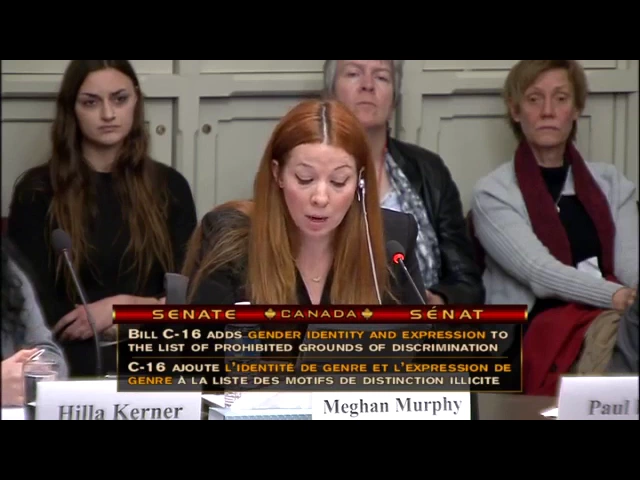
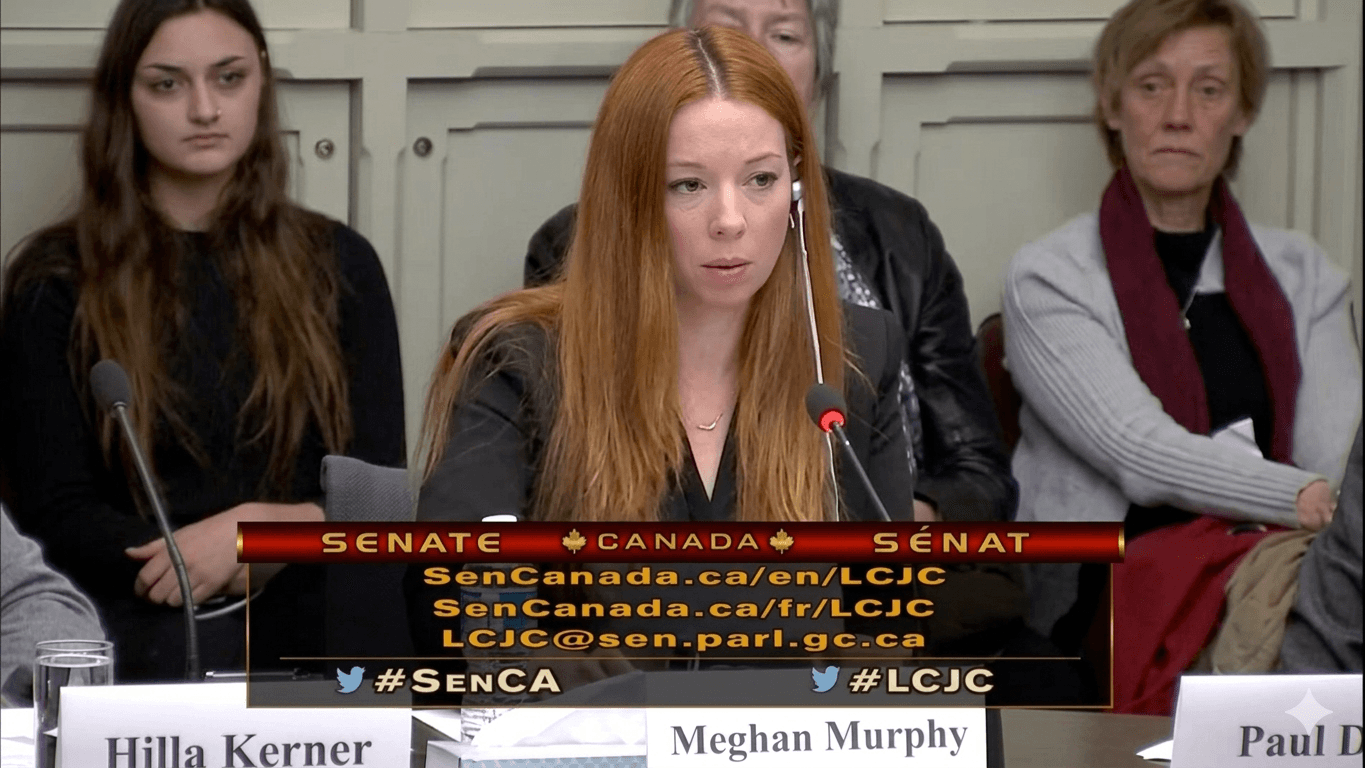
Bill C-16: An Act to amend the Canadian Human Rights Act and the Criminal Code
Added 'gender identity or expression' to federal anti-discrimination and hate crime laws, creating legal framework that CSC used to justify self-identification prison policies without explicit legislative mandate.
Bill C-16: The Law That Changed Everything (But Didn't Mention Prisons)
On June 19, 2017, Bill C-16 received Royal Assent, amending the Canadian Human Rights Act and Criminal Code to add "gender identity or expression" as prohibited grounds of discrimination. Six months later, Correctional Service Canada (CSC) implemented Interim Policy Bulletin 584, allowing federal inmates to request placement in institutions matching their self-identified gender—regardless of anatomy, surgical status, or criminal history.
The connection seems obvious. The timing appears deliberate. But here's what most Canadians don't know: Bill C-16 never mentions prisons. It doesn't define "gender identity or expression." And it certainly doesn't mandate self-identification policies in federal corrections.
This is the story of how a brief amendment to anti-discrimination law became the justification for a sweeping policy change that affects the safety and security of Canada's most vulnerable incarcerated women—a policy change that Parliament never debated, never voted on, and likely never intended.
What Bill C-16 Actually Says
Bill C-16 is a remarkably short piece of legislation. It makes three specific changes to Canadian law:
1. Canadian Human Rights Act Amendment The bill added "gender identity or expression" to Section 3(1)'s list of prohibited grounds of discrimination, which already included race, national or ethnic origin, colour, religion, age, sex, sexual orientation, marital status, family status, disability, and conviction for a pardoned offence.
2. Criminal Code Hate Speech Provisions The bill added "gender identity or expression" to sections 318 (advocating genocide) and 319 (public incitement of hatred).
3. Criminal Code Sentencing Enhancement The bill added "gender identity or expression" to section 718.2, which allows for enhanced sentencing when offences are motivated by bias, prejudice, or hate based on protected characteristics.
That's it. The entire text of the bill that "changed everything" fits comfortably on a single page.
What Bill C-16 Does NOT Say
Equally important is what Bill C-16 does not contain:
No mention of prisons or correctional facilities
No definition of "gender identity" or "gender expression"
No requirement for self-identification policies
No guidance on how to balance conflicting rights
No hierarchy establishing which right takes precedence when sex-based rights and gender identity rights come into conflict
This last point is critical. The Canadian Human Rights Act already prohibited discrimination based on "sex" since 1985. Bill C-16 added a new protected ground without addressing what happens when protecting one ground appears to conflict with protecting another. Can a prison maintain sex-based facilities (protecting women's sex-based rights to dignity and safety) while also respecting gender identity? Bill C-16 is silent.
The Legislative Gap: Where Parliament Failed to Act
If Parliament intended Bill C-16 to revolutionize federal prison policy, the logical place to make that clear would have been in the Corrections and Conditional Release Act (CCRA)—the federal law that actually governs how prisons operate.
The CCRA was enacted in 1992 and gives CSC broad authority to classify and place inmates. Section 4 includes guiding principles such as "respect for gender, ethnic, cultural and linguistic differences," but it does not define "gender," does not address transgender inmates specifically, and does not mandate accommodation based on self-identification.
When Parliament passed Bill C-16 in 2017, it had the opportunity to amend the CCRA to provide clear direction on how the new protected ground of "gender identity or expression" should be operationalized in federal prisons. Parliament chose not to do so. No amendments were made to the CCRA. No legislative guidance was provided to CSC on how to balance the new anti-discrimination protections with existing security requirements and sex-based protections.
This was not an oversight—it was a choice. The debate around Bill C-16 was extensive and contentious. Critics raised concerns about compelled speech, the lack of definitions, and potential conflicts with other rights. Yet even as these concerns were aired, Parliament declined to amend the legislation governing federal corrections.
From Law to Policy: CSC's Interpretive Leap
Into this legislative vacuum stepped Correctional Service Canada. On December 27, 2017—exactly six months after Bill C-16 received Royal Assent—CSC issued Interim Policy Bulletin 584.
This policy went far beyond anything Bill C-16 required:
Self-identification is sufficient: Inmates can request placement based on gender identity "regardless of their anatomy (sex) or gender on their identification documents"
No medical requirements: No requirement for medical diagnosis, hormone therapy, or surgery
High bar for denial: Placement should be allowed "unless there are overriding health or safety concerns which cannot be resolved"
CSC presented this policy as necessary to comply with Bill C-16. But the bill contains no such requirements. Adding "gender identity or expression" as a protected ground does not automatically mean:
That self-identification alone must be determinative
That accommodation must override all other considerations
That sex-based facilities are prohibited
That individual safety concerns can be dismissed
In fact, the Canadian Human Rights Act itself contains a critical exception that CSC appears to have ignored: Section 15(1)(a) states it is not discriminatory to maintain requirements that are based on a "bona fide occupational requirement." CSC could have argued that housing inmates according to sex is a bona fide requirement for prison security and dignity. Instead, CSC adopted an interpretation that effectively treats gender identity as the only relevant consideration.
The Constitutional Foundation CSC Overlooked
The Canadian Charter of Rights and Freedoms—Canada's constitutional document—provides additional context that CSC's policy ignores.
Section 7 guarantees "the right to life, liberty and security of the person." Female inmates argue that the presence of male-bodied individuals in women's prisons violates their security rights.
Section 15(1) provides equality rights and specifically prohibits discrimination based on sex. Women argue they are being discriminated against when forced to share intimate facilities with male inmates.
Section 28 reinforces that Charter rights are "guaranteed equally to male and female persons"—suggesting that sex-based protections have constitutional status.
Section 1 allows rights to be limited only if "demonstrably justified in a free and democratic society." Any limitation on women's sex-based rights would need to meet this high standard.
These constitutional protections existed before Bill C-16 and continue to exist alongside it. Yet CSC's interpretation of Bill C-16 effectively treats gender identity rights as absolute, overriding sex-based constitutional protections without the demonstration of justification that Section 1 requires.
International Obligations Canada Is Violating
Canada's obligations under international law add another layer of complexity that CSC has failed to address.
The International Covenant on Civil and Political Rights (ICCPR), ratified by Canada in 1976, requires that all persons deprived of liberty "shall be treated with humanity and with respect for the inherent dignity of the human person." The UN Standard Minimum Rules for the Treatment of Prisoners (the Mandela Rules) specify that men and women should be detained separately.
The Convention on the Elimination of All Forms of Discrimination against Women (CEDAW), ratified by Canada in 1981, obligates Canada to "pursue by all appropriate means... a policy of eliminating discrimination against women" and to ensure "the full development and advancement of women." Housing male inmates—including those convicted of violent and sexual offences against women—with female inmates arguably constitutes discrimination against incarcerated women in violation of Canada's treaty obligations.
The Timeline: How Did This Happen?
Understanding how we arrived at the current situation requires examining the timeline:
1960: Canadian Bill of Rights protects equality "without discrimination by reason of... sex"
1982: Canadian Charter guarantees equality rights including protection based on sex
1985: Canadian Human Rights Act prohibits discrimination based on sex
1992: Corrections and Conditional Release Act enacted with respect for "gender... differences" but no definition of gender
2014: Ontario Human Rights Commission releases policy suggesting refusing preferred pronouns may be discrimination
2017 (June 19): Bill C-16 receives Royal Assent
2017 (December 27): CSC implements Policy Bulletin 584—just six months later
2024-present: Legal challenges to CSC policy proceed through courts
The speed of implementation is notable. CSC had Policy Bulletin 584 ready to go exactly six months after Bill C-16 became law. This suggests the policy was either developed in anticipation of the bill's passage or created very rapidly afterward—in either case, without the kind of extensive consultation, pilot programs, and evidence-gathering that such a significant policy change would normally require.
What Should Have Happened
A responsible approach to implementing Bill C-16 in federal corrections would have looked very different:
1. Legislative Clarity Parliament should have amended the Corrections and Conditional Release Act to provide specific guidance on:
How to define and verify gender identity claims
What medical or psychological assessment, if any, is appropriate
How to balance gender identity accommodation with sex-based protections
What standard of evidence is required for placement decisions
How to address cases where accommodation creates security risks
2. Pilot Programs Before implementing a national policy, CSC should have:
Conducted pilot programs in select institutions
Gathered data on safety outcomes, incidents, and inmate concerns
Evaluated different models for accommodation (separate units, individual assessments, etc.)
Consulted with affected inmates—both those requesting accommodation and those impacted by it
3. Evidence-Based Decision Making Policy should have been based on:
Review of international evidence on transgender inmate placement
Analysis of risks and benefits of different approaches
Consideration of the specific security concerns in federal institutions
Assessment of impacts on different inmate populations
4. Meaningful Consultation CSC should have consulted:
Women's organizations and advocates for incarcerated women
Correctional officers and security staff
Mental health and medical professionals
Legal experts on Charter rights and conflicts between protected grounds
5. Graduated Implementation Rather than an immediate, universal policy:
Start with lower-security institutions
Develop protocols for individual risk assessment
Create mechanisms for monitoring and adjustment
Build evidence base before expanding
None of this happened. Instead, CSC implemented a sweeping policy change based on an interpretation of Bill C-16 that the legislation itself does not require.
The Current Reality
As of 2024, the consequences of this policy are becoming clear:
Male-bodied inmates, including those convicted of sexual offences against women, are housed in federal women's institutions
Female inmates report fear, anxiety, and retraumatization
Correctional officers describe safety concerns and policy confusion
Access to Information requests reveal CSC is unwilling to release detailed data on transfers, incidents, and assaults
Legal challenges proceed through the courts, with women's groups arguing CSC's policy violates Charter rights
The Accountability Question
If Bill C-16 does not mandate CSC's self-ID prison policies, who decided this interpretation was correct? Who weighed the competing rights and interests? Who determined that gender identity accommodation must override all other considerations, including women's safety?
The answer appears to be: unelected bureaucrats at Correctional Service Canada.
This is not how significant policy changes are supposed to work in a democracy. When fundamental rights are at stake—the security of incarcerated women, the dignity of sex-based facilities, the accommodation of gender identity—Parliament should make the hard decisions through transparent debate and clear legislation.
Instead, CSC made these decisions through administrative policy, without legislative mandate, without public debate, and without meaningful consultation with affected women.
What Happens Next
Bill C-16 is now law and is unlikely to be repealed. But the policy choices CSC has made in response to Bill C-16 are not inevitable. They are not required by the legislation. And they can be changed.
Several paths forward are possible:
Parliamentary Action: Parliament could amend the Corrections and Conditional Release Act to provide clear direction on how to operationalize Bill C-16's protections while maintaining sex-based security measures.
Policy Reform: The Minister of Public Safety could direct CSC to revise Policy Bulletin 584 to include more rigorous assessment protocols, maintain sex-based protections, and prioritize inmate safety.
Judicial Intervention: The ongoing Charter challenge could result in courts requiring CSC to better balance competing rights or invalidating the current policy as unconstitutional.
International Pressure: Canada's compliance with ICCPR and CEDAW obligations could be raised with UN treaty bodies, potentially leading to recommendations or criticism.
Conclusion: The Law That Didn't
Bill C-16 added "gender identity or expression" to Canada's anti-discrimination laws. It was a significant change, worthy of serious debate about how to protect a vulnerable population while preserving other important rights and social goods.
But Bill C-16 did not create a mandate for self-identification prison policies. It did not require CSC to place male-bodied inmates in women's institutions based solely on self-declared identity. It did not establish that gender identity accommodation must override women's security and dignity. It did not resolve the question of how to balance competing rights.
Those policy choices were made by CSC, not by Parliament. And what bureaucrats chose to do, democratically accountable leaders can choose to undo.
The question is whether Canada's political leaders have the courage to acknowledge that the current policy is not working, is not legally required, and is not fair to the incarcerated women whose safety and dignity it sacrifices in the name of an interpretation of Bill C-16 that the law itself does not demand.
Key Provisions
Canadian Human Rights Act Amendment: Added 'gender identity or expression' to Section 3(1) list of prohibited grounds of discrimination
Criminal Code Hate Speech: Added 'gender identity or expression' to sections 318 (advocating genocide) and 319 (public incitement of hatred)
Criminal Code Sentencing: Added 'gender identity or expression' to section 718.2 (hate crime sentencing enhancement)
No Prison Mandate: Bill does NOT mention prisons, does NOT require self-ID placement, does NOT define 'gender identity or expression'
No Hierarchy: Does NOT establish which right takes priority when sex-based rights and gender identity rights conflict
Ministerial Chain of Custody:
Bill C-16 was a government bill, not a private member's bill. The decision to introduce it, the choice not to define its key terms, and the management of its passage through Parliament were all ministerial acts made by identifiable officials.
Jody Wilson-Raybould
Minister of Justice and Attorney General of Canada, November 2015 to January 2019 She introduced Bill C-16 in the House of Commons on May 17, 2016. The bill added "gender identity or expression" to the Canadian Human Rights Act and the Criminal Code without defining either term and without providing any mechanism for resolving conflicts between the new protected ground and the existing protection for sex. During committee hearings she defended the bill against concerns about its undefined scope and its implications for sex-segregated spaces. Those concerns were not addressed in the final legislation. She resigned from Cabinet in February 2019 and subsequently left Parliament.
Justin Trudeau
Prime Minister, November 2015 to March 2025 Bill C-16 was a commitment of his government and appeared in Minister Wilson-Raybould's mandate letter. More significantly, Trudeau made a public commitment at a town hall in Kingston, Ontario on January 12, 2017 — before the bill had passed the Senate — that transgender federal prisoners would be placed based on gender identity. CSC issued the policy implementing that commitment eleven months later. The sequence makes clear that the executive decision preceded the legislative process.
Senator Grant Mitchell
Senate Sponsor He sponsored Bill C-16 in the Upper Chamber, called on senators to pass it without amendment, and secured its passage by a vote of 67 to 11.
Senator Don Plett
Principal Senate Opponent He raised concerns during Senate debate about the bill's lack of definitions and its potential impact on sex-segregated spaces. Those concerns were procedurally overruled and are now the subject of active Charter litigation.
Who is responsible now:
The bill's undefined terms and unresolved conflicts with sex-based rights protections remain in force. No minister has moved to define "gender identity or expression" in law or to establish how it interacts with the protection for sex. That omission belongs to every Minister of Justice since 2017.
References:
Bill C-16: An Act to amend the Canadian Human Rights Act and the Criminal Code, 1st Sess, 42nd Parl, 2017 (Royal Assent 19 June 2017), online: Parliament of Canada https://www.parl.ca/DocumentViewer/en/42-1/bill/c-16/royal-assent.
Correctional Service Canada, Interim Policy Bulletin 584: Gender Identity or Expression (27 December 2017), online: Public Safety Canada https://www.publicsafety.gc.ca/cnt/trnsprnc/brfng-mtrls/prlmntry-bndrs/20200621/023/index-en.aspx.
Canadian Human Rights Act, RSC 1985, c H-6, s 3(1).
Corrections and Conditional Release Act, SC 1992, c 20.
Canada, Parliament, House of Commons Debates, 42nd Parl, 1st Sess, Vol 148, No 116 (16 November 2016) (debate on Bill C-16).
Canadian Charter of Rights and Freedoms, Part I of the Constitution Act, 1982, being Schedule B to the Canada Act 1982 (UK), 1982, c 11.
International Covenant on Civil and Political Rights, 19 December 1966, 999 UNTS 171, Can TS 1976 No 47, art 10(1) (entered into force 23 March 1976, accession by Canada 19 May 1976).
United Nations Standard Minimum Rules for the Treatment of Prisoners (the Mandela Rules), GA Res 70/175, UNGAOR, 70th Sess, UN Doc A/RES/70/175 (2015), Rule 11.
Convention on the Elimination of All Forms of Discrimination against Women, 18 December 1979, 1249 UNTS 13, Can TS 1982 No 31, arts 2-3 (entered into force 3 September 1981, ratification by Canada 10 December 1981).
Canadian Bill of Rights, SC 1960, c 44, s 1(b).
Ontario Human Rights Commission, Policy on preventing discrimination because of gender identity and gender expression (2014), online: http://www.ohrc.on.ca/en/policy-preventing-discrimination-because-gender-identity-and-gender-expression.
"Legal challenge underway over transgender women in Canadian prisons" CBC News (29 March 2024), online: https://www.cbc.ca/news/canada/british-columbia/legal-challenge-transgender-women-prisons-1.7155843.
Data obtained through Access to Information requests by various advocacy organizations (specific incident reports available through ATIA).
Testimony and affidavits from incarcerated women collected by Canadian Women's Sex-Based Rights (caWsbar) and Justice Centre for Constitutional Freedoms for ongoing Charter challenge.
Union of Canadian Correctional Officers, statements and media releases regarding safety concerns with Policy Bulletin 584.
Access to Information Act, RSC 1983, c A-1; multiple ATIA requests to CSC regarding transgender inmate data have resulted in heavily redacted responses.
Read More

text
Alberta Human Rights Act
Alberta's provincial human rights law; amended in 2015 to add 'gender identity' and 'gender expression' as protected grounds; applies to provincial services but federal prisons fall under federal jurisdiction.
text
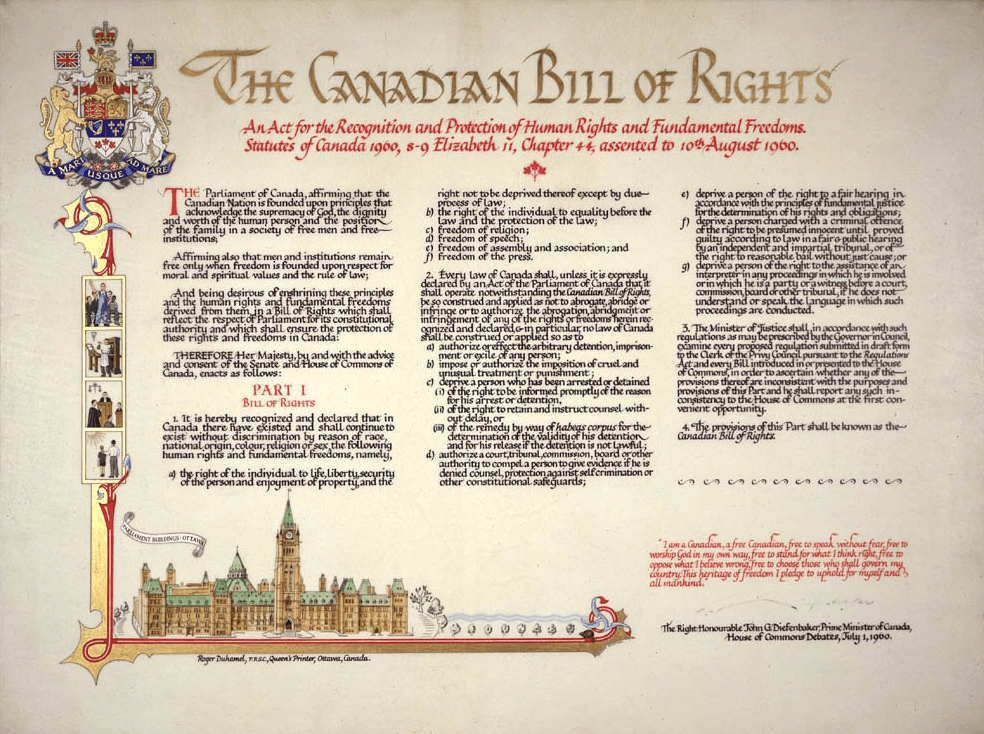
Canadian Bill of Rights
Canada's first federal human rights statute, enacted in 1960 under Prime Minister Diefenbaker; protects equality before the law without discrimination by sex — and is directly named in caWsbar's Charter challenge as violated by CSC's prison placement policy, making it an active legal instrument, not merely a historical one.