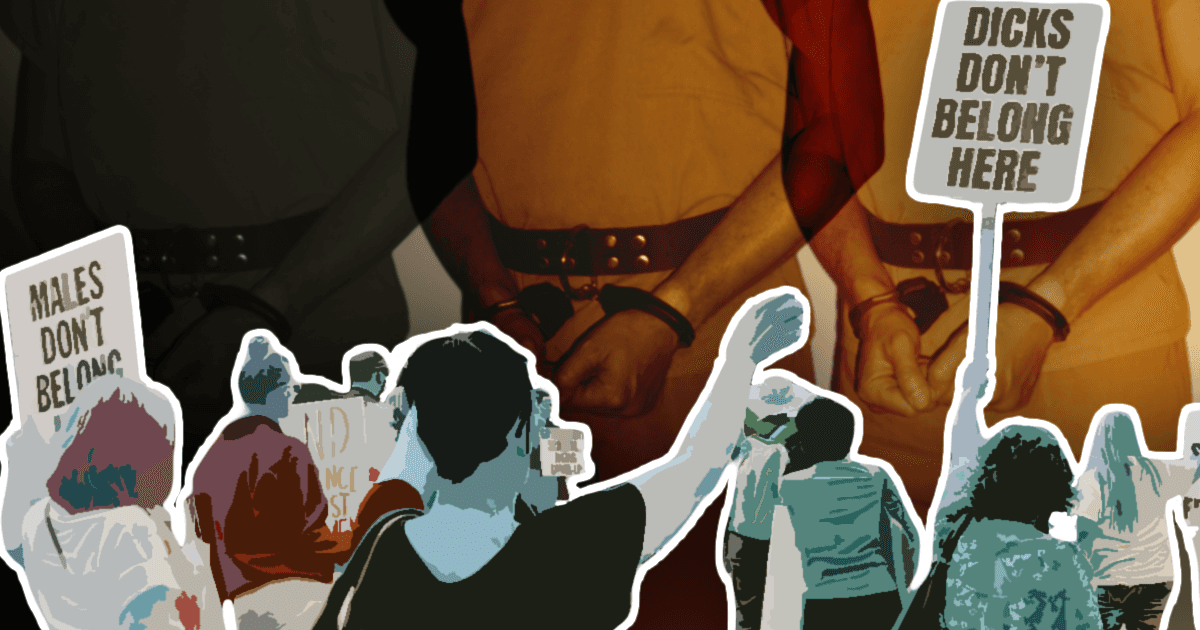
Interim Policy Bulletin 584: Gender Identity or Expression
Administrative policy (not law) allowing federal inmates to request transfer to institutions matching self-identified gender regardless of anatomy, surgery, or criminal history; implemented 6 months after Bill C-16.
Policy Bulletin 584: The Rule Change Nobody Voted For
On December 27, 2017 — exactly six months after Bill C-16 received Royal Assent — Correctional Service Canada issued a document called Interim Policy Bulletin 584: Gender Identity or Expression. It was brief. It was not a law. It was not debated in Parliament. It was not voted on by elected representatives. But it fundamentally changed how Canada's federal prison system decides who goes where — and with whom.
The bulletin's central provision was simple: incarcerated persons could request placement in an institution matching their self-declared gender identity, "regardless of their anatomy (sex) or gender on their identification documents." No medical diagnosis was required. No surgery was required. No hormone therapy was required. The only explicit limit was an undefined reference to "overriding health or safety concerns which cannot be resolved."
This is the story of how a rule that never went to Parliament came to govern the safety of the most vulnerable women in Canadian federal custody.
What a "Policy Bulletin" Is — and What It Is Not
Policy bulletins are administrative instruments. They are not legislation passed by Parliament. They are not regulations filed under the Statutory Instruments Act. They are not even formal Commissioner's Directives — the top tier of CSC's internal policy hierarchy. They are the mechanism by which CSC's senior officials communicate how they would like the rules to work, pending a formal directive.
This matters for three reasons:
Parliamentary scrutiny does not apply. There is no first reading, no committee study, no opposition response. The bulletin is issued, and it takes effect.
Judicial review is indirect. Courts can review administrative policy, but challenges typically proceed through the consequences of the policy — a specific placement decision, a rights violation — rather than the policy instrument itself. This creates a high practical threshold for contesting the rule at the level of the rule.
Revocation is as quiet as issuance. A future Commissioner can rescind or amend a bulletin without public notice. The policy can change overnight — and, in this case, stayed in force for nearly five years before its formal replacement.
In the period between Policy Bulletin 584 and its successor, Commissioner's Directive 100 — Gender Diverse Offenders, Canada's federal prison placement policy for trans-identified inmates was governed by a document that most members of Parliament never read.
What Policy Bulletin 584 Actually Says
The operative provisions of the bulletin can be stated briefly:
Inmates were permitted to request placement in institutions aligned with their self-declared gender identity, "regardless of their anatomy (sex) or gender on their identification documents"
Requests were to be assessed on a case-by-case basis
No medical diagnosis of gender dysphoria was required
No gender-affirming surgery was required
No hormone therapy was required
Placement aligned with self-declared gender identity was the default outcome, "unless there are overriding health or safety concerns which cannot be resolved"
CSC framed this framework as flowing directly from Bill C-16. But neither the amending bill nor the Canadian Human Rights Act required this specific interpretation. Adding "gender identity or expression" as a prohibited ground of discrimination could have been operationalized in many ways consistent with sex-based protections for incarcerated women. CSC chose the most permissive possible reading.
The Town Hall That Changed Federal Prison Policy
The proximate cause of Policy Bulletin 584 was not a legislative decision. It was a town hall question.
On January 12, 2017, Prime Minister Justin Trudeau held a town hall event in Kingston, Ontario. An audience member raised the issue of transgender federal prisoners. The Prime Minister responded that the issue would be addressed — despite, by his own account, having not previously considered it.
The next day, CBC News reported that CSC's policy had effectively been changed. The administrative work to formalize the new approach took another eleven months. The product of that work was Policy Bulletin 584.
This is not how major changes to correctional policy normally proceed. The Canadian federal correctional system has a professional policy infrastructure: the Commissioner's Directive system, the Research Branch, the Correctional Investigator, consultations with advocacy organizations and inmate advisory committees. Each of these serves as a check on politically-motivated or insufficiently-studied decisions. None of these checks appears to have been engaged before Policy Bulletin 584 was issued.
A policy that protects the safety of the most vulnerable women in federal custody should not originate in a town hall answer. It should originate in careful analysis, broad consultation, and Parliamentary scrutiny. Policy Bulletin 584 originated in none of these.
The Legal Authority CSC Claimed
Policy Bulletin 584 did not cite a specific statutory provision requiring self-identification-based placement. Its stated authority rested on a chain of inference:
Bill C-16 added "gender identity or expression" to the Canadian Human Rights Act's prohibited grounds of discrimination
CSC is subject to the Canadian Human Rights Act
Therefore, failing to accommodate gender identity in placement decisions would constitute prohibited discrimination
This reasoning skips two critical steps.
The first is the question of what "accommodation" actually requires. Canadian human rights law recognizes that reasonable accommodation is not limitless. The duty to accommodate is bounded by "undue hardship" — a concept developed in decades of Supreme Court jurisprudence, including British Columbia (Public Service Employee Relations Commission) v BCGSEU (the Meiorin decision). In the context of federal corrections, the safety, dignity, and security of other incarcerated persons — particularly women with histories of male-perpetrated violence — is not a trivial consideration. CSC could have concluded that accommodation through individualized protocols within men's institutions, rather than cross-sex placement, satisfied its statutory obligations.
The second is the Act's own bona fide requirement exception. Section 15(1)(g) of the Canadian Human Rights Act provides that a practice is not discriminatory if there is bona fide justification for it. Sex-segregated incarceration is among the most longstanding such justifications in Canadian and international correctional practice — reflected in the Corrections and Conditional Release Act, the UN Bangkok Rules, and the UN Mandela Rules. CSC declined to rely on this exception.
The gap between what the law required and what the policy chose to do is the gap in which every subsequent harm has occurred.
The "Overriding Health or Safety Concerns" Loophole That Isn't
Defenders of Policy Bulletin 584 pointed to the policy's explicit safety override: placements could be denied where "there are overriding health or safety concerns which cannot be resolved." In theory, this clause preserves the ability to refuse a transfer that would expose women to unacceptable risk.
In practice, the clause has done almost no work.
Several features of the override explain why:
The burden falls on CSC to justify denial, not on the requesting offender to justify transfer. This inverts the traditional burden in high-risk placements.
"Cannot be resolved" sets an effectively unreachable threshold. A risk is, by definition, almost always capable of some form of management — segregation, enhanced supervision, conditional placement. A risk that "cannot be resolved" is a rare finding.
No examples or parameters were published. What, concretely, constitutes an "overriding" concern? A prior conviction for sexual violence against women? A history of institutional violence? The bulletin did not say. Operational staff were left without guidance.
The Office of the Correctional Investigator identified this precise gap in its annual reporting, recommending that CSC clarify the practice of "overriding health or safety concerns" by establishing parameters, guidelines, and clear examples. Years after the bulletin was issued, the body statutorily responsible for oversight of federal corrections found the key operative phrase was still undefined.
What Policy Bulletin 584 Replaced
Before December 27, 2017, CSC's placement practice for trans-identified federal offenders was different in one critical respect: it required medical transition.
The pre-2017 standard permitted transfer of male-bodied offenders to women's institutions only where the offender had undergone gender-affirming surgery — at minimum, surgical removal of male genitalia. This requirement was itself the product of a 2001 ruling of the Canadian Human Rights Tribunal, which found that CSC's blanket denial of gender-affirming surgery to transgender-identifying inmates constituted discrimination on the basis of sex and disability. In the years that followed, CSC developed a protocol under which post-operative transfer was possible, but pre-operative transfer was not.
Policy Bulletin 584 eliminated the surgical requirement entirely. In its place, self-identification became the sole threshold for a transfer request.
The significance of this change was both categorical and practical. It redefined the criterion for accessing a women's institution from a physical fact — the presence or absence of male genitalia — to an internal declaration. It also permitted, for the first time in federal corrections, the placement of male-bodied, intact, and in many cases violently criminalized men in facilities designed to hold women.
Data obtained through Access to Information requests by caWsbar and allied organizations indicates that the overwhelming majority of male inmates transferred to women's institutions under the new framework are pre-operative. CSC's own research on gender-diverse offenders with a history of sexual offending found that 31% of trans-identified male offenders had sexual assault convictions, and 44% had previous convictions for sexual assault. These are the offenders the pre-2017 surgical requirement had effectively excluded.
The Consultation That Didn't Happen
Policy Bulletin 584 was issued without formal consultation with women's organizations, without consultation with women incarcerated in federal institutions, and without the evidence-gathering that typically precedes a significant correctional policy change.
The consultations CSC has cited as supporting the policy were consultations with gender diversity advocacy organizations. These consultations were real and substantial. What was missing was the other side of the accommodation equation: the women whose facilities would be affected, the survivors of male violence for whom sex-segregated space was designed to be a respite, and the women's advocacy organizations with decades of expertise in the correctional conditions of incarcerated women.
This asymmetry was not accidental. CSC framed the policy question as "how do we accommodate trans offenders?" rather than "how do we balance the human rights of trans offenders with the human rights of incarcerated women?" The framing determined the consultation design. The consultation design determined what information the policy would and would not account for.
The result is a policy that reads, on its face, as a straightforward accommodation — and that in practice has imposed uncompensated costs on a population whose voices were never heard.
The Data Gaps CSC Maintained
From its issuance through its formal replacement in 2022, Policy Bulletin 584 operated in a near-total data vacuum.
Basic questions that any evidence-based policy should be able to answer were, and to a significant extent remain, unanswered:
How many male inmates have been transferred to women's institutions under the policy?
What were their offence histories?
What incidents — sexual assaults, physical assaults, intimidation, sexual harassment — have occurred in the receiving institutions?
How have female inmates characterized the effect of cross-sex placement on their safety, mental health, and conditions of confinement?
CSC's responses to Access to Information requests seeking this data have been heavily redacted or have produced assertions that no responsive records exist. Where data has been released — most notably the figures relied on in caWsbar's Charter challenge — it has come in aggregated form, without the granularity required to assess the safety of specific institutions or the outcomes of specific placements.
A policy operating without outcome data is a policy that cannot be evaluated. It also cannot be corrected. The absence of data is not a gap in the implementation of the policy; it is a feature of its governance.
From "Interim" to Entrenched
Policy Bulletin 584 was, by its own terms, interim. It was issued in December 2017 with the understanding that a formal Commissioner's Directive would follow.
It took nearly five years.
Between December 2017 and May 2022, CSC operated under an explicitly provisional framework without the public-facing debate, stakeholder engagement, or formal policy development that the Commissioner's Directive process contemplates. During that period, the number of male offenders transferred to women's institutions grew, incidents occurred, women's advocacy organizations raised alarms, and the Office of the Correctional Investigator flagged concerns. None of this produced a reconsideration of the underlying policy. It produced, instead, the formalization of the same approach.
Commissioner's Directive 100: Gender Diverse Offenders took effect May 9, 2022. It replaced Policy Bulletin 584, which was revoked. But the core rule — self-identification as the threshold for transfer requests, "overriding health or safety concerns" as the only denial basis — was carried forward.
The "interim" designation served, in effect, as a placeholder label for a policy that was never genuinely revisited. The bureaucratic tactic of issuing a policy as "interim" while operating it as permanent is a recognizable pattern in Canadian administrative practice. In this instance, the consequences of that pattern have been borne by the women of Grand Valley, Edmonton, Fraser Valley, and Joliette Institutions.
The Accountability Question
Who decided that self-identification alone would be sufficient for cross-sex federal placement?
The answer cannot be Parliament — Parliament never legislated on the question. The answer cannot be the Supreme Court of Canada — no Supreme Court judgment required this outcome. The answer cannot be the Canadian Human Rights Tribunal — the 2001 ruling the policy ostensibly built on concerned access to gender-affirming surgery, not cross-sex placement.
The answer is: senior officials of Correctional Service Canada, acting in December 2017, shortly after the Prime Minister was asked a question at a town hall in Kingston, Ontario, and committed to the policy change on the spot.
This is not the process Canada's democratic institutions are designed to produce. Policy changes of this significance — changes that alter the basic safety profile of federal incarceration for a specific, identifiable, and vulnerable group of inmates — belong in statute, or at minimum in formal regulation. They belong in Hansard. They belong in committee testimony. They do not belong in an administrative bulletin issued without notice.
What Happens Next
Policy Bulletin 584 has been revoked. Its replacement, Commissioner's Directive 100, is now the governing instrument. But the bulletin's legacy is consequential:
It established the precedent that cross-sex federal placement could be implemented through administrative policy rather than legislation
It normalized self-identification as the operative criterion
It created a five-year track record that a future government or future CSC Commissioner would have to actively overturn to change course
It generated a body of incident data — most of it still unreleased — that now informs the Charter challenge filed by caWsbar and the Justice Centre for Constitutional Freedoms on April 7, 2025
The Charter challenge, at its core, asks the courts to do what Parliament has failed to do: to answer, as a matter of constitutional law, how the sex-based rights of incarcerated women under sections 7, 12, and 15 of the Canadian Charter of Rights and Freedoms are to be reconciled with the gender identity claims of trans-identified male offenders. The answer the courts provide will determine the fate of the framework that Policy Bulletin 584 set in motion.
Until that answer arrives, the rule that nobody voted for remains in force — under a new name.
Key Provisions
Self-Identification Sufficient: Inmates can request placement based on gender identity 'regardless of their anatomy (sex) or gender on their identification documents'
No Medical Requirements: No requirement for medical diagnosis, hormone therapy, or surgery
Safety Override: Placement allowed 'unless there are overriding health or safety concerns which cannot be resolved' - extremely high bar
Not Law: This is administrative policy created by CSC bureaucrats, NOT legislation passed by Parliament
Timeline: Implemented December 27, 2017 - exactly 6 months after Bill C-16 royal assent
No Consultation: Implemented without meaningful consultation with women's organizations or incarcerated women
Ministerial Chain of Custody:
Interim Policy Bulletin 584 is an administrative document, not a piece of legislation. It was not debated in Parliament, not subject to public consultation, and not announced through a press release or formal policy statement. It was issued by Correctional Service Canada on December 27, 2017 — exactly six months after Bill C-16 received Royal Assent — and it fundamentally changed how federal prisons classify and place inmates based on gender identity. Its ministerial chain of custody is short and precise.
Justin Trudeau served as Prime Minister of Canada from November 2015 to March 2025. The policy that became Interim Policy Bulletin 584 began with a commitment he made publicly at a town hall in Kingston, Ontario on January 12, 2017 — before Bill C-16 had even passed the Senate. When an audience member asked about transgender prisoners, Trudeau stated that he would address the issue. The CBC reported the resulting policy change the following day. The speed with which CSC produced a formal policy document — eleven months after that public commitment, and six months after Royal Assent — suggests the policy was developed in anticipation of or parallel to the legislative process, not in response to careful analysis of the law as passed. Trudeau was Prime Minister throughout the policy's implementation and the subsequent development of Commissioner's Directive 100.
Ralph Goodale served as Minister of Public Safety and Emergency Preparedness from November 2015 to November 2019. He was the minister responsible for Correctional Service Canada when Policy Bulletin 584 was issued on December 27, 2017. His ministerial sign-off — whether explicit or implicit through his oversight of CSC — is the political authority behind the interim policy. He has not publicly explained why CSC chose to implement a self-identification prison placement policy without seeking legislative amendment to the Corrections and Conditional Release Act, which does not mandate any such policy.
Don Head served as Commissioner of Correctional Service Canada from June 2008 to 2018. He was the most senior CSC official at the time Policy Bulletin 584 was issued and the operational authority behind its implementation. The policy was issued under his signature and his authority as Commissioner. He was also Commissioner when the Bangkok Rules took effect in 2011 and when Canada's correctional practice was still consistent with sex-separated detention. The same official who oversaw a compliant system in 2011 oversaw the transition to a non-compliant one in 2017.
References:
Correctional Service Canada, Interim Policy Bulletin 584: Gender Identity or Expression (27 December 2017), online: Public Safety Canada https://www.publicsafety.gc.ca/cnt/trnsprnc/brfng-mtrls/prlmntry-bndrs/20200621/023/index-en.aspx
Correctional Service Canada, Commissioner's Directive 100: Gender Diverse Offenders (in effect 9 May 2022), online: https://www.canada.ca/en/correctional-service/corporate/acts-regulations-policy/commissioners-directives/100.html
Corrections and Conditional Release Act, SC 1992, c 20, online: https://laws-lois.justice.gc.ca/eng/acts/C-44.6/
Canadian Human Rights Act, RSC 1985, c H-6, ss 3(1), 15(1), online: https://laws-lois.justice.gc.ca/eng/acts/h-6/
Bill C-16: An Act to amend the Canadian Human Rights Act and the Criminal Code, 1st Sess, 42nd Parl, 2017 (Royal Assent 19 June 2017), online: https://www.parl.ca/DocumentViewer/en/42-1/bill/c-16/royal-assent
Canadian Charter of Rights and Freedoms, Part I of the Constitution Act, 1982, being Schedule B to the Canada Act 1982 (UK), 1982, c 11, ss 7, 12, 15, online: https://laws-lois.justice.gc.ca/eng/const/page-12.html
Canadian Bill of Rights, SC 1960, c 44, ss 1(a), 1(b), 2(b), online: https://laws-lois.justice.gc.ca/eng/acts/c-12.3/
British Columbia (Public Service Employee Relations Commission) v BCGSEU, [1999] 3 SCR 3 [Meiorin], online: https://scc-csc.lexum.com/scc-csc/scc-csc/en/item/1724/index.do
United Nations Rules for the Treatment of Women Prisoners and Non-custodial Measures for Women Offenders (the Bangkok Rules), GA Res 65/229, UNGAOR, 65th Sess, UN Doc A/RES/65/229 (2010), Rule 4, online: https://www.unodc.org/documents/justice-and-prison-reform/Bangkok_Rules_ENG_22032015.pdf
United Nations Standard Minimum Rules for the Treatment of Prisoners (the Mandela Rules), GA Res 70/175, UNGAOR, 70th Sess, UN Doc A/RES/70/175 (2015), Rule 11.
Convention on the Elimination of All Forms of Discrimination against Women, 18 December 1979, 1249 UNTS 13, Can TS 1982 No 31, arts 2-3.
International Covenant on Civil and Political Rights, 19 December 1966, 999 UNTS 171, Can TS 1976 No 47, art 10(1).
Office of the Correctional Investigator, online: https://oci-bec.gc.ca/
Office of the Correctional Investigator, Challenges Faced by Gender Diverse Persons in Federal Corrections: An Ombudsman's Perspective, online: https://oci-bec.gc.ca/en/content/challenges-faced-gender-diverse-persons-federal-corrections-ombudsman-s-perspective
"Trans inmates can now be placed in prison based on their gender identity" CBC News (1 February 2018), online: https://www.cbc.ca/news/politics/transgender-inmates-women-men-prison-1.4513760
Canada, Parliament, House of Commons Debates, 42nd Parl, 1st Sess, Vol 148, No 116 (16 November 2016) (debate on Bill C-16).
Access to Information Act, RSC 1985, c A-1, online: https://laws-lois.justice.gc.ca/eng/acts/a-1/
Testimony and affidavits from formerly incarcerated women, including Heather Mason (Grand Valley Institution for Women), collected by Canadian Women's Sex-Based Rights (caWsbar) and the Justice Centre for Constitutional Freedoms for the Charter challenge filed 7 April 2025.
Justice Centre for Constitutional Freedoms, online: https://www.jccf.ca/
Union of Canadian Correctional Officers – Syndicat des agents correctionnels du Canada (UCCO-SACC-CSN), public statements regarding safety concerns with CSC's gender identity placement policy.
Read More
text
CSC Commissioner's Directive (In Development)
CSC has been working to formalize Interim Policy Bulletin 584 into permanent Commissioner's Directive but has not yet published final version; status unclear as of 2025.

text
Employment Equity Act
Federal law requiring employment equity for designated groups including women; raises question of whether males identifying as women count toward 'women' targets in correctional employment.