It Doesn't Have to Be This Way: How New Zealand Could Define "Woman" in a Sentence While Australia and Canada Fight On
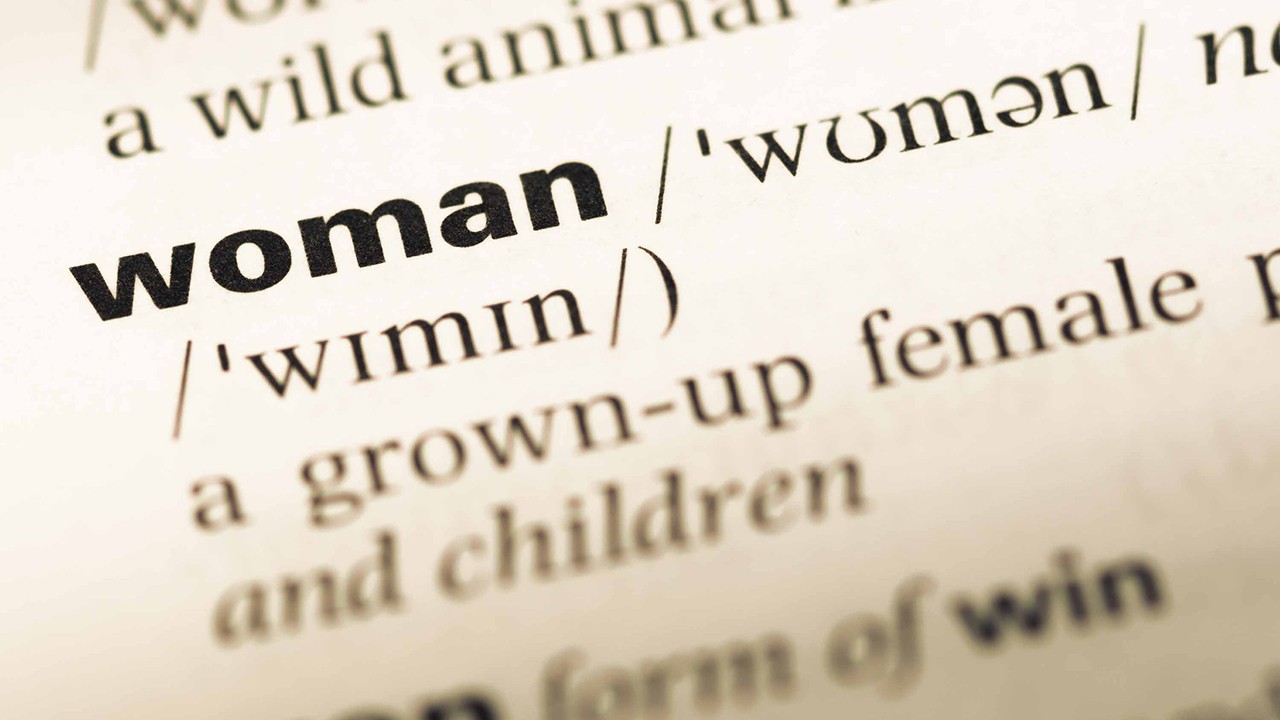

New Zealand is trying to do something simple. It wants to define the words "woman" and "man" in law. On 20 May 2026, a short bill called the Legislation (Definitions of Woman and Man) Amendment Bill passed its first reading. It would define "woman" as an adult human biological female, and "man" as an adult human biological male.
That is the entire idea. Two definitions. No new agency, no complicated system. Just the words, matched to reality.
One thing to be clear about up front. This is not law yet. It has passed only the first of several steps, and it could still be changed or voted down. What makes it worth writing about is how simple the fix is.
Why this approach is so clever
Most laws would have to be rewritten one by one to change how the word "woman" is used. New Zealand is not doing that. It is changing a single statute: the Legislation Act 2019.
The Legislation Act is the rulebook for all the other laws. It tells courts how every other Act should be read. Section 13 of it is titled "Definitions of terms for all legislation." A word defined there carries that meaning across every law in the country, unless a specific law says otherwise.
So by adding two definitions to that one section, New Zealand would set the meaning of "woman" and "man" everywhere in its law at once.
This is the key point. Women's rights were not erased by repealing them. They were weakened by quietly emptying out the meaning of the word "woman." New Zealand's answer is to put the meaning back, at the source.
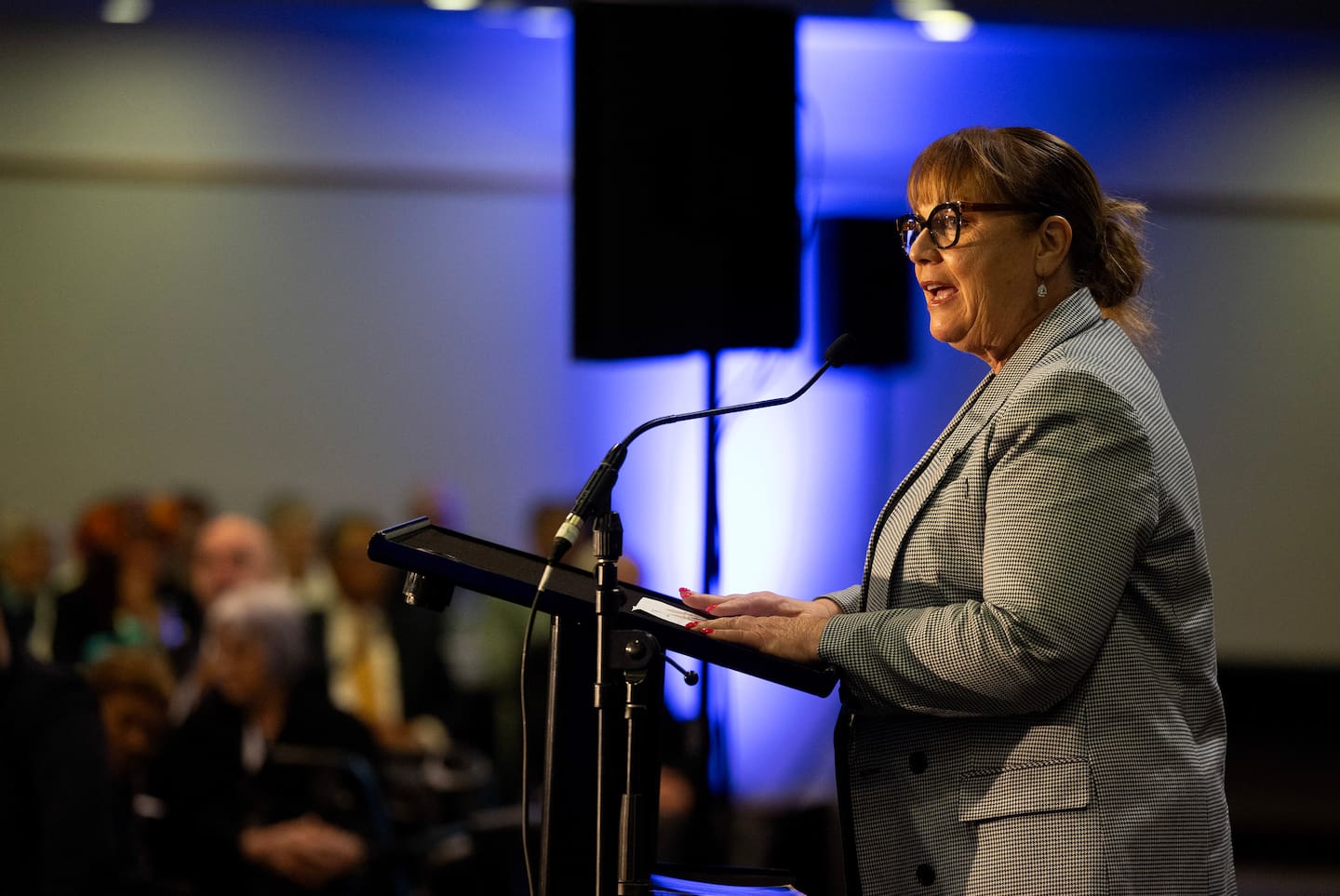
(New Zealand First MP Jenny Marcroft)
Where the bill is now
A few facts about where things stand:
It is a member's bill from New Zealand First MP Jenny Marcroft, who is part of the governing coalition.
It passed its first reading by 67 votes to 55.
It is now with the Social Services and Community Committee, which is taking public submissions until midnight on 2 July 2026.
Anyone can make a submission, including people and groups outside New Zealand.
Even if everything goes smoothly, this will take many months, not weeks. The committee alone usually takes up to six months. After that, the bill still needs a second reading, a full debate, and a third reading before it becomes law. Nothing is guaranteed.
In her speech, Marcroft pointed to last year's United Kingdom Supreme Court ruling that "woman" in equality law means biological sex. But the clearest warning was right next door, in Australia.
New Zealand: closest to a fix
A short bill would define a woman in law as an adult human biological female. It is the simplest version of this reform anywhere, and it is the furthest along.
Sources: Legislation (Definitions of Woman and Man) Amendment Bill, NZ Parliament · Legislation Act 2019 s 13 · RNZ first reading coverage, May 2026.
Why now: the warning from Australia
Five days before New Zealand's first reading, Australia's Federal Court handed down a major decision in Giggle v Tickle.
Sall Grover built Giggle for Girls, an app just for women, and kept males out. Roxanne Tickle, a trans-identifying male, was removed and sued under Australia's Sex Discrimination Act 1984.
In 2024, the court found Grover had discriminated, and ruled that "sex" can change.
On 15 May 2026, the full court agreed and went further, finding direct discrimination and doubling the damages to 20,000 dollars.
Grover says she will ask to take the case to the High Court of Australia.

(Sall Grover vs. "Roxanne Tickle")
That last step is worth explaining, because "ask" is the right word:
The High Court is Australia's top court.
You cannot simply appeal to it. You have to request permission, which is called "special leave."
The court agrees to hear only a small number of cases, usually ones that raise a big legal question.
If it says no, the lower ruling stands as the law.
The plain meaning of the case is hard to miss. In Australia, a law meant to protect women was used to punish a woman for making a space for women, because the word "sex" had been read to mean something other than sex. That is where this road leads when the words are left undefined.
New Zealand watched its closest neighbour and chose the opposite path.
Australia: entrenched in the courts
Australia shows the cost of leaving the word undefined. Its courts have ruled that "sex" can change, and that a women-only space can be unlawful.
Sources: Giggle for Girls Pty Ltd v Tickle [2026] FCAFC 64 · Tickle v Giggle [2024] FCA 960 · Australian Human Rights Commission, May 2026.
What Canada would have to do
Could Canada do the same simple thing? The tool exists. The obstacle is bigger.
Canada has its own rulebook for all laws, the Interpretation Act. Like New Zealand's Legislation Act, it sets definitions that apply across all federal law. In theory, Parliament could add biological definitions of "woman" and "man" there, and they would apply everywhere.
The problem has a name: Bill C-16. In 2017, it added "gender identity or expression" to the Canadian Human Rights Act and the Criminal Code. It never defined those terms, and it never defined "woman" against them. Ever since, policy and tribunal decisions have treated sex and gender identity as the same thing. That is what lets males self-identify into women's prisons, women's sport, and women's services.
Here is the difference, in plain terms:
In New Zealand, "woman" is mostly undefined, so adding a definition fills an empty space.
In Canada, that space is already taken. Gender identity is already protected, and almost a decade of decisions sits on top of it.
So a real Canadian version of this bill is not one sentence. It is two jobs at once:
Define the sex-based words clearly, the way New Zealand is doing.
Make those definitions win when they clash with gender identity, including for single-sex spaces.
That second job means reopening Bill C-16. That is a much bigger and more political fight. The definition is the easy part. Undoing what C-16 set in motion is the hard part.
How Canada is fighting this right now
Because that big legislative fix is not on the table, Canadians are defending women's sex-based rights the only way currently open: in court, one issue at a time. The clearest example is happening right now.
What the case is:
In April 2025, Canadian Women's Sex-Based Rights (caWsbar) filed a constitutional challenge in the Federal Court.
It challenges the federal practice of housing trans-identifying male inmates in women's prisons. That practice comes from a Correctional Service Canada policy called Commissioner's Directive 100: Gender Diverse Offenders.
The case is funded by the Justice Centre for Constitutional Freedoms and argued by Charter Advocates Canada.
It argues the policy breaks female inmates' Charter rights: the right to life, liberty and security of the person (section 7), the right not to be subjected to cruel and unusual treatment (section 12), and the right to equality (section 15). It also relies on the Canadian Bill of Rights.
What just happened:
On 14 May 2026, the case cleared two hurdles in a single day.
The government had asked the court to throw the case out, which is called a motion to strike. Associate Judge Catharine Moore refused, finding the claim raises real Charter issues.
The court also granted caWsbar public interest standing. That means caWsbar is allowed to bring the case on behalf of incarcerated women who cannot safely sue on their own.
The case now moves forward to be argued in full.

(Associate Judge Catharine Moore)
What this route can and cannot do:
It will not define "woman" across all of Canadian law the way New Zealand's bill would.
It can establish, in one urgent area, that sex still matters and that women have a constitutional right to be housed away from males.
That is a major precedent, and it protects some of the most vulnerable women in the country.
But it is slow, costly, and won one issue at a time.
That is the whole contrast. New Zealand may settle the meaning of a word with a single law. Canada is rebuilding the same principle case by case, in court, against its own government. That is why caWsbar's prison challenge matters far beyond the prison walls.
Where we go from here
We will read the New Zealand bill in full, write a submission to the committee before the 2 July deadline, and post both the bill and our analysis here so Canadians can see what a clear law looks like.
New Zealand has not won yet. The bill still has to survive months of process, and it might not. But it has shown the rest of us something important. The meaning of "woman" in law can be settled in a single, simple sentence. Australia is stuck in its courts. Canada is fighting policy by policy. All three are headed for the same destination, and New Zealand is closest to it.
Woman: fact, not feeling. New Zealand has put those words within reach of its law. Our job is to bring them within reach of ours.
Canada: fought policy by policy
Canada has the same tool New Zealand does, but the space is already occupied. So women's sex-based rights are being defended in court, one issue at a time.
Sources: Bill C-16, SC 2017 c 13 · Interpretation Act, RSC 1985 c I-21 · Federal Court ruling of 14 May 2026 (caWsbar) · Justice Centre for Constitutional Freedoms.
Sources
Legislation (Definitions of Woman and Man) Amendment Bill, New Zealand Parliament, official bill and public submission page (submissions to 2 July 2026) — https://www3.parliament.nz/en/pb/sc/make-a-submission/document/54SCSSC_SCF_9E8E8A14-A51C-4567-AB33-08DE9053A7D1/legislation-definitions-of-woman-and-man-amendment-bill
RNZ, "Bill seeking to legally define the terms 'man' and 'woman' passes first reading" (definitions, Marcroft, first reading 20 May 2026) — https://www.rnz.co.nz/news/political/595833/bill-seeking-to-legally-define-the-terms-man-and-woman-passes-first-reading
RNZ, "New Zealand's Definitions of Woman and Man Bill and how the public can give submissions" (67 to 55 vote, committee, submission process) — https://www.rnz.co.nz/news/political/597004/new-zealand-s-definitions-of-woman-and-man-bill-and-how-the-public-can-give-submissions
For Women Scotland Ltd v The Scottish Ministers [2025] UKSC 16 (16 April 2025), House of Commons Library briefing — https://commonslibrary.parliament.uk/research-briefings/cbp-10259/
Giggle for Girls Pty Ltd v Tickle [2026] FCAFC 64 (15 May 2026), Australian Human Rights Commission media release (direct discrimination, damages doubled to $20,000) — https://humanrights.gov.au/about-us/media-centre/media-releases/sex-and-gender-rights/full-federal-court-finds-two-acts-of-direct-discrimination-in-giggle-v-tickle-appeal
Reuters, "Australian court upholds ruling for transgender woman, doubles damages against female-only app" (15 May 2026, Grover to seek High Court leave) — https://www.usnews.com/news/world/articles/2026-05-15/australian-court-upholds-ruling-for-transgender-woman-doubles-damages-against-female-only-app
Interpretation Act (R.S.C., 1985, c. I-21), Justice Laws Website — https://laws-lois.justice.gc.ca/eng/acts/i-21/
An Act to amend the Canadian Human Rights Act and the Criminal Code (Bill C-16, S.C. 2017, c. 13), Parliament of Canada LEGISinfo — https://www.parl.ca/legisinfo/en/bill/42-1/c-16
Justice Centre for Constitutional Freedoms, "Federal Court delivers major procedural wins for women challenging prison transfer policy" (14 May 2026 ruling, Associate Judge Catharine Moore, motion to strike dismissed, public interest standing) — https://www.jccf.ca/federal-court-delivers-major-procedural-wins-for-women-challenging-prison-transfer-policy/
Justice Centre for Constitutional Freedoms, caWsbar case page (CD-100, filed April 2025, Charter sections 7, 12, 15) — https://www.jccf.ca/court_cases/the-forcible-confinement-of-female-inmates-with-trans-identifying-males-is-challenged-in-court/
caWsbar Statement of Claim, Federal Court File T-1146-25 (redacted) — https://www.jccf.ca/wp-content/uploads/2025/04/CAWSBAR-Statement-of-Claim-Filed-Redacted.pdf