From a Lawsuit in Australia to How Canada Lets Trans-Identified Males Induce Lactation with Drugs and "Chestfeed" Newborns
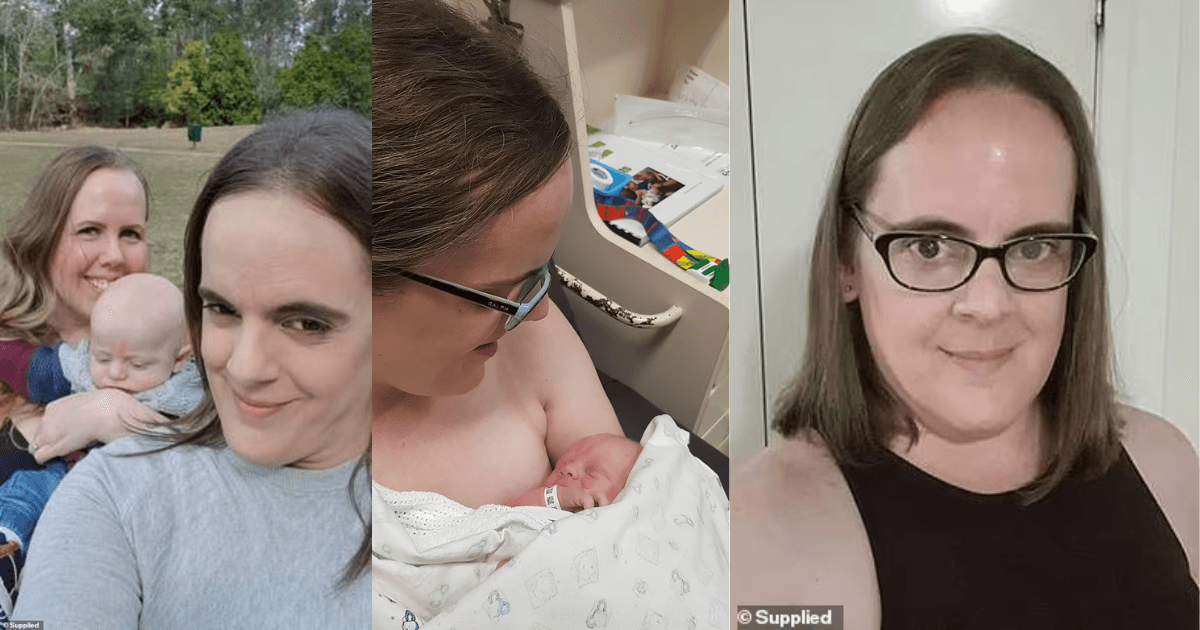
Jasmine Sussex spent fifteen years as a volunteer breastfeeding counselor with the Australian Breastfeeding Association. In 2021 she responded to a post on the Association's Facebook page by saying plainly that the person describing himself as nursing a baby appeared to be a man. She was investigated, and then dismissed, for refusing to use gender-neutral language such as "parent" in place of "mother," according to her own account and reporting by multiple Australian outlets. She has since been pursued through years of legal proceedings for the offense of stating that only women can breastfeed.
Her case is back before the Queensland Civil and Administrative Tribunal. As part of her defense, Sussex's lawyers sought access to the medical records of the man who complained about her, including the treatment used to attempt lactation and the composition of the fluid that was fed to the baby. According to available reporting, the tribunal dismissed that request, ruling the man's medical treatment was not relevant to whether Sussex had vilified him. In our view, the question of what that infant actually received was deemed beside the point. Sussex is appealing.
It would be comforting to treat this as an Australian problem. It is not. The same capture of the same kind of organization has already happened in Canada, and it happened more quietly.
A mothers' organization, founded by mothers
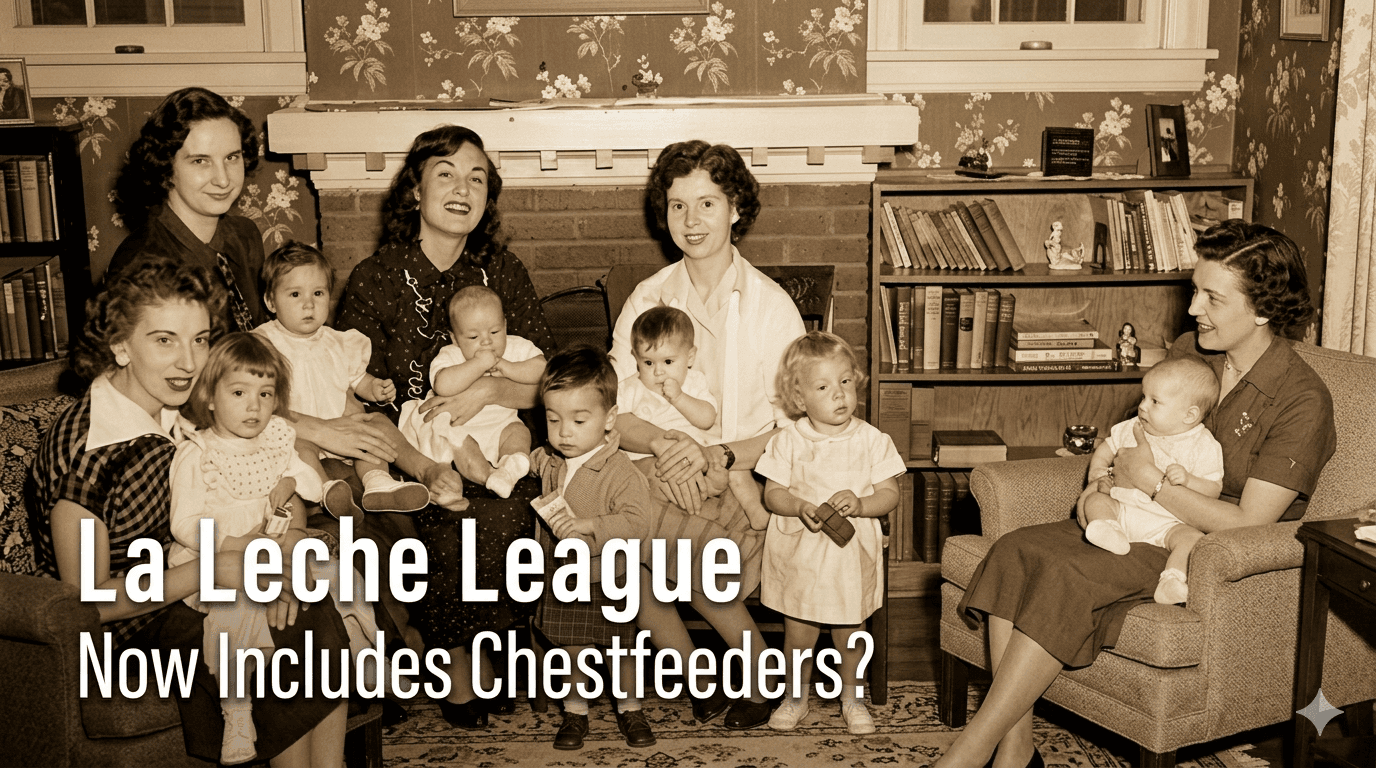
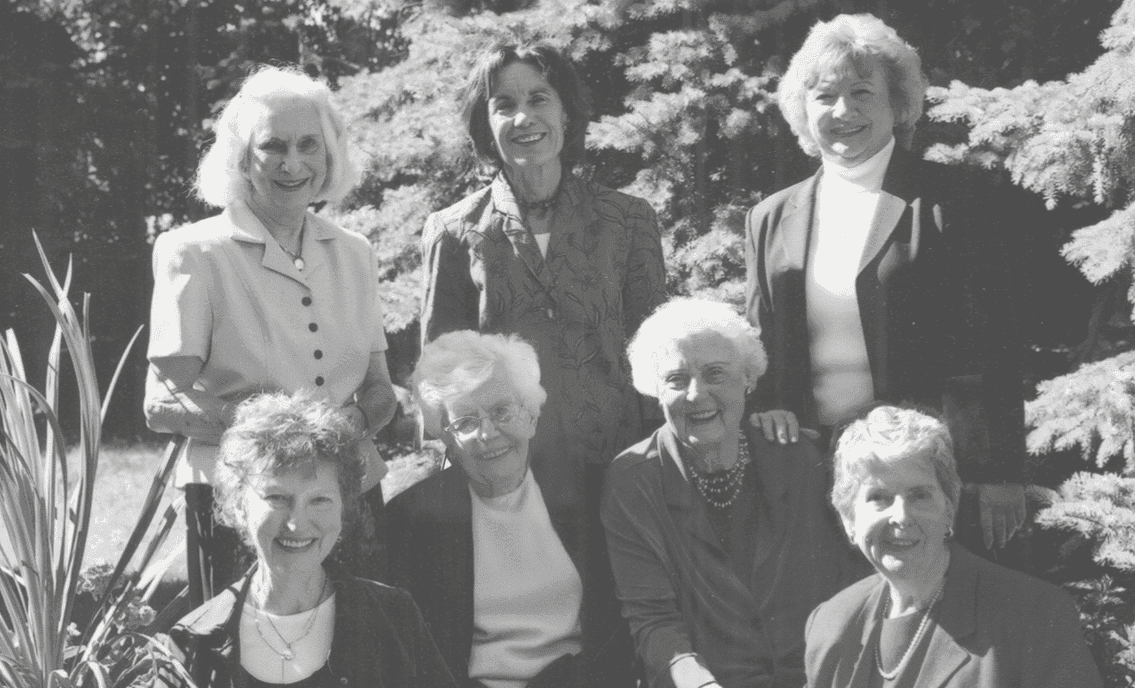
La Leche League was founded in 1956 by seven women in Illinois who wanted to help mothers breastfeed at a time when formula was the cultural default and breastfeeding was treated as faintly improper. For nearly seven decades the League existed for one purpose: mother to mother support. Women helped other women feed their babies. Its Canadian arm, La Leche League Canada, carried that mission north of the border for generations of families.
That mission has changed, and the language has changed with it. The change did not arrive all at once. It was introduced gradually, in increments small enough that each one could be waved through as a kindness, until the organisation no longer resembled the one those seven women built. In Canada, the change has a clear origin and a clear chronology.
How the change began
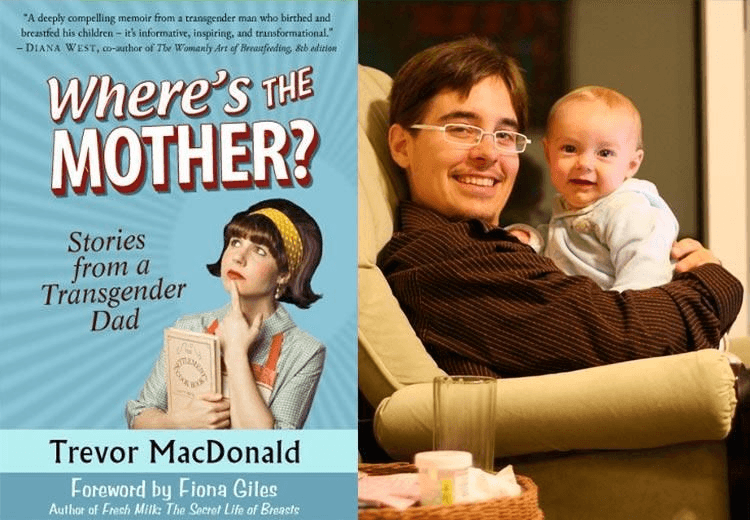
In 2012, a Winnipeg parent named Trevor MacDonald approached a local La Leche League chapter for breastfeeding support. MacDonald is a biological woman who identifies as a man, having transitioned with testosterone and chest surgery, then stopped testosterone on medical advice in order to conceive, become pregnant, and give birth. After attending meetings, MacDonald was encouraged to apply for a volunteer leadership role.
La Leche League Canada declined. Its position at the time was unambiguous: a Leader was a mother who had breastfed her baby, and on that basis a man could not become an LLLC Leader. The organisation noted the question had never once arisen in its more than fifty-year history.
That clarity did not survive. La Leche League International reviewed the policy, citing its mandate to be a non-discriminatory service organisation, and in 2014 revised its rules to remove the requirement that a Leader be a woman. In 2016, MacDonald became the first trans-identified person accredited as a La Leche League Leader anywhere in the world. A spokeswoman for the international body, Diana West, explained the reversal by saying the organisation wanted to be on "the right side of history." The prerequisite that a Leader be a woman was simply deleted.
MacDonald did not stop there, and neither did the institutional momentum. In 2012, MacDonald had already founded an international advocacy and support group for trans-identified people who wish to nurse, which now counts thousands of members. In 2014, MacDonald assembled a research team through the University of Ottawa and secured funding from the Canadian Institutes of Health Research. The resulting 2016 paper carried the first known use of the word "chestfeeding" in the title of a peer-reviewed academic study. Canadian public money, in other words, helped legitimise — in our view — the very vocabulary now used to reframe female biology in institutional settings. MacDonald went on to author the trans nursing tip sheet that La Leche League still circulates, and published a memoir whose title, with no apparent irony, asks the question this whole movement leaves hanging: Where's the Mother?
By 2018, La Leche League Canada and La Leche League USA had issued a joint statement formally adopting "chestfeeding" as organizational language. None of this was an accident, and none of it was the work of a single rogue chapter. It was a deliberate progression, made by the institution itself, from a clear rule that Leaders are mothers to a settled policy that the word mother is negotiable.
What La Leche League Canada now teaches
The language
La Leche League Canada publishes a page titled "What is Chestfeeding?" It defines the term as one used by parents who identify as transmasculine or non-binary, and frames the shift, in its own words, as adding more chairs to the table rather than taking any away. The reassurance is that "mother" and "breastfeeding" will never be erased. Yet in our view the practical effect of the new vocabulary is precisely erasure: the mother becomes a "parent," her breastfeeding becomes "feeding," and the one word that describes what only she can do is quietly retired from official use.
The drug protocol
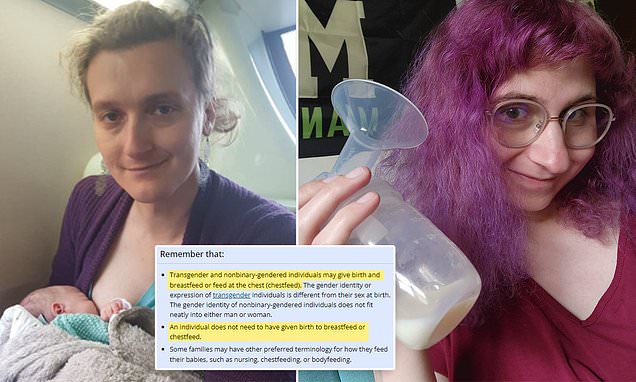
The more consequential document is La Leche League Canada's trans nursing tip sheet, written for the organisation by Trevor MacDonald. Its section on assisting trans women is not about supporting biological mothers. It is a set of instructions for how a biological male can attempt to produce milk and feed an infant from his chest.
The tip sheet states that males may induce lactation by following the Newman-Goldfarb protocol, that a physician would need to prescribe the appropriate medications, that birth control pills are started months in advance, and that domperidone is suggested and normally continued for the entire nursing period. La Leche League International's own guidance names additional drugs involved in the process, including those used to suppress testosterone, and states that they should be considered for safety on an individual basis.
And then, in the middle of these instructions, the tip sheet concedes the one fact that ought to end the discussion:
there has been little to no research done in this area.
That is La Leche League Canada, in its own document, describing the evidence base behind a practice it nonetheless promotes to its Leaders and the families they serve.
The questions no one is answering
Consider plainly what is being recommended. A biological male takes a combination of hormones and off-label drugs in order to produce a fluid from his chest, which is then fed to a newborn, in some cases alongside or in place of the milk of the woman who carried and delivered that child.
Domperidone, the drug at the centre of the protocol, is not approved in Canada to produce milk at all. It is authorised only for certain gastrointestinal conditions and for nausea linked to Parkinson's medication. Using it to stimulate lactation is off-label. Health Canada issued safety advisories in 2012 and again in 2015 warning that domperidone is associated with serious abnormal heart rhythms and sudden cardiac death, particularly at higher doses. In the United States the drug is not approved at all, and the Food and Drug Administration warned against using it to increase milk supply as far back as 2004.
Those warnings concern the adult who swallows the pills, and an adult can read them and consent. The infant cannot. And on the infant there is almost nothing. There is no body of high quality, long-term evidence on the composition of fluid produced by a male body under this drug regimen. There is nothing reliable on what it does or does not deliver nutritionally to a growing newborn. There is nothing on long-term outcomes for the child. This is not our claim to invent or exaggerate. It is the claim La Leche League Canada's own tip sheet makes when it admits that little to no research has been done.
A newborn in the first days of life is the single party to this arrangement who gets no say, signs no waiver, and is handed no safety data. The Australian case that returned to the Queensland tribunal illustrates the stakes clearly. Adrian Buckley "Jennifer", a Queensland trans identify male paramedic who, stated publicly on social media that he had taken domperidone for six weeks "in an attempt to be able to produce breast milk so that I can have the experience of breastfeeding," and according to his own account fed the baby within the first hour of its life.
In our view, when an adult's stated motivation for feeding a newborn centres on their own experience and sense of self, the question of what the infant actually receives — nutritionally and physiologically — deserves an answer that no one is yet providing.
When women object, the women are removed
The Canadian pattern mirrors the Australian one with unsettling precision. When women raise concerns, it is reliably the women who are removed.
In November 2024, Marian Leonard Tompson, then ninety-four years old and one of the seven founders of La Leche League, resigned from the organization she had helped create. She said it had abandoned the natural foundations of mothering in order to accommodate the desires of adults, and that this was destroying the League. In the same period, a director of La Leche League Great Britain, Miriam Main, resigned after her concerns about the steady replacement of "mother" with "parent" and "breastfeeding" with "chestfeeding" were, by her account, simply ignored. The international body had by then directed its British affiliates to support all nursing parents regardless of sex or gender identity.
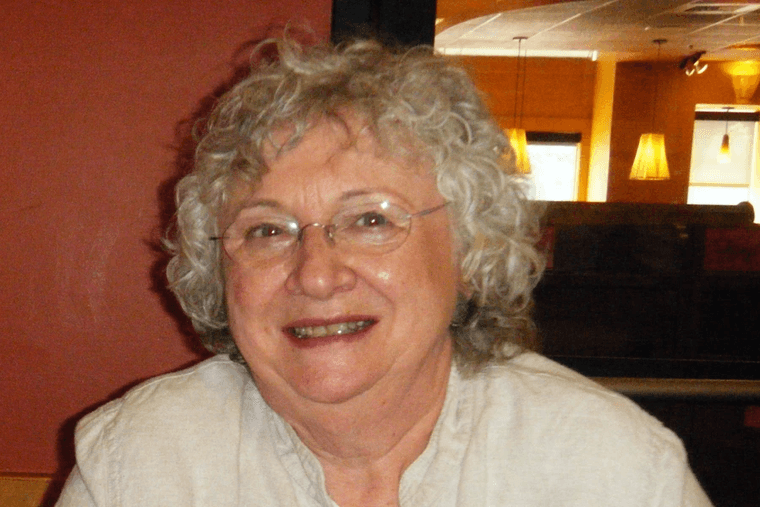
(Marian Leonard Tompson is one of the seven founders of La Leche League International. She was President of La Leche League for 24 years, from 1956 to 1980, and a member of the Founders Advisory Council until her resignation in November 2024, following policy changes regarding the inclusion of transgender women.)
So the tally now reads as follows. In Australia, a fifteen-year volunteer was dismissed and dragged before a tribunal. In Britain, a director resigned in protest. In Canada and internationally, the ninety-four-year-old founder herself walked out of the organization that exists because of her. The direction of travel is identical across all three countries, and so is the figure who is shown the door: the woman who says that mothers are women.
Why this matters in Alberta and across Canada
Our position is neither complicated nor cruel. Adults are free to live and present however they wish, and to call themselves whatever they choose. That freedom does not require a mothers' organization to dissolve the word mother. It does not require Canadian public funding to bankroll the vocabulary that re frames women's biology in institutional language. And it does not require a newborn to serve as the test subject for an adult's chosen experience, fed a fluid of unknown composition under a drug regimen that, by the promoting organization's own admission, no one has properly studied.
This is the same logic we have watched dismantle other single-sex provisions for women and girls. Once the category of woman is redefined as a feeling rather than a fact, every space and service built around female biology becomes negotiable: the shelter, the prison, the changing room, and now the breastfeeding support group. Many of the women who turn to organizations like La Leche League are vulnerable, exhausted, recovering from birth, and in some cases healing from male violence. They were promised mother to mother support. They are entitled to know that the support remains exactly that.
A breastfeeding group for mothers should be free to say plainly that it is for mothers. Women who have been told, correctly, that human milk matters should not then be told that the sex of the body producing it is irrelevant and unmentionable. A child's safety should never be ranked below an adult's experience.
Only women can breastfeed. Saying so should not cost a woman her volunteer role, her reputation, or years of her life in a tribunal. That it now does, in Australia, in Britain, and in Canada alike, is the clearest possible measure of how far these institutions have drifted from the women and children they were built to serve.
What you can do
1. Share this story. Most Canadians have no idea that their national breastfeeding organisation now coaches biological males to lactate, or that it admits in its own materials that the practice is unstudied. Awareness is the first and most powerful step.
2. Ask questions of your own providers. If you are an expectant or nursing mother, you are entitled to single-sex support and to plain, accurate language about your own body. Ask for it.
3. Stand with the women who speak. Jasmine Sussex, Marian Tompson, Miriam Main and others have paid a real and personal price for stating obvious facts. They should not have to stand alone.
4. Contact your elected representatives. Ask where they stand on protecting the sex-based interests of women and children in healthcare and in the institutions that serve mothers, and ask why public research funding has gone toward erasing the word mother.
5. Support our work. For Women and Girls Alberta is volunteer-led and independently funded. Help us keep raising these issues where they are happening, here at home.
Sources
La Leche League Canada, "What is Chestfeeding?" — https://www.lllc.ca/chestfeeding
La Leche League Canada, Trans Nursing Tip Sheet (authored by Trevor MacDonald) — (mirror copy: https://ubccpd.ca/media/2071/download)
La Leche League Canada, LGBTQ2S virtual support group — https://www.lllc.ca/lgbtq2s-virtual
La Leche League International, "Transgender and Non-binary Parents" (names spironolactone) — https://llli.org/breastfeeding-info/transgender-non-binary-parents/
La Leche League Canada and USA, Joint Statement on the term "Chestfeeding" (8 July 2018) — https://www.lllusa.org/wp-content/uploads/2018/08/Joint-Statement-on-use-of-the-term-Chestfeeding.pdf
MacDonald et al., "Transmasculine individuals' experiences with lactation, chestfeeding, and gender identity," BMC Pregnancy and Childbirth (2016), DOI 10.1186/s12884-016-0907-y — https://www.ncbi.nlm.nih.gov/pmc/articles/PMC4867534/
Trevor MacDonald (Kirczenow), biography and chronology — https://en.wikipedia.org/wiki/Trevor_MacDonald_(health_researcher)
The Advocate, "La Leche League to Consider Transgender Leaders" (2012), documenting LLLC's original position and the policy reversal — https://www.advocate.com/politics/transgender/2012/08/26/la-leche-league-consider-transgender-leaders
Health Canada, Summary Safety Review of domperidone (cardiac risk, 2012 and 2015 advisories) — https://dhpp.hpfb-dgpsa.ca/review-documents/resource/SSR00277
CBC News, "Domperidone safety alert issued by Health Canada" (2012), which also reports the U.S. FDA's 2004 warning against domperidone for milk production — https://www.cbc.ca/lite/story/1.1233078
National Catholic Register, "2 Leaders Resign from La Leche League Over Shift to Include Men in Breastfeeding Groups" (Marian Tompson resignation, 2024) — https://www.ncregister.com/cna/2-leaders-resign-from-la-leche-league-over-shift-to-include-men-in-breastfeeding-groups
The Bridgehead, "Founder of breastfeeding advocacy group resigns after transgender takeover" (2024) — https://thebridgehead.ca/2024/11/22/founder-of-breastfeeding-advocacy-group-resigns-after-transgender-takeover/
Women's Forum Australia, "Male chestfeeding saga returns to QCAT" (10 June 2026) — https://www.womensforumaustralia.org/male_chestfeeding_saga_returns_to_qcat

text
The US Supreme Court Just Protected Women's Sports. How Alberta Is Leading the Way in Canada While the Federal Government Falls Behind
On June 30, 2026, the US Supreme Court ruled 6-3 that schools may maintain women's sports for biological females. Alberta is the only Canadian province to have already acted, and we break down exactly what federal law still needs to change.
text
It Doesn't Have to Be This Way: How New Zealand Could Define "Woman" in a Sentence While Australia and Canada Fight On
New Zealand is trying to define woman and man in law with a single sentence. Australia shows what happens without that clarity, where its own Sex Discrimination Act was used to punish a woman for building a space for women. Canada sits in between, with Bill C-16 blocking the simple fix and women left to defend their sex-based rights one court case at a time.