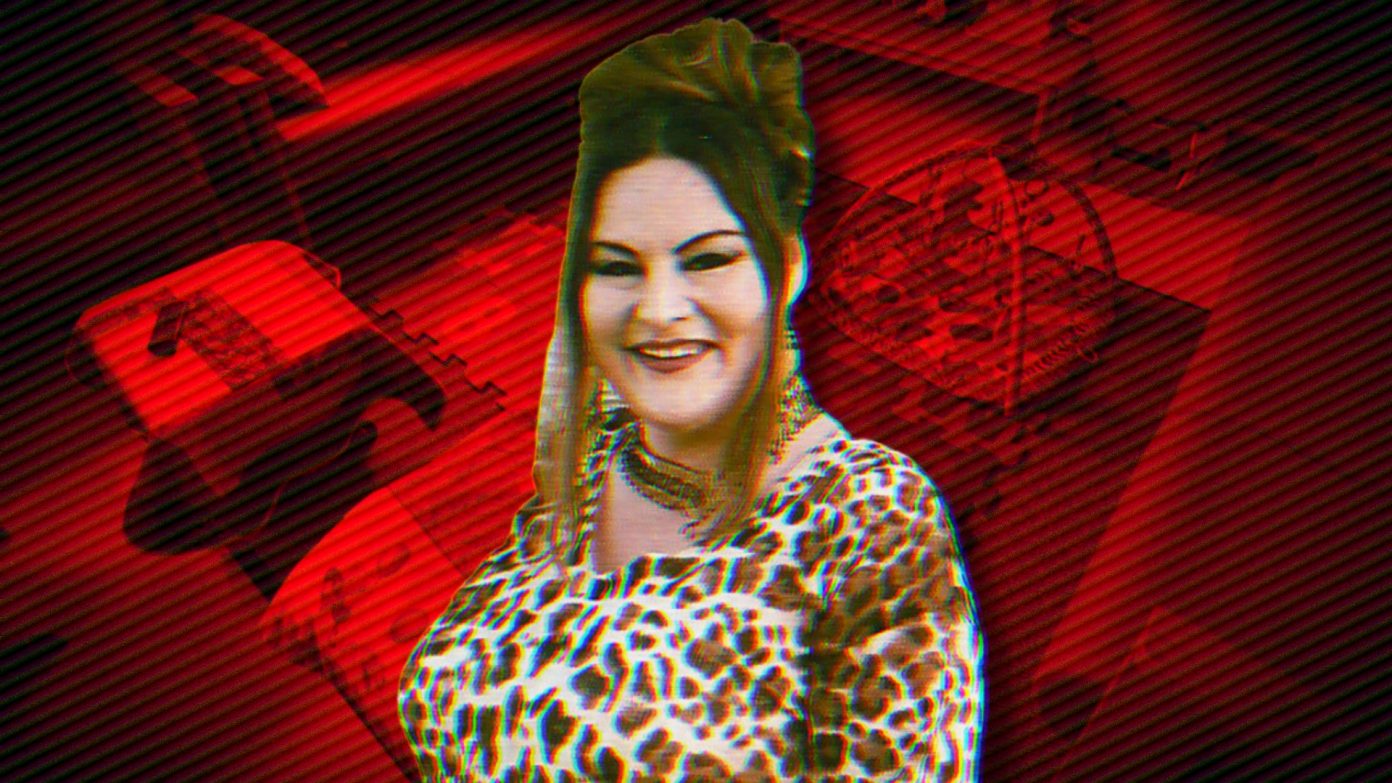
Canada's Youngest Dangerous Offender: The Case of Adam Laboucan
GIVEN NAME:
Adam Laboucan
ALIAS:
Tara Desousa
DATE:
1993-1997
LOCATION:
Quesnel, BC
Adam Laboucan sexually assaulted a three-month-old baby boy in 1997, requiring emergency reconstructive surgery, and admitted to drowning a three-year-old child in 1993. Designated Canada's youngest ever Dangerous Offender at seventeen, he has since been transferred to a federal women's prison where he broke a female inmate's ribs and had a sexual assault reported against him.
Full Story
In 1997, a horrific crime in Quesnel, British Columbia set in motion a case that would become emblematic of the complex intersection between violent sexual offending, mental health, and transgender identity policies in Canadian corrections. Adam Laboucan, then just 15 years old, sexually assaulted a three-month-old infant with such brutality that the child required emergency reconstructive surgery in Vancouver. By age 17, Laboucan became Canada's youngest designated dangerous offender, receiving an indefinite prison sentence with no fixed release date.
More than two decades later, now identifying as a woman named Tara Desousa and having undergone taxpayer-funded gender reassignment surgery, Laboucan resides in the Fraser Valley Institution for Women in Abbotsford, British Columbia—a facility that houses a Mother-Child Program where incarcerated women can live with their children up to age seven. This placement has sparked intense debate about prisoner safety, children's welfare, and the consequences of self-identification policies in correctional settings.
The Original Crime and Conviction
The 1997 Sexual Assault
In 1997, Adam Laboucan was hired as a babysitter for a three-month-old baby boy in Quesnel, a small city in central British Columbia. What the parents could not have known was that their babysitter harbored violent, sadistic impulses that would soon manifest in one of the most disturbing crimes in Canadian history.
During that babysitting session, Laboucan sexually assaulted the infant with such violence that the baby had to be airlifted 410 miles to Vancouver for emergency reconstructive surgery. The extent of the injuries inflicted on this helpless child speaks to the extreme depravity of the crime.
In the aftermath of the assault, Laboucan's behavior grew even more disturbing. He began engaging in severe self-mutilation, biting and chewing his own wrists and arms. According to court testimony, Laboucan "mutilated himself and ate his own flesh," consuming fat and muscle tissue during episodes that could last 30 minutes or more.
A History of Violence
During the trial proceedings, psychiatric experts uncovered an even more disturbing history. Dr. Steve Sigmond, a clinical psychologist who examined Laboucan, testified that the teenager had admitted to drowning a three-year-old boy in 1993 when Laboucan was just 11 years old. The child had been pushed into a pond during what Laboucan described as a "fit of anger."
Because Laboucan was under 12 years old at the time of the drowning—below the age of criminal responsibility in Canada—no charges were ever filed for this death. However, this earlier killing became part of the court record and factored heavily into sentencing decisions.
Correctional files also documented a troubling pattern of sexual abuse of younger relatives and friends, painting a picture of an individual with deeply entrenched violent and sexual pathologies beginning in early childhood.
Psychiatric Assessments
The psychiatric evaluations conducted during Laboucan's trial revealed the depth of his psychological disturbance. Dr. Ian Postnikoff, a forensic psychiatrist who examined Laboucan multiple times at the Youth Containment Centre in Prince George, provided chilling testimony about the young offender's mental state.
During these examinations, Laboucan confessed to Dr. Postnikoff that he had "no way to control the flood of violent, murderous fantasies" that plagued him. An expert witness testified that Laboucan displayed "everything from transsexual to pedophilic tendencies." Even Laboucan himself acknowledged that he was a danger to the public.
Dr. Postnikoff detailed Laboucan's extreme self-mutilation in custody, noting that he would chew on his wrists to the point of serious injury. "He said that biting himself tended to ease the anger and frustration," Postnikoff explained. "In one instance, he chewed on his arm for 30 minutes, ingesting fat and muscle tissue."
The psychiatrist warned that this capacity for extreme violence could easily be redirected toward others. "While in custody, he would turn them against himself, but this high level of self-mutilation, almost self-cannibalization, could be turned against other, weaker individuals, with possibly fatal consequences," Postnikoff testified.
Dangerous Offender Designation
In 1999, at age 17, B.C. Supreme Court Judge Victor Curtis handed down an indefinite sentence and designated Laboucan as a dangerous offender—making him the youngest person in Canadian history to receive this designation. This rare sentencing provision is reserved for offenders deemed to pose an ongoing threat to public safety with no foreseeable timeline for rehabilitation.
Judge Curtis explained that there was no foreseeable "time span in which Adam Laboucan may be cured." However, the judge emphasized that the indeterminate sentence was not meant to be punitive beyond what was necessary: "What is intended, and what must happen is that Mr. Laboucan be kept only so long as it is necessitated by the risk he poses."
The B.C. Court of Appeal upheld this dangerous offender designation in 2002, cementing Laboucan's status as an offender requiring indefinite incarceration due to the extreme risk he posed to public safety.
Institutional Behavior and Parole Hearings
Laboucan's behavior while incarcerated has consistently demonstrated the wisdom of the dangerous offender designation. Over more than two decades behind bars, a disturbing pattern of violence, sexual deviance, and instability has emerged.
Violence and Misconduct in Prison
According to parole board documents, Laboucan's institutional record includes:
Prostitution: Laboucan prostituted himself to other male prisoners while incarcerated in men's facilities
Drug use: Developed a drug addiction while in prison
Weapons possession: Was caught with a homemade knife
Violence: Stabbed by another inmate; involved in multiple violent altercations
Threats: Threatened to kill a female prison guard
A 2008 psychological report concluded that Laboucan meets the criteria for psychopathy and severe borderline personality disorder. His case file documents what the parole board described as "bizarre sexual behavior" including ongoing issues with "gender identity, impulsive behaviour, violence and sexual deviance."
Multiple Parole Denials
Laboucan has applied for parole numerous times since his initial incarceration, and every application has been denied. By 2010, there had been seven parole hearings, and Laboucan's gender identity issues had been mentioned at every single one—not as a protected characteristic requiring accommodation, but as a risk factor contributing to his likelihood of reoffending.
In a 2010 parole decision, the board stated: "Of particular concern is that you confessed to killing a three-year-old child when you were 11 years of age. According to your correctional file, while in a fit of anger, you pushed your victim into a pond."
The board refused release "on the grounds of gender identity struggles, impulsive behaviour, violence and sexual deviance," finding that "a complex set of risk factors related to his gender identity, impulsive behaviour, violence and sexual deviance puts him at high risk to reoffend."
In November 2017, Laboucan applied for parole again and was denied. He appealed this decision, claiming bias on the part of the parole board. The appeal division rejected his claims in April 2018, finding "no reasonable apprehension of bias" and noting that the board had properly considered all relevant factors, including his Indigenous heritage.
The 2017 parole denial specifically cited concerns about Laboucan's inability to manage anger after he "flung another inmate by her hair, then kicked her in the face"—an incident discussed in more detail below.
In October 2020, Laboucan was denied parole yet again. A psychological assessment filed in August 2019 concluded that Laboucan "posed a relatively high risk of future violence" and that release would be premature, though the report did support allowing escorted temporary absences for counseling purposes.
Most recently, in June 2024 and again in September 2024, Laboucan's applications for both day parole and full parole were denied. The Parole Board of Canada's appeal division upheld these denials in October 2025, finding that while Laboucan has made some progress in addressing issues around trust and emotional regulation, he still demonstrates "a continued pattern of impulsive and high-risk responses to stress" and lacks "a viable release plan."
The parole board has repeatedly acknowledged the suffering of Laboucan's victim and the victim's family, noting in their June 2024 decision: "The assault victim and their family have suffered pain, anxiety and anguish and long-term emotional impacts resulting from your offending. Each time you come up for parole, they are haunted by your offending and the damage you inflicted on their defenceless son/grandson."
Transfer to Women's Prison
Gender Transition and Policy Changes
The timeline of Laboucan's gender transition coincides precisely with significant policy changes in Canadian corrections. In June 2017, Canada passed Bill C-16, which added "gender identity or expression" as a protected characteristic under the Canadian Human Rights Act. Following this legislation, Correctional Service Canada (CSC) implemented a transfer policy based on gender self-identification, allowing male prisoners who identify as women to be transferred to women's prisons regardless of surgical status or hormone use.
Sometime around 2018, Laboucan began identifying as transgender and changed his name to Tara Desousa. A dating profile created that year on Canadian Inmates Connect, a website connecting prisoners with pen pals, showed Laboucan boasting about the results of his medical transition.
"I am a transgender woman and I was born a man but now after surgery I became a full woman," Laboucan wrote on the profile. "I have a vagina, not a penis, and also have 720ccs DD gel implants."
Reports suggest these surgeries, estimated to cost approximately $10,000 for the breast implants alone, were taxpayer-funded. However, Corrections Canada has stated that such expenses were not covered by the federal government, leaving the source of funding unclear.
What is clear is that following his transition, Laboucan was transferred from a men's facility to the Fraser Valley Institution for Women in Abbotsford, British Columbia. It is unknown exactly when this transfer occurred, but it was sometime after 2018.
Fraser Valley Institution for Women
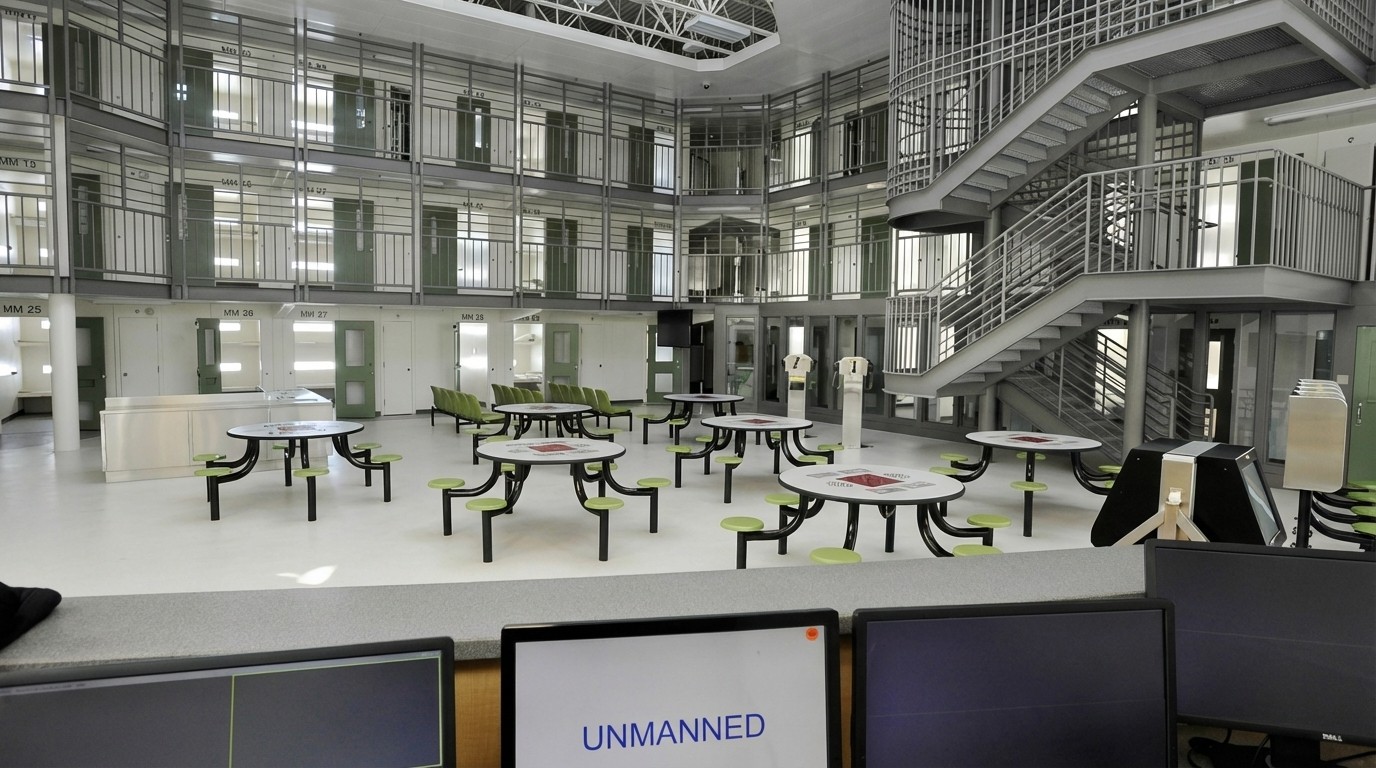
The Fraser Valley Institution for Women is a multi-security level federal women's correctional facility. Critically, it houses a Mother-Child Program in a minimum-security annex. This program allows incarcerated mothers to live with their children, from newborns up to age seven, in a house-like setting with shared kitchens, lounges, bathrooms, and bedrooms. The unit is designed to look like a neighborhood, with multiple housing units arranged together.
Canada's youngest and most violent dangerous offender—a man who raped an infant, admitted to killing a toddler, and has a documented history of pedophilic fantasies and behaviors—was placed in a facility adjacent to this Mother-Child Program.
Incidents at Fraser Valley
The 2018 Assault
In 2018, shortly after being transferred to Fraser Valley Institution for Women, Laboucan was involved in a violent assault against a female inmate that would only come to public attention six years later.
According to eyewitness testimony provided to women's rights advocate Heather Mason, Laboucan had been observed loitering around the Mother-Child Program unit, staring through windows at the children and mothers, and making "sexist and inappropriate antagonizing comments."
One mother, disturbed by Laboucan's behavior around her and her child, confronted him about his actions. Mason's testimony describes what happened next: Laboucan "picked her up, threw her, and then charged at her once she was on the ground and continued the assault."
Prison guards intervened, but their response to the incident reveals the disturbing power dynamics created by transgender ideology in correctional settings. Rather than punishing Laboucan for the assault, prison authorities placed the female victim in segregation for "inciting" the attack. Her offense? Calling Laboucan a pedophile—an objectively accurate term given his criminal conviction.
An eyewitness who spoke to Reduxx in November 2024 provided additional details: "[She] actually had broken ribs. I was on the inmate committee at that time, and the guards wouldn't do anything except blame the woman for instigating the fight because she called Tara a pedophile."
The witness, identified as "Angela" to protect her privacy, confronted prison administrators about the injustice: "I talked to the warden and said, 'This is a proper term that Tara will be referred to in the public, so why is it okay for Tara to beat this woman for it and have no consequence?'"
Despite the female inmate suffering multiple fractured ribs, Laboucan faced no meaningful consequences for the assault. The incident was mentioned only vaguely in an April 2018 Parole Board decision that referred to Laboucan with female pronouns and framed the assault as evidence of his inability to "manage her anger."
Ongoing Harassment and Safety Concerns
The 2018 assault was far from an isolated incident. Multiple sources have documented ongoing problems with Laboucan's presence in the Mother-Child Program area.
In June 2021, Heather Mason submitted a comprehensive brief to Canada's Standing Committee on Public Safety and National Security, detailing the experiences of women imprisoned with male transfers at Fraser Valley. Her testimony included specific allegations about Laboucan and another convicted pedophile, Matthew Harks (who identifies as "Madilyn").
"One of these women reported that while in the mother-child program, two transgender individuals with convictions for pedophilia, Madilyn Harks and Tara Desousa, would loiter near her and her child, making sexist and inappropriate antagonizing comments," Mason testified.
According to Mason's sources, Laboucan would "stare in the windows of the [Mother-Child] house and always be loitering around it." He allegedly attended prison events where children were present, creating fear and distress among the mothers.
An anonymous female inmate with a three-month-old baby boy housed at Fraser Valley told Mason: "I was told that there was an extremely violent child sex offender present who hadn't been in the presence of a young child in a very long time. Once I was informed of the sick and brutal nature of the crime against the child, I regretted even going or letting that person set eyes on my child."
The inmate described Laboucan staring at children to "antagonize" the women, creating a hostile and threatening environment for the most vulnerable population in the prison.
2019 Sexual Assault Report
In 2019, another female inmate at Fraser Valley reported being sexually assaulted by Laboucan. According to available information, no charges were filed in connection with this report. The lack of prosecution, despite Laboucan's extensive history of sexual violence, raises serious questions about how seriously such complaints are taken when the accused is a transgender-identified male in a women's prison.
Institutional Response
Throughout these incidents, the institutional response has consistently prioritized Laboucan's claimed transgender identity over the safety concerns of female inmates and their children. Former Fraser Valley inmate Alia Pierini, speaking at a 2021 protest outside the prison, described the power dynamics: "[Corrections Canada] let men basically rule the prison … women are scared to speak up because they think their paroles are going to get denied."
According to Mason's research, at the time of the 2021 protests, there were five males claiming to be transgender housed at Fraser Valley Institution for Women out of a total population of 92 inmates. Reports from the facility included "STD scares, pregnancy rumours and sexual harassment allegations because of the biological males in residence."
Mason noted that many correctional guards oppose the transfer policy but are not allowed to speak out publicly about their concerns.
Recent Developments
2024-2025: Continued Parole Denials
In June 2024, the Parole Board of Canada again denied Laboucan's applications for both day parole and full parole. The decision cited recent psychiatric assessments indicating Laboucan remains at high risk for reoffending and continues to pose a danger to society.
On August 20, 2024, Laboucan's legal representative filed an appeal, arguing that the board had failed to adequately consider Laboucan's Indigenous heritage and had violated his Charter rights given his dangerous offender designation.
On September 23, 2024, the appeal division denied this appeal, finding that the board had properly considered Laboucan's Indigenous background and had noted that "many of (Desousa's) problems and issues are the direct result of (her) experiences of systemic discrimination and inter-generational trauma."
The appeal decision acknowledged that Laboucan had been a victim of "extreme" abuse as a child, was bullied at school, was diagnosed with "several disorders," and exhibited "violent and sexual behaviour" around other children from a young age. The board also noted Laboucan's self-identification as a "Two-Spirit individual of Metis-Cree heritage."
However, the appeal division concluded that while Laboucan has made progress in addressing some issues—particularly through cultural interventions and increased access to Indigenous ceremonies—he still has "more work to do to demonstrate sustained stability and the ability to consistently apply of risk management skills and tools."
The decision noted Laboucan's "continued pattern of impulsive and high-risk responses to stress, a recent assessment of high risk to reoffend and a lack of a viable release plan."
Application for Escorted Temporary Absences
In August 2023, Laboucan applied for "escorted temporary absences" from Fraser Valley Institution to attend ceremonies at the Anderson Lodge, described as a "healing centre for women" run by the Circle of Eagles Lodge Society, an Indigenous-led organization.
When this request was denied by the institution, Laboucan filed an application with Federal Court in October 2024 seeking to overturn the decision. As of November 2024, this application was pending.
Merv Thomas, CEO of the Circle of Eagles Lodge Society, stated that the organization takes a "holistic" approach to healing through ceremonies and that "those that are involved in culture and ceremony have a greater chance at reintegrating positively into the community." He noted that inmates approved for escorted absences go through a "rigorous" process.
Laboucan's case management team has reportedly argued that escorted temporary absences would be "the next logical step in reintegration and gradual release." However, the Parole Board has repeatedly deferred to Laboucan's dangerous offender status and the ongoing risk he poses, particularly if given access to children or substances.
Broader Context: Transgender Inmates in Canadian Women's Prisons
The Scale of the Problem
Laboucan's case is part of a much larger pattern in Canadian corrections. In 2022, Correctional Service Canada released a report revealing that 82 percent of "gender-diverse" inmates in federal custody are trans-identified males serving sentences for sex offenses. The report further noted that almost all of these individuals came out as transgender after committing their crimes and that most offenses had caused death or serious harm to victims, over half of whom were female.
This data strongly suggests that a significant number of male sex offenders are using transgender self-identification as a strategy to gain access to female prisoners—a vulnerable population with disproportionately high rates of prior victimization by male violence.
Policy Concerns
The Canadian policy of placing male prisoners in women's facilities based solely on self-identification, with no requirement for surgery or even hormone therapy, has created serious safety concerns:
No verification process: There is no mechanism to distinguish between genuine gender dysphoria and tactical self-identification by predatory males seeking access to female victims.
No safeguards: Once transferred, there are minimal protections for female inmates, who report being told they will face parole denial if they complain.
One-sided policy: Notably, females who identify as men are routinely denied transfer to men's prisons due to "overriding health and safety concerns"—an acknowledgment that biological sex matters for safety that is not extended to women's prisons.
Silencing of concerns: Correctional staff who oppose the policy are reportedly forbidden from speaking out, while female inmates fear retaliation for raising safety concerns.
Impact on Female Inmates
Heather Mason's 2021 testimony to Parliament documented the extensive harms reported by female inmates since the implementation of self-ID policies:
Sexual assault
Sexual harassment and stalking
Sexually transmitted diseases
Pregnancy scares
Negative impacts to programming access
Emotional trauma (particularly for survivors of male violence)
Increased drug issues
Fear of retaliation for complaints
Mason's brief emphasized that incarcerated women are disproportionately likely to have histories of trauma and abuse by men, making the forced integration with male sex offenders particularly harmful. Her testimony noted that "the issue of transgender transfers from male prisons to women's prisons became particularly significant and severe in recent years" with increasingly frequent transfers of both pre-and post-operative males.
Victims' Perspectives
Throughout all of these developments, the original victim of Laboucan's violence—now an adult in his late twenties—and his family continue to suffer. The Parole Board's 2024 decision acknowledged their ongoing trauma: "Each time you come up for parole, they are haunted by your offending and the damage you inflicted on their defenceless son/grandson."
Every parole hearing forces this family to relive the horror of what happened to their infant son, knowing that the person who inflicted such suffering is not only still alive but is receiving special accommodations, taxpayer-funded surgeries, and sympathetic consideration for early release based on his claimed transgender identity.
The female inmates who have been assaulted, harassed, or made to feel unsafe by Laboucan's presence are also victims—secondary victims of a policy that prioritizes the desires of male sex offenders over the safety of women and children.
And the children who have been exposed to Laboucan's leering presence in the Mother-Child Program, whose mothers have had to explain why this person makes them uncomfortable, are yet another category of victims created by this policy.
Conclusion
The case of Adam Laboucan represents one of the most extreme examples of the consequences of gender self-identification policies in Canadian corrections. A person designated as the country's youngest dangerous offender—someone who brutally raped an infant, admitted to killing a toddler, and has been assessed as meeting the criteria for psychopathy with an ongoing high risk of violence—has been placed in a women's prison with access to children based solely on a claimed transgender identity.
This placement has resulted in:
Violent assault of a female inmate who confronted his predatory behavior
Ongoing harassment and intimidation of mothers and children
A reported sexual assault of a female inmate
Creation of a climate of fear where women are afraid to speak out
Throughout all of this, the institutional response has been to punish women who complain, accommodate Laboucan's demands, and continue denying the relevance of biological sex to prison safety.
The Laboucan case forces several uncomfortable questions:
At what point does the accommodation of claimed gender identity become complicity in enabling predatory behavior?
What duty of care do correctional authorities owe to female inmates and their children when they knowingly place violent male sex offenders in women's facilities?
How can a system that acknowledges it is too dangerous to place female inmates in men's prisons simultaneously claim it is safe to place male inmates in women's prisons?
What message does it send to male sex offenders when those who claim a transgender identity receive special privileges, sympathetic consideration, and access to new victims?
As of 2025, Adam Laboucan remains incarcerated at Fraser Valley Institution for Women, still seeking release, still near the Mother-Child Program, and still representing an ongoing threat to the safety of the women and children housed there. His case stands as a stark warning about the real-world consequences of prioritizing ideology over the safety of women and children.
Timeline
1993: Admitted to drowning a three-year-old boy by pushing him into a pond during a "fit of anger"; no charges laid — Laboucan was eleven years old, below the age of criminal responsibility in Canada
1997: Sexually assaulted a three-month-old baby boy in Quesnel, BC with such violence the infant required emergency airlifting 410 miles to Vancouver for reconstructive surgery
1997–1999: While in custody awaiting sentencing, engaged in severe self-mutilation — biting and chewing his own wrists and consuming his own flesh; psychiatrists warned this violence could be redirected toward others
1999: Designated Canada's youngest ever Dangerous Offender at age 17; BC Supreme Court Judge Victor Curtis imposed an indefinite sentence with no fixed release date
2002: BC Court of Appeal upheld the Dangerous Offender designation
2008: Psychological assessment concluded Laboucan meets criteria for psychopathy and severe borderline personality disorder
Multiple parole hearings: Denied parole at every hearing across more than two decades; board cited "gender identity struggles, impulsive behaviour, violence and sexual deviance" as ongoing risk factors
2018: Began identifying as transgender woman "Tara Desousa"; created dating profile on Canadian Inmates Connect boasting of taxpayer-funded vaginoplasty and "720cc DD gel breast implants"
2018: Transferred to Fraser Valley Institution for Women, Abbotsford, BC — a facility housing a Mother-Child Program where incarcerated mothers live with children up to age seven
2018: Broke a female inmate's ribs after she called him a pedophile; guards segregated the victim for "inciting" the assault; Laboucan faced no meaningful consequences
2019: A female inmate reported a sexual assault by Laboucan; no charges were filed
Ongoing: Repeatedly loitered around the Mother-Child Program staring at children and mothers through windows; made "sexist and inappropriate antagonizing comments" to mothers with young children
2024: Parole denied twice; appeal division upheld both denials, finding a "continued pattern of impulsive and high-risk responses to stress" and no viable release plan
Currently: Remains at Fraser Valley Institution for Women, still near the Mother-Child Program, still on indefinite sentence with no parole granted
References
Primary Sources and Official Documents
Parole Board of Canada Decision (June 2024). Tara Desousa Parole Application Denial. Referenced in multiple media reports.
Parole Board of Canada Appeal Division Decision (September 23, 2024). Tara Desousa Appeal Decision. Reported by Black Press Media, October 28, 2024.
B.C. Supreme Court (1999). R. v. Laboucan. Sentencing decision by Judge Victor Curtis.
B.C. Court of Appeal (2002). R. v. Laboucan. Upholding dangerous offender designation.
Mason, Heather (June 22, 2021). "Brief to The Standing Committee on Public Safety and National Security." Available at: https://www.ourcommons.ca/Content/Committee/432/SECU/Brief/BR11468302/br-external/MasonHeather-e.pdf
News Reports and Investigations
Reduxx (February 14, 2023). "CANADA: Man Who Raped Infant Quietly Moved to Prison with Mother-Baby Unit After Transgender Claim." https://reduxx.info/canada-man-who-raped-infant-quietly-moved-to-prison-with-mother-baby-unit-after-transgender-claim/
Reduxx (November 12, 2024). "EXCLUSIVE: Female Inmate Assaulted by Canadian Transgender Child Rapist in Women's Prison Sustained Broken Ribs, Eyewitness Reports." https://reduxx.info/exclusive-female-inmate-assaulted-by-canadian-transgender-child-rapist-in-womens-prison-sustained-broken-ribs-eyewitness-reports/
Daily Wire (February 14, 2023). "Convicted Child Rapist Housed In Canadian Women's Prison Near Mother-Child Unit After Identifying As Transgender: Report." https://www.dailywire.com/news/convicted-child-rapist-housed-in-canadian-womens-prison-near-mother-child-unit-after-identifying-as-transgender-report
The Globe and Mail (November 1, 2024). "Canada's youngest dangerous offender seeks escorted leave from prison." https://www.theglobeandmail.com/canada/article-canadas-youngest-dangerous-offender-seeks-escorted-leave-from-prison/
APTN News (November 2, 2024). "Tara Desousa initially denied escorted temporary absences." https://www.aptnnews.ca/national-news/canadas-youngest-dangerous-offender-who-sexually-assaulted-baby-seeks-prison-leave/
CBC News (April 25, 2018). "Appeal board upholds decision to deny parole for Canada's youngest-ever dangerous offender." https://www.cbc.ca/news/canada/british-columbia/adam-laboucan-1.4634393
CBC News (December 16, 2010). "'Bizarre' dangerous offender denied parole." https://www.cbc.ca/amp/1.878162
Quesnel Cariboo Observer (November 9, 2020). "Quesnel dangerous offender denied parole; to be reviewed in a year." https://www.quesnelobserver.com/news/quesnel-dangerous-offender-denied-parole-to-be-reviewed-in-a-year-5794071
Quesnel Cariboo Observer (April 25, 2018). "Canada's youngest dangerous offender from B.C. loses appeal for parole." https://www.quesnelobserver.com/news/canadas-youngest-dangerous-offender-from-b-c-loses-appeal-for-parole-5768226
Black Press Media (October 28, 2025). "Parole appeal denied for Canada's youngest dangerous offender from B.C." Multiple regional publications including Kelowna Capital News, Campbell River Mirror, Langley Advance Times, and others.
The Post Millennial (February 14, 2023). "Biological male who raped baby moved to women's prison in Canada." https://thepostmillennial.com/biological-male-who-raped-baby-moved-to-womens-prison-in-canada
True North (August 22, 2021). "Protesters demand removal of biological male inmates from women's prisons." https://tnc.news/2021/08/21/protesters-demand-removal-of-biological-male-inmates-from-womens-prisons/
Daily Caller (November 12, 2024). "Transgender Convicted Baby Rapist Reportedly Beat Female Inmate In Women's Prison." https://dailycaller.com/2024/11/12/transgender-convicted-baby-rapist-beat-female-inmate/
Women Are Human (January 29, 2021). "Man, Housed in a Women's Prison After Raping, Killing Children, Now Has DD Breast Implants." https://www.womenarehuman.com/man-housed-in-a-womens-prison-after-raping-killing-children-now-gets-dd-breast-implants-tara-desousa-ne-adam-laboucan/
Breitbart (August 31, 2023). "Canada: Man Who Raped Infant Transferred to Women's Prison." https://www.breitbart.com/politics/2023/08/31/canada-man-raped-infant-transferred-womens-prison-claiming-transgender/
Binary Australia. "Violent paedophile plays the transgender card." https://www.binary.org.au/violent_paedophile_plays_the_transgender_card
Additional Context and Background
Women's Space YVR. "Heather Mason - Men in Women's Prison." Profile of advocate's work. https://www.womenspaceyvr.com/prisons-heather-mason
Wikibious (May 19, 2023). "Who is Adam Laboucan." https://wikibious.com/adam-laboucan/
Factually.co (December 2024). "Tara Desousa transgender offender release UK fact check." https://factually.co/fact-checks/justice/tara-desousa-transgender-offender-release-uk-191f2e
Shore News Network (November 13, 2024). "Convicted Trans Baby Rapist Pummels Female Prisoner." https://www.shorenewsnetwork.com/transgender-convicted-baby-rapist-reportedly-beat-female-inmate-in-womens-prison/
Not the Bee. "Guess who got punished by the prison in this case?" https://notthebee.com/article/what-the---a-trans-prisoner-in-canada-assaulted-a-woman-who-called-him-a-pedophile-and-then-the-assaulted-woman-was-punished
Tampa Free Press (November 12, 2024). "Transgender Convicted Child Rapist Brutally Assaults Female Inmate In Canadian Prison." https://www.tampafp.com/transgender-convicted-child-rapist-brutally-assaults-female-inmate-in-canadian-prison/
SCNR (February 16, 2023). "Canadian Pedophile Permitted to Live in Prison's Mother-and-Baby Unit Following Transgender Surgery." https://www.scnr.com/article/canadian-pedophile-permitted-to-live-in-prisons-mother-and-baby-unit-following-transgender-surgery_f019a495d49111ed9f19b07b25f8c291
GoGetFunding. "Canadian Women's Prisons" - Heather Mason's fundraising campaign for prison reform activism. https://gogetfunding.com/canadian-womens-prisons/
Legal and Policy Background
Bill C-16 (2017). An Act to amend the Canadian Human Rights Act and the Criminal Code. Adding "gender identity or expression" as protected characteristics.
Correctional Service Canada Report (2022). Statistics on gender-diverse inmates in federal custody, showing 82% of trans-identified inmates are males serving sentences for sex offenses.
Commissioner's Directive 100 (2018). Correctional Service Canada policy on gender identity and expression, implementing self-identification for prison placement.
text
text
Ashley Smith: The Teenager Who Died in a Women's Prison While Guards Watched. What Her Death Still Tells Us About How Canada Treats Its Most Vulnerable Women
Ashley Smith, nineteen years old and originally sentenced for throwing crab apples at a postal worker at age fifteen, died by self-inflicted strangulation in a segregation cell at Grand Valley Institution for Women in Kitchener, Ontario on October 19, 2007, while guards stood outside her cell under orders from senior staff not to enter as long as she was breathing. A five-woman coroner's jury ruled her death a homicide in December 2013 and issued 104 recommendations to reform women's federal corrections. The majority were rejected or ignored by the Correctional Service of Canada.