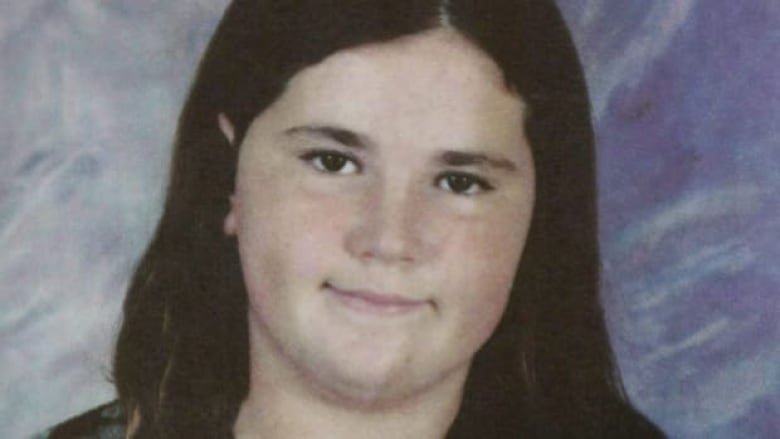
Ashley Smith: The Teenager Who Died in a Women's Prison While Guards Watched. What Her Death Still Tells Us About How Canada Treats Its Most Vulnerable Women

GIVEN NAME:
Ashley Smith
ALIAS:
N/A
DATE:
October 19, 2007 (death); December 19, 2013 (homicide verdict and 104 recommendations)
LOCATION:
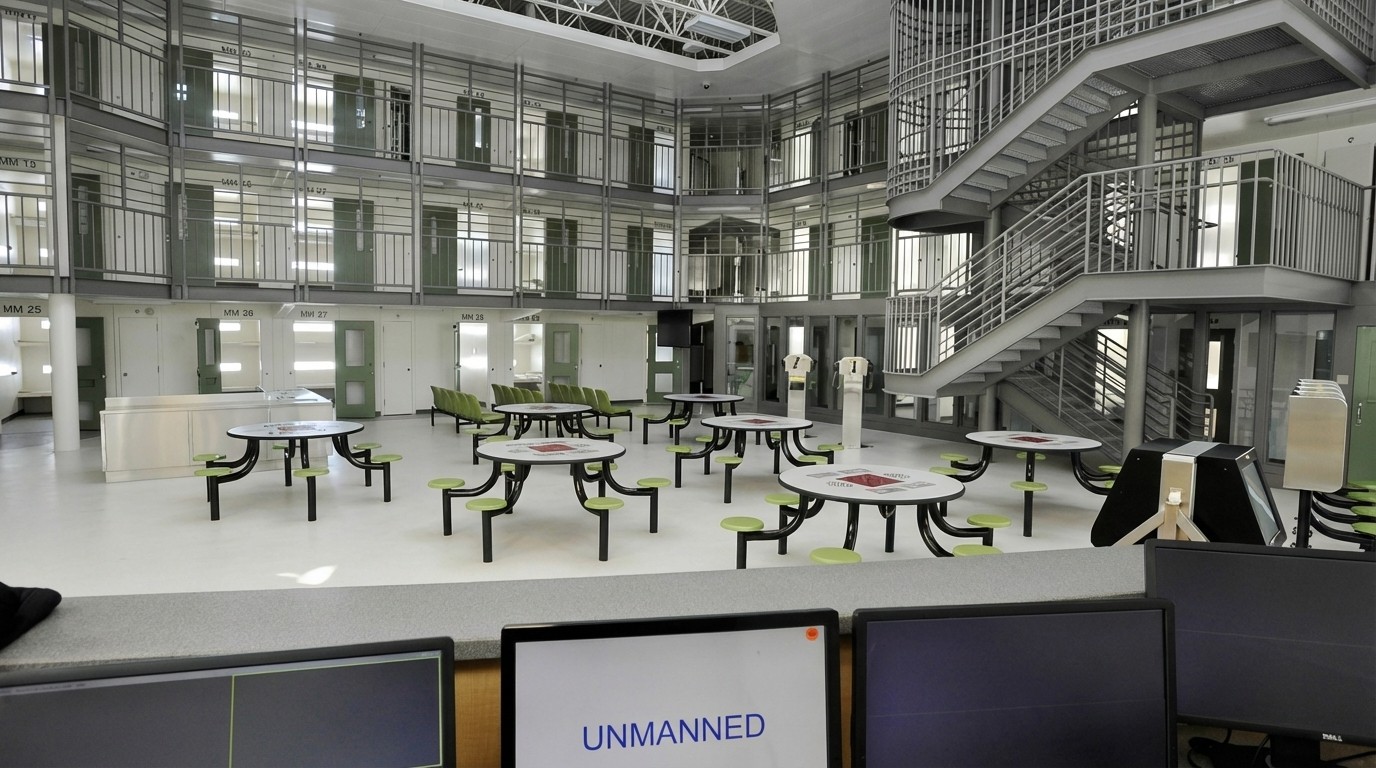
Grand Valley Institution for Women, Kitchener, Ontario
Ashley Smith, nineteen years old and originally sentenced for throwing crab apples at a postal worker at age fifteen, died by self-inflicted strangulation in a segregation cell at Grand Valley Institution for Women in Kitchener, Ontario on October 19, 2007, while guards stood outside her cell under orders from senior staff not to enter as long as she was breathing. A five-woman coroner's jury ruled her death a homicide in December 2013 and issued 104 recommendations to reform women's federal corrections. The majority were rejected or ignored by the Correctional Service of Canada.
Full Story
Ashley Smith was fifteen years old when she was first imprisoned. She had thrown crab apples at a postal worker. Her initial sentence was one month.
She was nineteen years old when she died. She died in a segregation cell at Grand Valley Institution for Women in Kitchener, Ontario, wearing nothing but a security gown, on the cement floor, with a ligature around her neck. Guards stood outside the cell. They watched through a monitor. They had been ordered by senior staff not to enter as long as she was still breathing.
They watched for more than thirty minutes.
When they finally entered the cell, she could not be revived.
In December 2013, a five-woman coroner's jury returned the first verdict of its kind in Canadian legal history: Ashley Smith's death was a homicide. Not a suicide. Not an accident. A homicide. The actions of others, the jury found, contributed to her death. The jury made 104 recommendations to reform how the federal corrections system handles mentally ill women.
The Correctional Service of Canada largely rejected those recommendations. The warden who had been fired after Smith's death was quietly rehired. Nine years after Ashley Smith died, a second inmate died at the same institution under similar circumstances.
This is Ashley Smith's case. It belongs in this database because it is the documented record of what Canada's federal women's corrections system does to its most vulnerable women when no one is required to intervene and no one is held accountable.
Who Ashley Smith Was
Ashley Smith was born in 1988 in Moncton, New Brunswick. She was a child with behavioural difficulties who entered the youth justice system and never found her way out of it. By the time she was fifteen, she had accumulated enough contact with the youth system that a breach of probation for throwing crab apples at a postal worker became the entry point to federal incarceration.
That is where the story of the crab apples ends. It is not, as it is sometimes presented, the whole story. Smith had genuine behavioural and mental health challenges. She was difficult to manage. She was resistant, disruptive, and at times physically combative with staff. None of this is contested. None of it is the point.
The point is that a fifteen-year-old with mental health needs entered a system designed to punish behaviour rather than address its causes, accumulated infractions in response to punishments that made her behaviour worse, and spent the next four years in increasing isolation until she died alone on a cement floor at nineteen while institutional policy kept the people outside her cell from opening the door.
She had never committed a serious criminal offence. She died in federal prison.
From One Month to Four Years to Death
How a Month Became Four Years
The mechanism by which Ashley Smith's sentence extended from one month to more than four years is documented in detail in the New Brunswick Ombudsman's 2008 report and in the evidence heard at the coroner's inquest. It is a mechanism familiar to advocates for women's prison reform and deeply troubling to anyone who examines it.
When an inmate in custody commits an infraction, she can be charged. That charge can result in an extension of her sentence. If the inmate's behaviour is itself a product of the conditions of her confinement, and if those conditions do not change, the behaviour will continue. The infractions will accumulate. The sentence will extend. The inmate will remain in custody longer, under increasingly punitive conditions, because the system responded to symptoms rather than causes.
Smith was charged with biting, punching, and spitting on staff who physically subdued her. She was physically subdued because of her behaviour. Her behaviour was a product of her mental health needs, which were not being met. The response to the behaviour was physical force and additional charges. The additional charges extended her sentence. The extended sentence kept her in an environment that produced the behaviour.
By the time she reached the federal system in late 2006, this cycle had been operating for years. She had spent two-thirds of her youth sentence in segregation, described by CSC as "therapeutic quiet time." The segregation was the response to her behaviour. The segregation made her behaviour worse. The behaviour produced more segregation. She was in this cycle for years before she died.
The Final Eleven Months
Ashley Smith entered the federal corrections system at Nova Institution for Women in Nova Scotia on October 31, 2006. In the eleven months that followed, she was transferred seventeen times among nine institutions in five provinces.
This transfer record is not incidental to her death. It is causal. Each transfer disrupted any therapeutic relationship she had formed. Each new institution required new staff to become familiar with her history, her needs, and her management. Each transfer was an opportunity for the institutional record to present a sanitized version of her history, with the most disturbing details redacted or omitted, so that staff at the receiving institution were not fully aware of what they were managing.
The coroner's jury found that the repeated transfers were themselves a form of institutional failure, and recommended that the practice of using transfers as a management response to difficult behaviour be discontinued.
CSC used transfer as a management tool throughout Smith's incarceration. It used it to the end.
Segregation as the Default Response
Smith's death occurred in a segregation cell. She was in segregation because she was on suicide watch. She was on suicide watch because she was self-harming. The self-harm was the behaviour the institution could not manage any other way, and so it responded to it with segregation.
The coroner's inquest heard evidence that Smith was kept in segregation for the entirety of her eleven months in federal custody. The jury recommended that indefinite solitary confinement be abolished. It recommended that self-injurious behaviour be treated as a mental health symptom rather than an infraction. It recommended that clinicians, not security management, make decisions about the care of inmates with mental health needs.
CSC largely rejected these recommendations.
October 19, 2007
What Happened
On October 19, 2007, Ashley Smith was in a segregation cell at Grand Valley Institution for Women in Kitchener, Ontario. She was on formal suicide watch. She was wearing a security gown. She was nineteen years old.
She tied a ligature around her neck. This was not the first time she had done so. Self-strangulation with ligatures she hid on her body was a documented pattern of self-harm, well known to the institution and to CSC. The documented response to this pattern was not to treat it clinically. It was to watch.
Guards stood outside the cell. They watched through the video monitor. They had been given a standing order: do not enter the cell as long as she is breathing. The order was issued by senior staff. It was based on an institutional assessment that interventions reinforced Smith's self-harming behaviour, because she received attention from staff when she engaged in it.
The theory is not without a clinical basis. Attention can reinforce behaviour. But the implementation of this theory meant that guards with a direct view of a nineteen-year-old asphyxiating herself had been ordered not to open the door.
They watched for more than thirty minutes.
When they entered the cell, she could not be revived. Ashley Smith was pronounced dead on October 19, 2007.
At the subsequent inquest, guard Valentino Burnett was shown the 45-minute video of Smith tying the ligature and the guards' response. He acknowledged that "in a perfect world," the guards would have intervened to save her.
It was not a perfect world. It was Grand Valley Institution for Women. And the orders were the orders.
The Video
The guards did not merely watch. They videotaped.
The existence of this footage became central to the subsequent legal and public proceedings. CSC moved to seal the video materials. The motion was contested. When portions of the footage were eventually made public, Canadians saw something that had never been visible before: a teenager dying in a federal prison cell while uniformed staff watched through the door.
The footage did not result in criminal convictions. The four guards and supervisors originally charged with criminal negligence causing death had those charges withdrawn. The warden who ordered the non-intervention policy was fired and later quietly rehired. No one was held criminally responsible for Ashley Smith's death.
The Homicide Verdict and 104 Recommendations
An Unprecedented Finding
On December 19, 2013, after 107 days of evidence and testimony, the five-woman jury at Ashley Smith's inquest returned its verdict: homicide.
This was the first time in Canadian legal history that a coroner's inquest into a prison inmate's death had returned a homicide verdict when another inmate was not the cause. The verdict did not assign criminal or civil liability. That is not the function of a coroner's inquest. But it found, as a matter of fact, that the actions of others contributed to Ashley Smith's death. The actions of the guards who watched. The actions of the senior staff who ordered the non-intervention. The actions of the system that transferred her seventeen times, kept her in segregation, responded to her self-harm with isolation, and handed down standing orders that kept rescuers outside a locked door while a nineteen-year-old died.
Presiding coroner Dr. John Carlisle closed the proceedings: "May she rest in peace, and may God bless her memory."
The 104 Recommendations
The jury's 104 recommendations addressed every level of the failure that produced Smith's death. Among the most significant:
Seriously mentally ill women should serve time in a federally operated treatment facility rather than a prison. The recommendation acknowledges the foundational problem: a women's prison is not equipped to provide clinical care to inmates whose needs are primarily psychiatric rather than correctional.
Decisions about inmates' treatment should be made by clinicians rather than security management and prison staff. The order not to enter Smith's cell came from institutional security management. It was not a clinical decision. It was a security decision applied to a clinical situation with fatal results.
Indefinite solitary confinement should be abolished. Smith spent the entirety of her federal sentence in segregation. The jury found this was itself a contributor to her death.
Guards should not require authorization before intervening in crisis situations. The order not to enter the cell was the authorization requirement that killed Ashley Smith. Removing the requirement for authorization removes the mechanism that produced the outcome.
Smith's case should be used as a mandatory case study for all CSC management and staff at every level.
The CSC Response
CSC released its formal response to the inquest in October 2014. The response noted the changes already implemented since 2007 and the commitments CSC was making going forward. The majority of the jury's recommendations were either categorically rejected or not addressed.
The pattern of inadequate response to documented institutional failure documented in Smith's case is consistent with the pattern documented across this database. A specific harm is documented. A specific institutional failure is identified. A specific recommendation is made. The institution notes that it has already taken action, or is in the process of doing so, or has determined the recommendation is not appropriate. The institutional culture that produced the harm continues.
Senator Bob Runciman captured this in 2016, when a second inmate died at Grand Valley under similar circumstances: "They've been given plenty of opportunities to change their ways and they haven't done it. Disturbingly, it shows correctional services has learned nothing from Ashley's death or the inquest into it."
The Same Institution
Ashley Smith died at Grand Valley Institution for Women. She is not the only woman who has suffered at that institution. This database documents, across multiple entries, what happened at Grand Valley to women housed with trans-identified male inmates including Steve Mehlenbacher, Frederick Radcliffe, Cassidy Honsinger, Matthew Harks, and Catherine Lynn.
The connection is not incidental. Grand Valley is one of Canada's largest federal women's prisons. It is the institution where the consequences of Canada's women's corrections policies have been most extensively documented. It is the institution where Ashley Smith died. It is the institution where female inmates have subsequently been sexually assaulted by male-bodied inmates placed there by CSC policy. It is the institution where a female guard was diagnosed with PTSD after being ordered to monitor a trans-identified male inmate and threatened with termination when she asked to be relieved.
What happened to Ashley Smith at Grand Valley in 2007 and what has happened to female inmates at Grand Valley since 2017 are not the same thing. But they are products of the same institutional logic: the women inside the facility are managed according to institutional policy, and when that policy fails them, the institution documents the failure, responds to the documentation, and continues operating under the same logic.
Ashley Smith's death produced 104 recommendations and a homicide verdict. The recommendations were rejected. The logic continued. The women continued to be managed by it.
What Ashley Smith's Case Documents
Ashley Smith's case is included in this database as a victim entry for a specific reason: it demonstrates that the institutional failures which have produced harm for women at Grand Valley and in other federal women's institutions since 2017 are not new. They are the continuation of a pattern of institutional disregard for the safety and wellbeing of incarcerated women that was documented, adjudicated, and found to constitute homicide in 2013.
The system that ordered guards not to enter a cell while a teenager died is the same system that places violent male-bodied inmates in federal women's prisons, ignores grievances filed by female inmates who report harassment and assault by those inmates, transfers male inmates from one women's institution to another rather than returning them to men's facilities, and describes the concerns of female inmates as transphobia.
It is the same system. The women inside it are still the least powerful actors in every situation. Their safety is still managed according to institutional policy rather than their actual needs. When the policy fails them, the institution notes the failure and continues.
Ashley Smith was nineteen years old. She had never committed a serious criminal offence. She died alone in a cell, in a security gown, on a cement floor, while people stood outside the door under orders not to open it.
She deserved better. So do the women who have come after her.
Conclusion
Ashley Smith entered the corrections system at fifteen for throwing crab apples. She died at nineteen in a federal women's prison. Guards watched. They had orders. They followed them.
A jury ruled it homicide. The recommendations that followed were rejected. The warden was rehired. No one was convicted.
The institution continued operating. It continues to operate today.
Ashley Smith's name belongs in this record not because her death was caused by gender identity policy. It was not. It belongs here because her death documents the institutional baseline: what Grand Valley Institution for Women, and the federal corrections system as a whole, is capable of doing to its most vulnerable women when policy supersedes humanity and no one is required to intervene.
That baseline has not changed. It has simply acquired new harms to add to its record.
Timeline
1988: Ashley Smith born in Moncton, New Brunswick
2002: First contact with the youth justice system in New Brunswick; repeated conflicts with authority at school and in community settings; enters the youth custody system
2003: Imprisoned at age fifteen at the New Brunswick Youth Centre after breaching probation for throwing crab apples at a postal worker; initial sentence is one month; repeated institutional infractions extend her sentence repeatedly; spends most of her youth sentence in segregation; accumulates over 50 charges during her youth sentence including threatening behaviour and assault for biting, punching, and spitting on staff who attempt to physically subdue her
October 5, 2006: Transferred to Saint John Regional Correctional Centre, an adult provincial facility; behaviour continues; placed in isolation; tasered twice; pepper-sprayed once
October 31, 2006: Transferred to Nova Institution for Women in Nova Scotia, her first federal institution; begins pattern of self-strangulation using ligatures she hides on her body; no consistent or comprehensive response to this behaviour is developed by CSC
November 2006 to October 2007: Transferred seventeen times among nine institutions across five provinces in her final eleven months; institutions include Grand Valley Institution for Women, Nova Institution for Women, Regional Mental Health Care in St. Thomas, and Central Nova Correctional Facility in Dartmouth; spends two-thirds of her time in segregation across her incarceration; files formal grievances about denial of release from her cell for up to four days at a time, excessive use of force, and CSC's failure to respond to her grievances; CSC violates Commissioner's Directive 081 by failing to respond to multiple grievances on time
October 16, 2007: Smith requests transfer to a psychiatric facility from Grand Valley; request denied
October 18, 2007: Placed on formal suicide watch at Grand Valley; held in administrative segregation
October 19, 2007 (morning): Smith ties a ligature around her neck in her segregation cell; guards stationed outside watch through the video monitor; guards are under standing orders from senior staff not to enter her cell as long as she is still breathing; guards observe for more than 30 minutes; when they finally enter the cell it is too late; Ashley Smith is pronounced dead; she is nineteen years old and wearing nothing but a security gown
October 25, 2007: Three guards and a supervisor at Grand Valley charged with criminal negligence causing death; warden and deputy warden fired; charges against all four front-line staff are eventually withdrawn; warden is quietly rehired approximately one year later
2008: New Brunswick Office of the Ombudsman and Child and Youth Advocate releases report on Smith's youth custody experience; documents systemic failures in how her mental health needs were managed before she entered the federal system
May 2011: Smith family's civil lawsuit against CSC for negligence settled out of court
September 20, 2012: Second coroner's inquest begins; presiding coroner Dr. John Carlisle widens scope to include long-term solitary confinement, repeated transfers, mental health care, and all youth-custody issues arising from Smith's death; more than 80 witnesses, nearly 11 months of testimony, over 12,000 pages of evidence
January 22, 2013: Jurors shown 45-minute video of Smith tying the ligature around her neck and the guards' response; guard Valentino Burnett acknowledges that "in a perfect world" the guards would have intervened to save her
December 19, 2013: Five-woman jury returns unprecedented homicide verdict; the first time in Canadian history a coroner's inquest into the death of a prison inmate resulted in a homicide verdict when another inmate was not the cause; jury issues 104 recommendations including abolishing indefinite solitary confinement, ensuring seriously mentally ill women serve time in a federally operated treatment facility rather than a prison, and requiring decisions about inmates' treatment to be made by clinicians rather than security management
October 7, 2014: CSC releases formal response to the inquest verdict; the majority of the jury's 104 recommendations are rejected or categorically ignored; CSC states it has already implemented most necessary changes
2016: Senator Bob Runciman states that a subsequent death at Grand Valley of inmate Terry Baker under similar circumstances shows "correctional services has learned nothing" from the Ashley Smith case or the inquest
References
CBC News (December 19, 2013). "Ashley Smith coroner's jury rules prison death a homicide." https://www.cbc.ca/news/canada/new-brunswick/ashley-smith-coroner-s-jury-rules-prison-death-a-homicide-1.2469527
The Globe and Mail (December 19, 2013). "Mother 'elated' as Ashley Smith's jail death is ruled a homicide." https://www.theglobeandmail.com/news/national/ashley-smith-inquest/article16052548/
Wikipedia. "Ashley Smith inquest." https://en.wikipedia.org/wiki/Ashley_Smith_inquest
Government of Canada. "Response to the coroner's inquest touching the death of Ashley Smith." https://www.canada.ca/en/correctional-service/corporate/library/deaths-custody/response-coroners-inquest-ashley-smith.html
Policy Options / IRPP (December 2012). "Ashley Smith (1988-2007): A predictable death." https://policyoptions.irpp.org/2012/12/kilty-leblanc/
LEAF (Women's Legal Education and Action Fund). "Seeking accountability by the Correctional Service of Canada for its treatment of women with mental health concerns." https://www.leaf.ca/news/seeking-accountability-by-the-correctional-service-of-canada-csc-for-its-treatment-of-women-with-mental-health-concerns/
CBC News (July 8, 2016). "Inmate's death shows Corrections Canada 'has learned nothing' from Ashley Smith case, senator says." https://www.cbc.ca/news/canada/kitchener-waterloo/grand-valley-institution-kitchener-inmate-death-1.3668822
New Brunswick Office of the Ombudsman and Child and Youth Advocate (June 2008). The Ashley Smith Report.
Corrections and Conditional Release Act, SC 1992, c 20: https://laws-lois.justice.gc.ca/eng/acts/C-44.6/
Canadian Charter of Rights and Freedoms, Part I of the Constitution Act, 1982: https://laws-lois.justice.gc.ca/eng/const/page-12.html
Canadian Women's Sex-Based Rights (caWsbar): https://cawsbar.ca/

text
Canada's Youngest Dangerous Offender: The Case of Adam Laboucan
Adam Laboucan sexually assaulted a three-month-old baby boy in 1997, requiring emergency reconstructive surgery, and admitted to drowning a three-year-old child in 1993. Designated Canada's youngest ever Dangerous Offender at seventeen, he has since been transferred to a federal women's prison where he broke a female inmate's ribs and had a sexual assault reported against him.

text
Cassidy Honsinger: The Violent Trans-Identified Male Who Stabbed a Teenage Stranger and Served His Sentence Among Women
Cassidy Honsinger stabbed a seventeen-year-old girl repeatedly with a steak knife in a public park in Cornwall, Ontario on September 10, 2022, then walked home and disposed of the knife in a sewer drain. Sentenced to two years in federal prison, he served a portion of his sentence at Grand Valley Institution for Women — where female inmates were reportedly "walking on eggshells" — before being released on statutory parole in September 2024.