Health Statutes Amendment Act, 2024 (No. 2)
In force as of December 18, 2025 — Federalism challenge ongoing | Court of King's Bench denied amendment application May 2026 | Egale Canada intends to appeal
Related Federal Legislation
Alberta Draws a Line on Child Medical Transition & Holds It
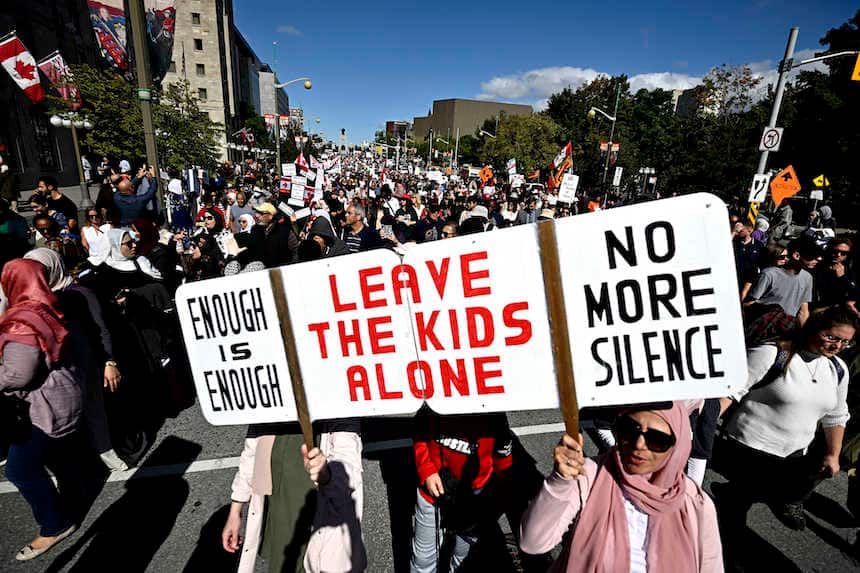
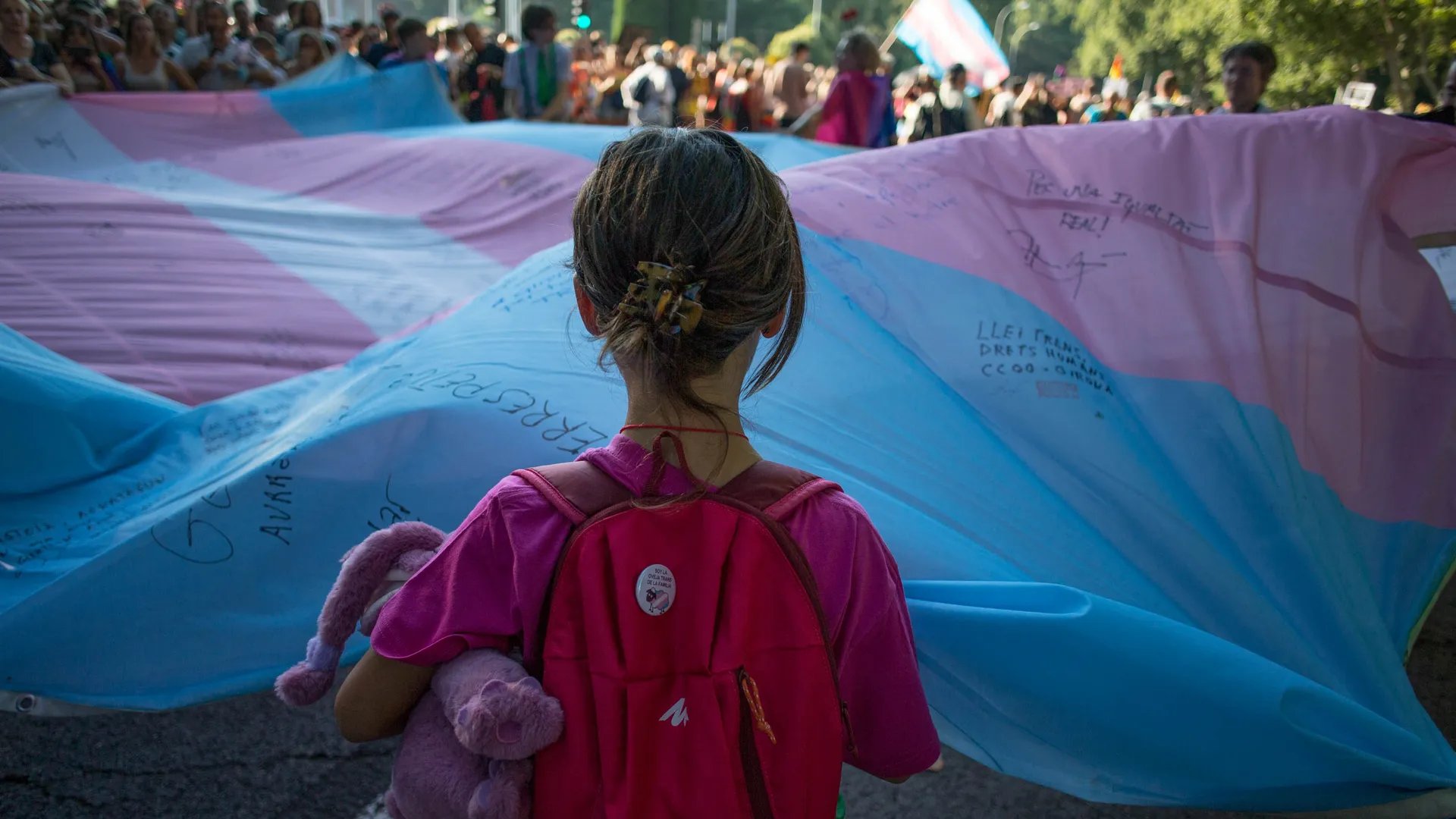
On December 5, 2024, the Alberta Legislature passed three bills that collectively represented the most direct legislative assertion of sex-based rights for children and women anywhere in Canada. One of those bills — the Health Statutes Amendment Act, 2024 (No. 2), introduced as Bill 26 — restricted the medical transition of minors, prohibiting puberty blockers, cross-sex hormones, and gender-affirming surgeries for anyone under 18 experiencing gender dysphoria.
Within 24 hours, it was in court.
That speed — legislation passed on December 5, litigation filed on December 6 — tells you something about the stakes both sides believe are involved. For the organizations challenging the law, Bill 26 represented an unconstitutional denial of healthcare to transgender youth. For the Alberta government and the advocates who supported the legislation, it represented a long-overdue application of the precautionary principle to a pediatric medical intervention with no long-term safety data, no randomized controlled trials, and an accelerating international consensus that the evidence base was, in the words of the UK's landmark Cass Review, remarkably weak.
As of May 2026, Bill 26 is in force. The injunction that briefly blocked it has been ended. The Charter challenge has been narrowed to a federalism argument that a Court of King's Bench denied in May 2026. An appeal is being pursued. The legislation stands.
This is the story of what Bill 26 does, why Alberta passed it, what happened when the courts intervened, and why the government held the line.
The Rise of Pediatric Gender Medicine in Canada
To understand Bill 26, you need to understand what it is responding to.
Prior to roughly 2012, gender dysphoria — the clinical condition of experiencing distress due to incongruence between one's biological sex and internal sense of identity — was rare in children and adolescents, occurred predominantly in natal males, and typically resolved by adulthood without medical intervention. The standard clinical approach was watchful waiting: psychological support, careful monitoring, and a recognition that the large majority of gender-dysphoric children would, by adulthood, come to identify with their biological sex, often as gay or lesbian adults.
That model changed rapidly. Between 2012 and 2020, referrals to pediatric gender clinics in Canada, the United Kingdom, the United States, Australia, and across Europe increased by factors of ten to forty, depending on the country and clinic. More significantly, the demographics of that population inverted: what had been a condition presenting predominantly in natal males became one presenting predominantly in natal females — adolescent girls, typically in their early to mid-teens, with no prior history of childhood gender dysphoria.
In Canada, the change was documented. Dr. Margaret Lawson, endocrinologist at the Children's Hospital of Eastern Ontario, stated publicly in 2019 that adolescent natal females then comprised approximately 75% of the patients her clinic was seeing. The clinical response to this surge was not caution. It was affirmation. Driven by advocacy organizations, influenced by the World Professional Association for Transgender Health's Standards of Care, and shaped by a cultural environment in which questioning a young person's declared gender identity was treated as harmful, Canadian gender clinics moved rapidly toward an affirmation model: social transition first, then medical intervention on a pathway that was described to families as reversible but that, in practice, functioned as a near-universal conveyor belt toward permanent medicalization.
Bill 26 is the Alberta legislature's response to that model.
What Bill 26 Actually Says
The Health Statutes Amendment Act, 2024 (No. 2) amended several Alberta health statutes to restrict gender-affirming medical interventions for minors. Its operative provisions are clear.
On puberty blockers and cross-sex hormones: Bill 26 prohibited regulated health professionals in Alberta from prescribing puberty-suppressing drugs or cross-sex hormones to individuals under 18 for the purpose of treating gender dysphoria, regardless of parental consent or the minor's expressed wishes.
On surgery: Bill 26 prohibited gender-affirming surgeries on anyone under 18, including mastectomies performed for gender affirmation and genital surgeries.
On existing patients: The legislation included transition provisions for minors already receiving treatment at the time of passage. Those patients were not immediately cut off, and some categories of youth remain eligible under the legislation's exceptions.
On the 16 and 17 age range: For patients aged 16 and 17, Bill 26 created a limited exception allowing hormone treatment with the combined approval of a parent, a physician, and a psychologist — a three-party consent requirement that reflects recognition that older adolescents occupy a distinct position, while asserting that self-declaration alone is insufficient for irreversible medical intervention.
What Bill 26 does not say: The legislation does not prohibit psychological support, counselling, or any non-medical approach to addressing gender dysphoria. It does not prevent clinicians from discussing gender identity with patients. It does not prohibit social transition. Bill 26 restricts the administration of specific drugs and surgeries. It mandates nothing about how clinicians or families discuss gender identity.
The Medical Evidence: What the Cass Review Found
The political debate over pediatric gender medicine in Alberta did not occur in an evidential vacuum. It occurred against the background of the most comprehensive independent review of the clinical evidence ever conducted.
In April 2024, Dr. Hilary Cass released the final report of the Independent Review of Gender Identity Services for Children and Young People — a four-year review commissioned by NHS England and conducted with the assistance of the University of York's evidence synthesis team. Its findings were unambiguous.
On puberty blockers, the Review found the evidence for their benefits was of very low certainty and that the claim that they are fully reversible — made routinely to families as part of the informed consent process — was not supported by the available research. The Review noted that the majority of children who begin puberty blockers proceed to cross-sex hormones, raising serious questions about the treatment pathway's actual clinical function.
On cross-sex hormones, the Review found similarly weak evidence of benefit and identified significant gaps in long-term safety data, particularly regarding fertility, bone density, cardiovascular health, and neurological development.
On the demographic shift, the Review acknowledged that the rapid increase in adolescent females presenting with gender dysphoria represented an unexplained clinical phenomenon that existing research had not adequately characterized, and explicitly cautioned against applying clinical protocols developed for a largely male patient population to the predominantly female population now presenting to gender clinics.
The Review's overall conclusion was that pediatric gender medicine had developed by inverting the normal evidentiary requirements for clinical practice: rather than establishing safety and efficacy before widespread adoption, gender-affirming interventions had been adopted widely on the basis of advocacy and limited case series, with the evidence review coming afterward and finding the foundation inadequate.
Alberta's Bill 26 reflects the Cass Review's central finding: where the evidence is inadequate, the precautionary principle requires caution, not continuation.
The International Context
The Cass Review did not emerge in isolation. Its conclusions are consistent with a parallel movement in clinical policy across multiple countries that had been earlier and more aggressive in adopting the gender-affirmation model.
Sweden's National Board of Health and Welfare moved in 2022 to restrict puberty blockers and cross-sex hormones for minors to exceptional cases, following an internal review that found the risks outweighed the benefits for most patients. Finland's Council for Choices in Health Care issued similar guidance in 2020, concluding that gender dysphoria in minors should be treated primarily through psychological means, with medical intervention reserved for exceptional circumstances and only after thorough assessment. Denmark, Norway, and Iceland have each moved in similar directions. The United Kingdom, following the Cass Review, announced the closure of the Tavistock clinic and the development of a new, regionally distributed model emphasizing holistic assessment over medical affirmation.
The Canadian policy response to this international shift has been the opposite of Alberta's. No other Canadian province has legislated restrictions on pediatric gender medicine. Several have actively expanded access. The federal government has not initiated any independent evidence review comparable to the Cass Review.
Alberta, by passing Bill 26, aligned itself with the international clinical direction. That alignment is proving, in the weight of accumulating evidence, to be on the right side of the science.
Why This Matters for Women and Girls
Pediatric gender medicine is not a gender-neutral issue. The population most affected by the clinical model Bill 26 restricts is overwhelmingly female.
The documented shift in gender clinic demographics — from a predominantly male patient population to a predominantly female one — has occurred simultaneously across multiple countries, in different cultural contexts, with different healthcare systems. The one common factor is the cultural and digital environment in which adolescent girls are developing: an environment saturated with gender identity content on social media, in school curricula, and in peer networks.
Researchers and clinicians who have studied this population have documented patterns inconsistent with the classical model of gender dysphoria. Many of the adolescent females presenting to gender clinics have comorbid mental health conditions — depression, anxiety, eating disorders, a history of trauma or sexual abuse, autism spectrum conditions, or same-sex attraction experienced in an environment where being gay carries social stigma that being transgender does not.
The women who have detransitioned — who identified as transgender in adolescence, underwent medical transition, and subsequently returned to identifying with their biological sex — are among the most direct evidence of the harm this clinical model can produce. They describe being affirmed into a medical pathway before the underlying issues in their lives had been identified or addressed. They describe being given testosterone and mastectomies as teenagers, by clinicians who asked few questions, and discovering in their twenties that the transition had not resolved the distress it was supposed to treat.
Bill 26 exists, in part, because of these women.
The Charter Challenge, the Injunction, and Bill 9
On December 6, 2024, Egale Canada Human Rights Trust, Skipping Stone Foundation, and several Alberta families filed applications challenging Bills 26, 27, and 29 under the Canadian Charter of Rights and Freedoms. On June 27, 2025, Justice Colin Feasby of the Court of King's Bench of Alberta granted an injunction suspending the Bill 26 prohibition on puberty blockers and cross-sex hormones for minors, pending the determination of the Charter challenge. The injunction was not a ruling on the merits.
The Alberta government appealed the injunction and simultaneously moved to neutralize it legislatively. On November 18, 2025, the government introduced Bill 9 — the Protecting Alberta's Children Statutes Amendment Act, 2025. Bill 9 passed on December 10, 2025.
Bill 9 did three things. It re-enacted the substance of Bills 26, 27, and 29. It invoked section 33 of the Canadian Charter of Rights and Freedoms — the notwithstanding clause — shielding the legislation from Charter review under sections 2 and 7 through 15 for a renewable five-year period. And it suspended the application of the Alberta Bill of Rights and the Alberta Human Rights Act to the legislation in perpetuity — a scope of override broader than any previous invocation of the notwithstanding clause in Alberta's history.
On December 18, 2025, the Alberta government formally ended the injunction against Bill 26 on the basis of the notwithstanding clause invocation. Bill 26 came into force. Access to puberty blockers and cross-sex hormones for gender dysphoria treatment was restricted for minors in Alberta, with exceptions remaining for some categories of youth under the legislation's provisions.
Premier Danielle Smith characterized the decision plainly: "This government does not turn to the notwithstanding clause unless the stakes warrant it, and in this case, the stakes could not be higher."
The Federalism Challenge and Where Things Stand in May 2026
The notwithstanding clause shields legislation from Charter review — but not from all constitutional challenges. Egale Canada and Skipping Stone, working with lawyers from McCarthy Tétrault LLP, amended their legal challenge to pursue two remaining arguments.
The first is a claim for declaratory relief: even where a court cannot strike down legislation protected by the notwithstanding clause, it may still be able to declare that the legislation violates Charter rights. The Supreme Court of Canada is hearing cases in 2026, including the UR Pride case from Saskatchewan, that will determine whether this power of declaratory relief exists when the notwithstanding clause has been invoked.
The second is a federalism argument. Egale's legal team argues that Bill 26 is unconstitutional because the province of Alberta is improperly seeking to criminalize healthcare — a matter of criminal law that falls under exclusive federal jurisdiction. The argument draws on a 1993 Nova Scotia case challenging provincial legislation that restricted abortion access on jurisdictional grounds.
In May 2026, the Court of King's Bench of Alberta denied the application to amend the legal challenge to include these new arguments. Egale Canada has stated it intends to appeal that decision.
As of May 21, 2026, Bill 26 remains in force in Alberta. The legal challenge continues but has been significantly narrowed. The legislation restricting gender-affirming medical care for minors in Alberta is operative law.
Conclusion: Precaution Is Not Cruelty
The framing of Bill 26 as anti-trans healthcare rests on a contested premise: that puberty blockers, cross-sex hormones, and surgeries administered to adolescents constitute healthcare in the established sense — evidence-based, safety-monitored, and indicated for the population receiving them.
The Cass Review found that premise inadequate. The international clinical movement away from pediatric medical affirmation reflects a similar finding. The testimony of detransitioners — young women who were medicalized as teenagers and who are now navigating the consequences in their adult bodies — provides human evidence of the institutional failure the statistics describe.
Bill 26 does not tell gender-dysphoric children that their distress is not real, that they are not worthy of support, or that they do not deserve care. It says that specific medical interventions administered to children at scale, without adequate evidence of safety or long-term benefit, should not be administered to children in Alberta until that evidence exists.
That is not cruelty. It is what responsible clinical practice requires. And as of May 2026, it is the law in Alberta.
Key Provisions
Prohibited regulated health professionals from prescribing puberty blockers or cross-sex hormones to individuals under 18 for the purpose of treating gender dysphoria. Banned gender-affirming surgeries on anyone under 18.
Created limited exceptions for those aged 16 and 17 with combined approval from a parent, physician, and psychologist.
Included transition provisions for minors already receiving treatment at the time of passage — some categories of youth remain eligible under the exceptions.
Re-enacted and brought fully into force through Bill 9 (December 10, 2025), which also invoked the notwithstanding clause under section 33 of the Canadian Charter of Rights and Freedoms and suspended the application of the Alberta Bill of Rights and the Alberta Human Rights Act to the legislation in perpetuity.
Ministerial Chain of Custody:
Bill 26 was introduced under Premier Danielle Smith's United Conservative Party government, elected with a majority mandate in May 2023. The legislative package of which Bill 26 formed a part — alongside Bills 27 and 29 — was announced by Premier Smith in October 2024 as a deliberate policy response to the premature medicalization of gender-dysphoric children and the erosion of parental rights in Alberta schools.
Danielle Smith has served as Premier of Alberta since October 2022 and bears ultimate political accountability for both the introduction of Bill 26 and the subsequent decision to invoke the notwithstanding clause through Bill 9. Smith was explicit in her public statements: the government does not use the notwithstanding clause lightly, and in this case, she said, "the stakes could not be higher." Her government's invocation of section 33 — and its extension to suspend the Alberta Bill of Rights and Alberta Human Rights Act in perpetuity — is the most sweeping use of override powers in Alberta's legislative history and among the most significant in Canadian history.
Mickey Amery has served as Minister of Justice and Attorney General of Alberta since 2023. He bore primary ministerial responsibility for Bill 26's legal architecture, for the government's litigation strategy in response to the Charter challenge, and for the design and passage of Bill 9. Amery stated publicly that Bill 9's invocation of the notwithstanding clause would not only prevent new Charter challenges for five years but would terminate all ongoing court action against the three bills — a position the courts have substantially, though not entirely, upheld as of May 2026.
Adriana LaGrange served as Minister of Health at the time of Bill 26's introduction and passage. As the minister responsible for health policy and the regulation of health professionals, she was the portfolio minister directly responsible for the health statutes amendments — the provisions restricting the prescribing of puberty blockers and cross-sex hormones and prohibiting gender-affirming surgeries on minors. The policy direction Bill 26 implements — aligning Alberta's pediatric gender medicine practice with the international evidence consensus emerging from the Cass Review and comparable European assessments — was developed under her ministerial authority.
Jason Nixon served as Minister of Education at the time of Bill 26's passage. While Bill 26 is primarily a health statute amendment, its interaction with the school environment — particularly what healthcare information schools communicate to students and families — connects to the Education portfolio. Nixon bore concurrent ministerial responsibility for Bill 27, which addressed parental rights in schools directly, and the two bills form a coordinated policy package.
The College of Physicians and Surgeons of Alberta, as the regulatory body responsible for setting and enforcing professional standards for Alberta physicians, bears institutional accountability for the period during which gender-affirming care was administered to Alberta minors without an Alberta-specific independent evidence review. Bill 26 does not create regulatory accountability for past prescribing. It establishes a forward-looking legislative standard. The professional accountability for what was administered before December 5, 2024 — and for what the College permitted without adequate scrutiny of the emerging international evidence — sits with the professional regulatory body that permitted it.
References:
Bill 26, Health Statutes Amendment Act, 2024 (No. 2), 1st Sess, 31st Leg, Alberta, 2024 (Royal Assent 5 December 2024).
Bill 9, Protecting Alberta's Children Statutes Amendment Act, 2025, 2nd Sess, 31st Leg, Alberta, 2025 (Royal Assent 10 December 2025), invoking Canadian Charter of Rights and Freedoms, s 33.
Canadian Charter of Rights and Freedoms, Part I of the Constitution Act, 1982, being Schedule B to the Canada Act 1982 (UK), 1982, c 11, ss 2, 7, 15, 33, online: https://laws-lois.justice.gc.ca/eng/const/page-12.html.
Alberta Human Rights Act, RSA 2000, c A-25.5, online: https://www.qp.alberta.ca/documents/Acts/a25p5.pdf.
Canadian Bill of Rights, SC 1960, c 44, online: https://laws-lois.justice.gc.ca/eng/acts/c-12.3/.
Cass, Hilary, Independent Review of Gender Identity Services for Children and Young People: Final Report (April 2024), online: https://cass.independent-review.uk/home/publications/final-report/.
Egale Canada Human Rights Trust et al v His Majesty the King in Right of Alberta et al, Court of King's Bench of Alberta; injunction granted 27 June 2025; injunction ended 18 December 2025 following Bill 9; application to amend challenge denied May 2026; appeal pending.
Egale Canada, "The Fight Isn't Over: Egale Canada and Skipping Stone Continue Case Against Alberta Government" (11 December 2025), online: https://egale.ca/egale-in-action/fight-isnt-over/.
Egale Canada, "Egale Canada v Alberta — Health Statutes Amendment Act (Bill 26)" (updated May 2026), online: https://egale.ca/awareness/egale-v-alberta-healthcare/.
Littman, Lisa, "Parent Reports of Adolescents and Young Adults Perceived to Show Signs of Rapid Onset Gender Dysphoria" (2018) 13:8 PLOS ONE e0202330, online: https://doi.org/10.1371/journal.pone.0202330.
Cantor, James, "Do Trans Kids Stay Trans When They Grow Up?" Sexology Today (11 January 2016), online: http://www.sexologytoday.org/2016/01/do-trans-kids-stay-trans-when-they-grow_99.html.
Sweden, National Board of Health and Welfare, Care of Children and Adolescents with Gender Dysphoria (2022), online: https://www.socialstyrelsen.se/en/publications-and-materials/2022/care-of-children-and-adolescents-with-gender-dysphoria/.
Finland, Council for Choices in Health Care (COHERE), Recommendation: Medical Treatment Methods for Dysphoria Related to Gender Variance in Minors (2020).
Beard, J, "Spike in Demand for Treatment of Transgender Teens" CBC News (4 March 2019), online: https://www.cbc.ca/news/canada/ottawa/trans-teens-ottawa-cheo-demand-1.5026034.
Aitken, Madison et al, "Evidence for an Altered Sex Ratio in Clinic-Referred Adolescents with Gender Dysphoria" (2015) 12:3 Journal of Sexual Medicine 756.
World Professional Association for Transgender Health, Standards of Care, Version 7 (2012); Version 8 (2022).
French, Janet, "Alberta to invoke notwithstanding clause to shield 3 transgender bills from court challenges" CBC News (19 November 2025), online: https://www.cbc.ca/news/canada/edmonton/alberta-government-notwithstanding-clause-bills-9.6983786.
Zhao, Emma, "Bill 9 not discouraging 2SLGBTQ+ groups challenging Alberta laws affecting transgender youth" CBC News (14 December 2025), online: https://www.cbc.ca/news/canada/edmonton/alberta-egale-canada-skipping-stones-bill-9-notwithstanding-clause-transgender-laws-9.7013063.
LawNow Magazine, "The Alberta Legislature repeatedly uses the Charter's notwithstanding clause to shield controversial laws from court challenges" (11 December 2025), online: https://www.lawnow.org/the-alberta-legislature-repeatedly-uses-the-charters-notwithstanding-clause-to-shield-controversial-laws-from-court-challenges/.
Koshan, Jennifer, "Alberta's Bills Targeting Gender Diverse Youth: Comparisons, Constitutional Issues, and Challenges" (13 December 2024), online: ABlawg, http://ablawg.ca/2024/12/13/albertas-bills-targeting-gender-diverse-youth-comparisons-constitutional-issues-and-challenges/.
Read More
text
Bill 29: Fairness and Safety in Sport Act
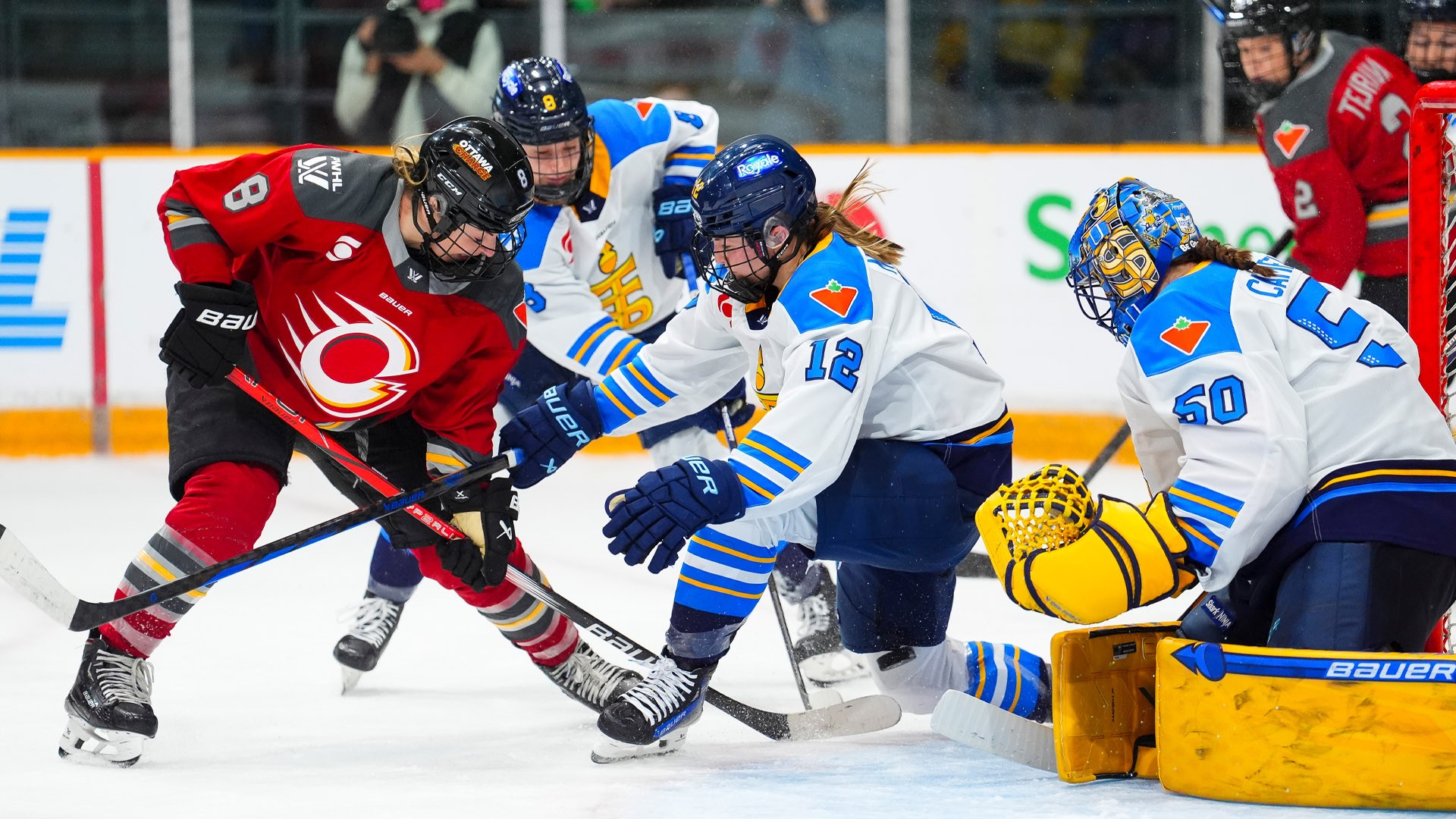
Alberta legislated biological sex as the basis for female sport divisions in schools, post-secondary institutions, and provincial sport organizations, making it the first Canadian province to do so by statute. The Act came into force September 1, 2025 and is shielded from Charter challenge by Bill 9's notwithstanding clause. No legal challenge had been filed as of the time of Bill 9's passage, though Egale Canada has stated its intention to challenge the legislation.
text
Bill 13: Regulated Professions Neutrality Act, 2025
Passed December 9, 2025, this Act prohibits professional regulatory bodies from disciplining members for off-duty speech and bans mandatory DEI, cultural competency, and unconscious bias training. Applying to over 40 regulatory bodies and 100+ professions, it directly protects women professionals who have faced regulatory consequences for expressing sex-realist views.